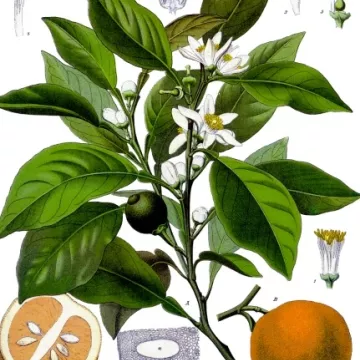
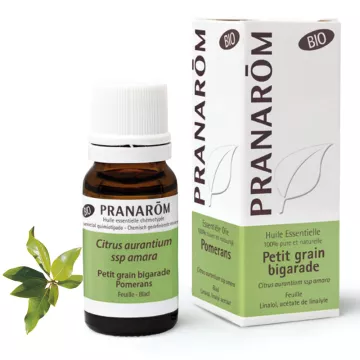
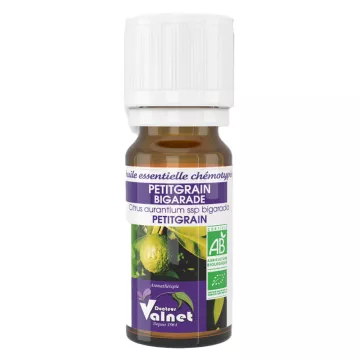
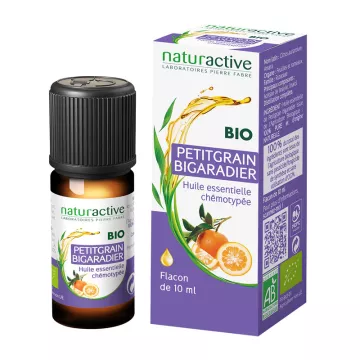
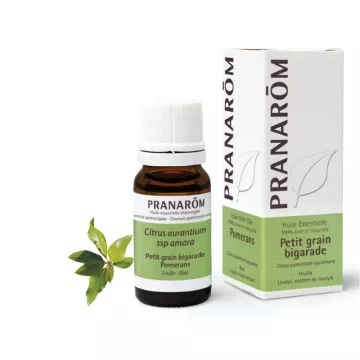
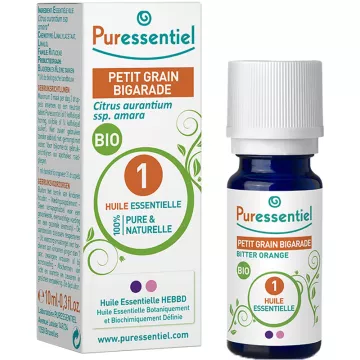
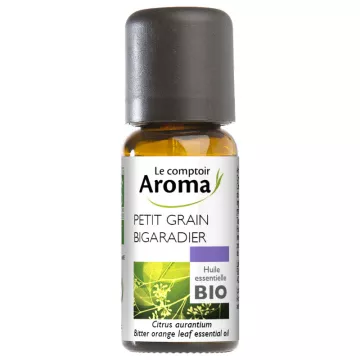
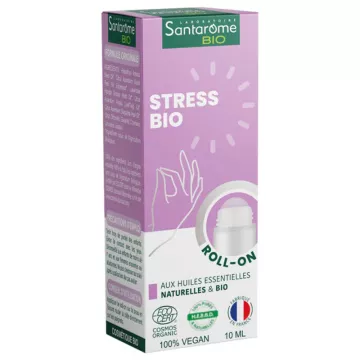
Petitgrain bigarade essential oil is extracted by steam distillation from the leaves and twigs of the bitter orange tree (Citrus aurantium ssp. aurantium). Its biochemical profile, dominated by esters (linalyl acetate 40–55%) and monoterpenes, gives it a relaxing, soothing, and nerve-rebalancing effect recognized in aromatherapy. It differs from neroli (flowers) and bergamot (zest), which come from the same tree. Explore our selection of aromatherapy products.
What is petitgrain bigarade?
Petitgrain bigarade (Citrus aurantium ssp. aurantium, leaf) belongs to the Rutaceae family—the same tree as neroli (flowers) and bitter orange (zest). Its essential oil is one of the most complex in the citrus family: rich in esters (linalyl acetate, geranyl acetate), linalool, α-terpineol, and β-myrcene. This ester-alcohol profile gives it properties that are calming, help restore nervous system balance, and provide mild muscle relaxation, without significant sedative effects. It should be distinguished from bergamot (zest, phototoxic)—petitgrain bigarade is not phototoxic.
What are its aromatherapeutic properties?
Petitgrain bigarade is one of the most versatile essential oils for the nervous system in aromatherapy.
- Nervous system rebalancing: documented adaptogenic action—calms states of hyperactivity and tones states of nervous hypotonicity as needed
- Supports emotional well-being: soothes emotional tension, restlessness, and chronic stress—without causing sedation or drowsiness
- Sleep support: helps people with hyperactive minds fall asleep — to be combined with sleep-promoting ingredients (valerian, passionflower) if necessary
- Mild antispasmodic (esters): supports digestive comfort related to nervous stress — applied topically to the abdomen
- Mild deodorizing and air-purifying action when diffused — highly appreciated “fresh” quality when diffused into the air
How to use petit grain bigarade?
There are many ways to use petitgrain bigarade—each with its own specific application method.
- Aromatherapy: 10–15 drops in an ultrasonic or nebulizing diffuser —30 minutes max every 2 hours—combine with bergamot or ylang-ylang for emotional balance
- Topical use: Always dilute in a carrier oil (sweet almond or jojoba oil) at a concentration of 2–5%—massage into the solar plexus, the nape of the neck, or the wrists
- Direct inhalation: 1–2 drops on the wrists or on a handkerchief — inhale gently 3 to 5 times — a quick method for managing occasional stress
- Care for oily/acne-prone skin: mix 1–2% into jojoba oil or a light cream—sebum-regulating action provided by monoterpenes
Recommended synergistic blends?
Petitgrain bigarade blends particularly well with several complementary essential oils.
- Neroli: “flower + leaf” blend from the bitter orange tree—a powerful emotional synergy for deep anxiety and grief
- Bergamot: “leaf + zest” blend—restores nervous system balance and promotes a bright mood (caution: bergamot is phototoxic if unrectified)
- Ylang-ylang: cardiovascular support + emotional comfort—a blend for deep relaxation when diffused
- Marjoram: nervous system balancer + muscle relaxant—a useful blend for simultaneous physical and mental stress
- Roman chamomile: deep nervous system calm — the ideal blend for anxiety-related insomnia
Precautions and contraindications?
Petitgrain bigarade is one of the best-tolerated essential oils—though a few precautions are still advised.
- Not phototoxic—can be used before sun exposure (unlike bergamot and citrus zest essential oils)
- Always dilute to 2–5% for topical use—test on the inner elbow 24 hours before first extensive use
- Pregnant women (first trimester) and infants under 3 months: avoid as a precaution—consult a doctor or pharmacist
- Asthma and respiratory hypersensitivity: use with caution when diffusing, for short periods only—discontinue if irritation occurs
- Store away from heat, light, and air—keep the bottle closed, in the refrigerator or in a cool, shaded place