What is joint range of motion, and how is it measured?
Joint mobility refers to the maximum range of motion available in a joint—measured in degrees by healthcare professionals using a goniometer. It is a key indicator of joint health, distinct from simple muscle flexibility. Our joint pain product line offers solutions tailored to your specific needs.
- Reference tests: deep squat (combined ankle-hip-spine mobility), forward reach test (posterior chain), shoulder internal rotation—used in sports medicine and physical therapy
- Reference ranges by joint: knee flexion ≥ 130°, shoulder flexion ≥ 160°, hip flexion ≥ 120°—values below these indicate a restriction that should be investigated
- Joint mobility decreases by an average of 6% per decade after age 50—but active individuals maintain ranges of motion close to those of younger people
- Not to be confused with laxity (ligament hypermobility): excessive range of motion can be just as problematic as reduced range of motion — more common in women due to hormonal and anatomical differences
What specific supplements support joint mobility?
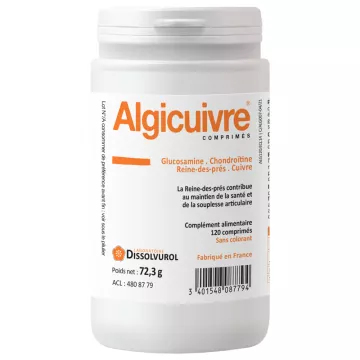
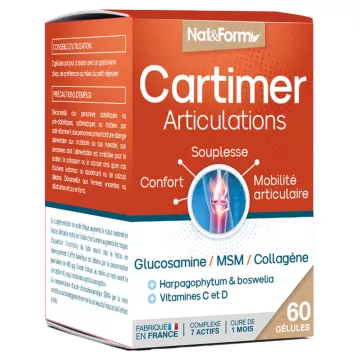
In addition to the traditional ingredients for joint comfort (glucosamine, chondroitin, collagen), two ingredients act more specifically on joint lubrication and flexibility.
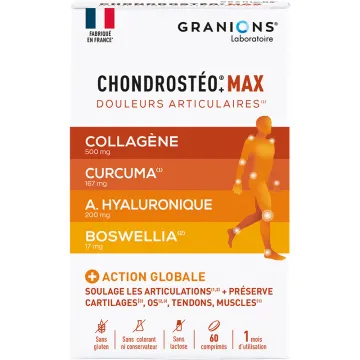
- Hyaluronic acid: the main component of synovial fluid—improves viscosity and lubricating properties—available as an oral supplement (low-molecular-weight molecules for better absorption) or as an intra-articular injection (viscosupplementation, by prescription)
- MSM (methylsulfonylmethane): an organic sulfur donor—plays a role in the synthesis of collagen and glycosaminoglycans—has anti-inflammatory and softening effects on connective tissues—effective dosage: 1,000–3,000 mg/day
- Glucosamine: also improves the production of synovial fluid in addition to its role in cartilage
- Omega-3: reduces synovial inflammation, which is often the direct cause of limited range of motion
- Turmeric (curcumin): Inhibits pro-inflammatory cytokines (IL-1β, TNF-α) responsible for cartilage degradation and capsular fibrosis
What role does physical therapy play in restoring mobility?
Physical therapy is the first-line treatment for mobility restrictions resulting from trauma, surgery, or osteoarthritis—in addition to available pain relief options.
- Passive mobilization: The physical therapist moves the joint beyond the patient’s active range of motion—a technique for gradually increasing the range of motion
- Targeted muscle-tendon stretches: distinguishing between muscle-related restrictions (which respond well to stretching) and capsular restrictions (which require specific techniques)
- Proprioception techniques: rehabilitation of neuromuscular coordination—crucial after a sprain or surgery to regain functional and safe mobility
- Pre-session thermotherapy: heat applied 10–15 minutes before mobilization—improves tissue viscosity and facilitates range-of-motion work
- A physical therapy evaluation is recommended if the mobility restriction lasts more than 3 weeks without spontaneous improvement
How can you maintain joint mobility in your daily life based on your individual profile?
- Sedentary individuals and those with desk jobs: Take a break every 45–60 minutes to perform joint rotations (ankles, wrists, hips, shoulders)—5 minutes is enough to reactivate synovial fluid production
- Athletes: Distinguish between warm-ups (dynamic mobilization before exercise) and mobility exercises (static and deep, reserved for after workouts or dedicated sessions)
- Seniors: gentle yoga, tai chi, water aerobics—activities with partial or total weight-bearing reduce stress on the joints while maintaining range of motion without risk of injury to weakened cartilage—see our joint care product line
- People with rheumatic conditions: mobility exercises outside of inflammatory flare-ups—during flare-ups, maintain range of motion through gentle, low-impact mobility exercises
- Hydration: 1.5 to 2 L of water per day—synovial fluid is 92% water; dehydration directly reduces joint fluidity