Intestinal permeability refers to the ability of the intestinal mucosa to filter what passes into the bloodstream—a function maintained by the tight junctions between epithelial cells (enteroocytes). When these junctions widen, bacterial fragments and partially digested food molecules pass into the bloodstream, triggering a low-grade systemic immune response. This mechanism, often referred to as “leaky gut,” is increasingly well documented. Discover our digestive comfort ingredients.
How does the intestinal barrier work?
The intestinal barrier is a multilayered system—its integrity depends on several simultaneous factors.
- Tight junctions: ZO-1, claudin, and occludin proteins linking enterocytes—the primary lock of the paracellular barrier
- Mucus layer: produced by goblet cells—the first line of defense before the epithelium
- Secretory IgA: mucosal immunoglobulins that prevent pathogens from adhering to the epithelium
- Microbiota: microbial barrier through competitive exclusion and production of SCFA (butyrate, which strengthens tight junctions)
- Zonulin is the primary regulatory protein of tight junctions—its levels in the blood or stool are used as a marker of intestinal permeability
What factors increase intestinal permeability?
Several everyday factors have been shown to weaken the intestinal barrier.
- Ultra-processed foods: emulsifiers (carrageenans, polysorbate 80) directly implicated in the disruption of tight junctions in animal studies
- Antibiotics: depletion of the protective microbiota—reduced production of butyrate, the energy source for enterocytes
- NSAIDs (ibuprofen, aspirin): inhibition of mucosal-protective prostaglandins—documented increased gastrointestinal permeability
- Chronic stress: cortisol increases permeability via intestinal mast cells and the brain-gut axis
- Alcohol, gluten (in cases of celiac disease or non-celiac gluten sensitivity), excess fructose — documented disruptors of the epithelial barrier
Ingredients that support the intestinal barrier?
Several dietary supplements directly support the integrity of tight junctions and the mucosa.
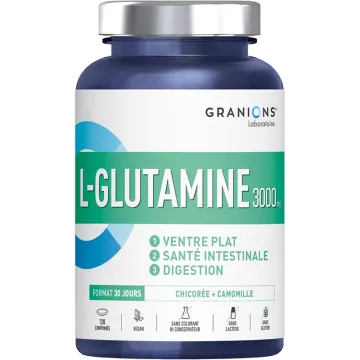
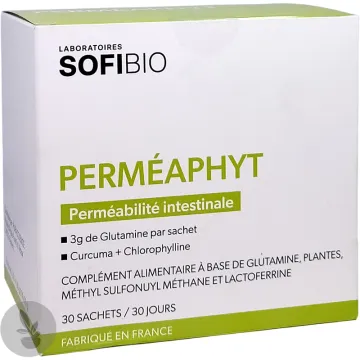
- Glutamine / L-glutamine: the primary fuel for enterocytes — glutamine is the most extensively studied conditionally essential amino acid for the intestinal barrier; 5–10 g/day is documented to maintain the mucosa
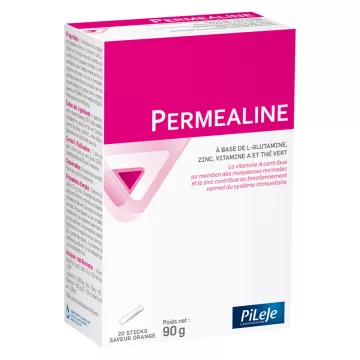
- Zinc: an essential cofactor for the synthesis of tight junction proteins (ZO-1, occludin)—deficiency has been documented in individuals with increased intestinal permeability
- Quercetin: a flavonoid shown in several studies to strengthen tight junctions and modulate the mucosal immune response
- Vitamin D3: directly regulates the expression of tight junction genes (claudin-2, occludin)—deficiency is associated with increased intestinal permeability
- Collagen: the amino acids glycine and proline are components of the mucosal structural proteins
Probiotics and prebiotics for the intestinal barrier?
Probiotics and prebiotics affect the barrier through indirect but powerful mechanisms.
- Bacterial butyrate: produced by the fermentation of fiber by Faecalibacterium prausnitzii and Roseburia —the primary energy source for colonocytes and a regulator of tight junctions
- Akkermansia muciniphila: a “sentinel” bacterium of the mucus layer—its abundance is inversely correlated with intestinal permeability; substrate: pectins
- Lactobacillus rhamnosus GG: strengthening of tight junctions documented in several in vitro and clinical studies
- See our line of products for digestive disorders
How can you assess your intestinal permeability?
Several tools can be used to objectively assess intestinal permeability—ranging from the most accessible to the most technical.
- Functional signs: multiple food sensitivities, unexplained fatigue after meals, chronic bloating, recurrent skin rashes—nonspecific warning signs
- Fecal or serum zonulin: a marker of tight junction regulation—available through a laboratory by prescription or as a direct-to-consumer test kit
- Lactulose/mannitol test: the absorption ratio of the two sugars reflects paracellular permeability—the gold standard in clinical research
- Fecal calprotectin: a marker of intestinal inflammation—not specific to permeability but useful for assessing the inflammatory state of the mucosa
- These tests must always be interpreted within a clinical context—the physician or gastroenterologist remains the primary point of contact