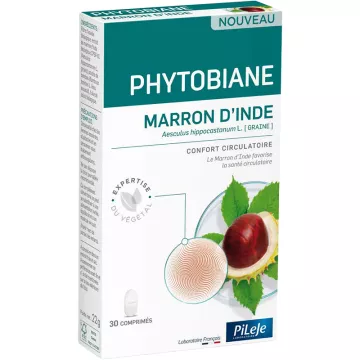
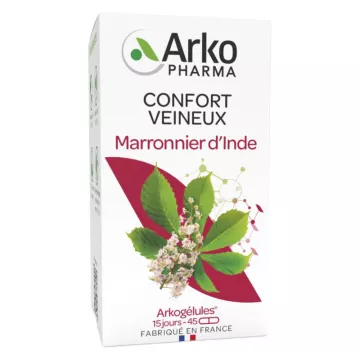
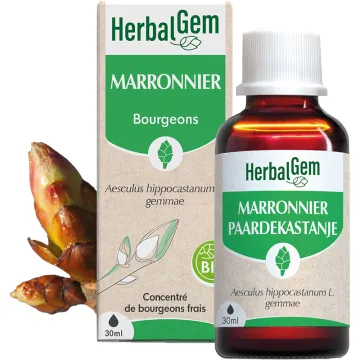
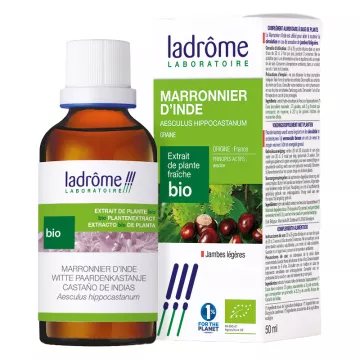
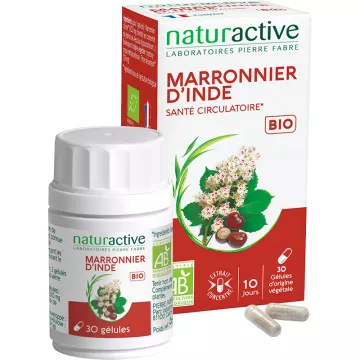
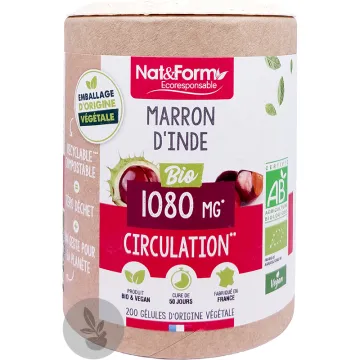
The horse chestnut is the fruit ofAesculus hippocastanum, a tree in the Sapindaceae family native to the Balkans and widely planted in Europe. Not to be confused with the edible chestnut, this fruit is not suitable for consumption in its raw form. It is the extraction and standardization of its active ingredients that make it one of the best-documented plant-based venotonics. Its use is recognized by the EMA and ESCOP for the symptomatic treatment of chronic venous insufficiency.
Aescin, a mixture of triterpene saponins, is the key active compound. It acts synergistically with flavonoids (quercetol, kaempferol) and coumarins (esculoside). Its properties include:
Aescin acts through several converging mechanisms: it reduces capillary permeability (limiting plasma leakage into tissues, and thus edema), increases the tone of the venous wall, exerts an antioxidant effect, and inhibits certain lysosomal enzymes involved in the degradation of venous collagen. This multifaceted pharmacological profile explains its central role in circulatory herbal medicine and its inclusion in Cochrane reviews on venous insufficiency.
Yes, and this is one of the indications best supported by the scientific literature. For varicose veins and chronic venous disease, standardized escin extracts provide a documented improvement in sensations of heaviness, itching, and edema, comparable to elastic compression in certain parameters. For hemorrhoids, its anti-edematous and venotonic effects explain its value as an internal treatment, in addition to local therapy. Any persistent anal pain, bleeding, or changes in bowel movements warrants a medical consultation.
Its ability to reduce capillary permeability makes it a key component in natural approaches to treating lower limb edema associated with standing, heat, or poor venous return. It also supports management of episodes of water retention, in conjunction with a healthy lifestyle (mobility, elevating the legs, hydration, compression if recommended).
The dosage forms depend on the intended use:
There are numerous complementary venotonic synergies: