What is escin, and where does it come from?
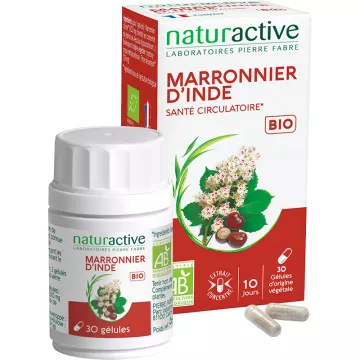
Aescin is a mixture of triterpene saponins extracted from the seeds of the horse chestnut (Aesculus hippocastanum L.). It is the main veinotonic active ingredient in this medicinal plant, which has been used for decades in herbal medicine and pharmacology to treat chronic venous insufficiency. Aescin is available as a dietary supplement and in topical form in the store’s “heavy legs” and “venous circulation” product lines.
- Biochemical structure: a mixture of α-escin and β-escin—β-escin is the most biologically active fraction—acts by inhibiting elastase and hyaluronidase (enzymes that break down vascular walls) → strengthening of venous walls and reduction in capillary permeability
- Scientific validation: positive Cochrane meta-analyses on chronic venous insufficiency — EMA: well-established traditional use — EMA monograph on Aesculus hippocastanum seed extract standardized to 16–21% escin — one of the most well-documented venotonic plants in phytotherapy
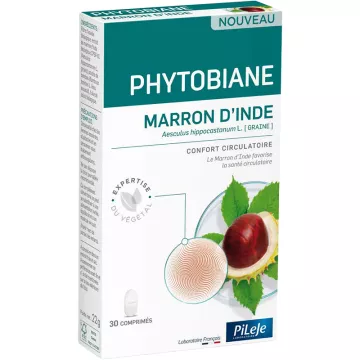
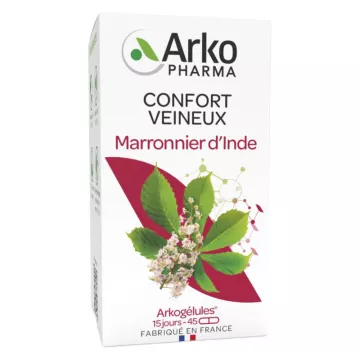
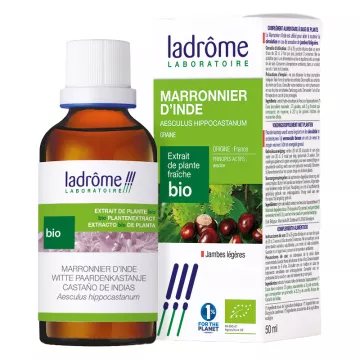
- Available forms: topical gels and creams (applied locally to heavy legs, varicose veins, and edema) — capsules and tablets (standardized extract taken orally) — oral solutions (often combined with other venotonic agents)
What are the effects of escin on venous and lymphatic circulation?
- Venotonic: increases the tone of vein walls — improves venous return from the lower extremities — reduces the sensation of heavy, tired legs at the end of the day
- Anti-edematous: reduces capillary permeability → decreases fluid leakage into tissues → reduces ankle edema and post-traumatic swelling — accelerates the resolution of bruises and contusions
- Vascular anti-inflammatory: inhibits the release of prostaglandins and pro-inflammatory factors at the venous wall
- Support for varicose veins: reduces dilation of vein walls and the progression of spider veins — supports venous compression — does not replace medical treatment for severe varicose veins
- Hemorrhoids: local vasoconstriction and anti-inflammatory effect — provides relief during hemorrhoid flare-ups — see venous circulation care
How to use escin and what precautions should be taken?
- Topical application (gel or cream): 1 to 2 applications per day — massage in a circular motion from the bottom up on the legs — in the morning upon waking and in the evening — visible results on swelling and heaviness within 2 to 4 weeks — test on a small area first (rare risk of skin irritation)
- Oral use (capsules): 250 to 500 mg/day of standardized extract containing 16–21% escin — as a 4- to 8-week course of treatment, which may be repeated — take with a meal to improve digestive tolerance
- Beneficial combinations: red vine (vasoprotective OPCs—synergistic venotonic combination) — Ginkgo biloba (peripheral microcirculation—complementary action) — witch hazel (capillary protection—frequently used topically) — arnica (bruises and contusions—as a topical gel)
- Contraindications and precautions:
- Contraindicated with anticoagulant treatments (increased risk of bleeding — medical advice required)
- Not recommended during pregnancy and breastfeeding (insufficient data)
- Use with caution in cases of severe renal insufficiency
- Do not apply to broken or irritated skin
- In cases of phlebitis or active thrombosis: escin is not a substitute for medical treatment—consult a doctor