What is a hazel tree?
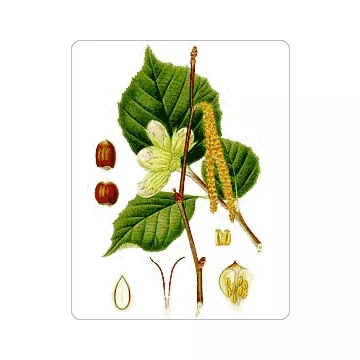
The hazel tree (Corylus avellana), also known as the European hazel, is a shrub or small tree in the Betulaceae family, native to Europe and Asia. Recognizable by its hanging male catkins in the spring and its iconic fruits, hazelnuts, it is valued in herbal medicine for its leaves, bark, buds, and oil. The leaves are rich in flavonoids (myricitrin, quercetol), tannins, and proanthocyanidins, while hazelnuts provide monounsaturated fatty acids, vitamin E, and magnesium.
What are the benefits of the hazelnut tree?
Its traditional and nutritional uses span several areas:
- Support for blood circulation through the leaves, traditionally associated with relief from heavy legs;
- Antioxidant benefits from the flavonoids and vitamin E in the fruit;
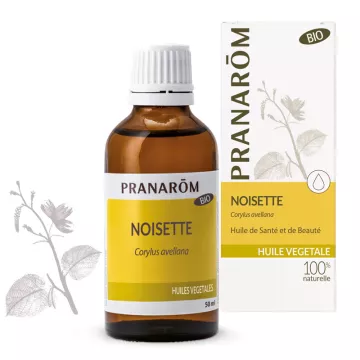
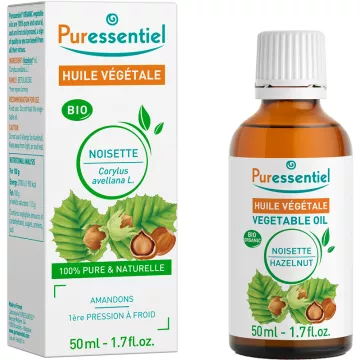
- Skin care with the oil, particularly for combination to oily skin;
- Nutritional benefits of hazelnuts: omega-9, magnesium, and vitamin E;
- Support for the body’s systems through buds in gemmotherapy, specifically for the respiratory and circulatory systems.
What are buds used for in gemmotherapy?
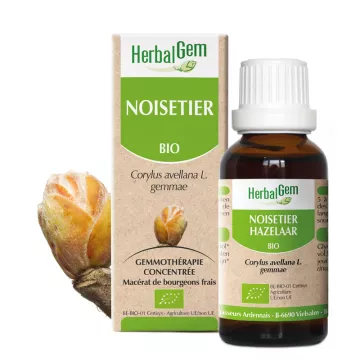
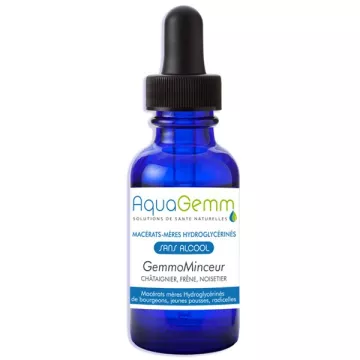
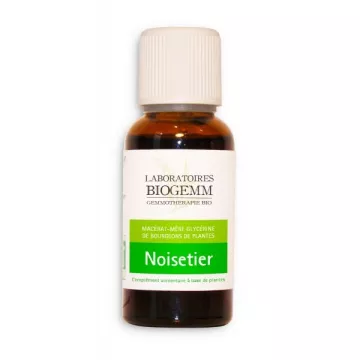
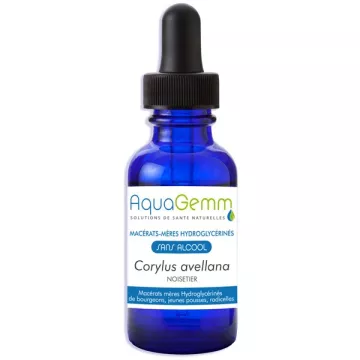
The mother macerate of Corylus avellana buds is one of the most commonly used gemmotherapy preparations by herbalists. It is traditionally used to support the respiratory system (to help with congested bronchial tubes and recurrent ENT infections) and the microcirculatory system. Usual dosage: 5 to 15 drops of the 1D-dilution glycerin macerate in a glass of water, 1 to 3 times a day, as a 3-week course of treatment. Consult a pharmacist to tailor the regimen to each individual’s needs.
Is hazelnut oil beneficial for the skin?
Yes,virgin hazelnut oil is particularly beneficial:
- It penetrates the skin and is non-comedogenic, making it suitable for skin with excess sebum;
- It helps regulate sebum production thanks to its omega-9 and phytosterol content;
- Nourishing without feeling “greasy,” suitable for combination skin;
- Can be used as an oil-based makeup remover to dissolve oxidized sebum;
- Rich in vitamin E, providing antioxidant protection for the skin;
- Also popular as a hair oil for hair with oily roots and dry ends.
What nutritional benefits do hazelnuts offer?
Hazelnuts are one of the most nutritionally complete nuts: 60% fat, mostly unsaturated (omega-9), 15% plant-based protein, 10% fiber, and a micronutrient profile rich in vitamin E (15 mg/100 g), magnesium (160 mg/100 g), manganese, copper, and folate. A daily handful (25 to 30 g) is in line with the recommended intake of nuts for general cardiovascular health, as part of a balanced diet.
Are hazelwood bracelets safe?
No—especially for babies and young children. Hazelwood bracelets and necklaces are strongly discouraged by the DGCCRF and ANSES for infants. The documented risks are serious:
- Strangulation by the cord or chain;
- Choking from accidentally swallowing a bead or a fragment;
- No proven effectiveness for teething.
To relieve teething discomfort, opt for CE-certified teething rings, gentle gum massage, cool water, or consult a pharmacist. Never leave any jewelry within an infant’s reach.
What precautions should be taken with hazelnut wood?
- Nut allergy: strictly contraindicated; risk of a severe reaction, including angioedema (emergency: 15 or 112);
- Allergy to Betulaceae pollen (hay fever): possible cross-reaction;
- Gemmotherapy: Consult a pharmacist for pregnant or breastfeeding women and children;
- Hazelnut oil: possible skin sensitivity upon application; perform a patch test on the inner elbow;
- Storage of the oil: Keep refrigerated and protected from light (sensitive to oxidation);
- Wooden bracelets and necklaces: never use on infants or young children.
Which plants can be combined with hazelnut?
Plant synergies vary depending on the intended use:
- Hornbeam and viburnum buds in gemmotherapy to enhance respiratory support;
- Horse chestnut and red vine to enhance the effect on venous circulation;
- Jojoba oil as a synergistic addition for combination skin;
- Walnut for digestive and detoxifying benefits (botanical relationship, complementary properties).