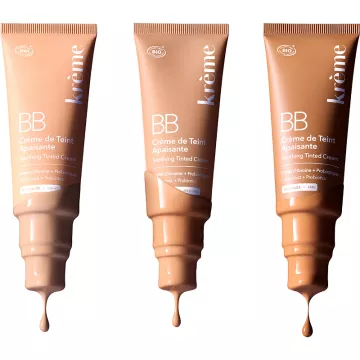
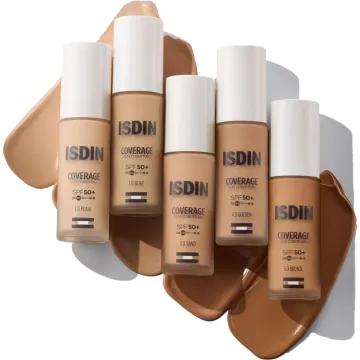
Foundation is a cosmetic product designed to even out the complexion, visually minimize imperfections, and create a smooth base for the rest of your makeup. It’s probably the most versatile product in your complexion routine.
Its formula combines pigments, emollients, preservatives, and active cosmetic ingredients to create a smooth, even surface. Depending on the formula, it offers buildable coverage, ranging from very light (“second-skin” effect) to full (high coverage for uneven skin tones), with a matte, satin, or luminous finish. When used correctly, it complements your skincare routine without masking it, and is a must-have for achieving a flawless complexion.
The choice of foundation depends first and foremost on your skin type. An unsuitable product will yield disappointing results, even when applied with the best technique.
For oily skin, opt for mattifying, non-comedogenic foundations that control shine without clogging pores. For dry skin, choose moisturizing formulas with a satin finish enriched with emollients (hyaluronic acid, glycerin, plant oils) to avoid a powdery look and dry patches. For combination skin, look for balancing products that mattify the T-zone while moisturizing the cheeks. For delicate and sensitive skin, choose hypoallergenic foundations with a short INCI list, no added fragrance, and dermatologically tested. A tinted moisturizer with built-in SPF remains an excellent, simplified option for minimalist routines.
Textures influence the finish, ease of application, and staying power. Four main categories cover most needs.
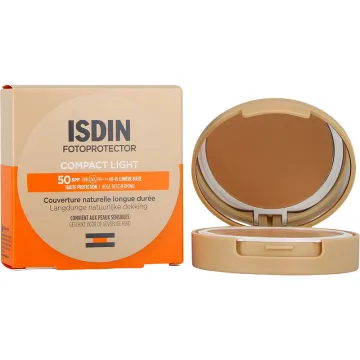
Liquid foundations are the most versatile: they offer buildable coverage depending on application technique and can be applied with a brush, sponge, or fingers; they’re suitable for most skin types. Compact powder foundations provide a natural mattifying effect and are ideal for oily skin types looking for a quick application; they offer lighter coverage and a smooth, even finish. Cream foundations offer greater coverage and nourish the skin thanks to their moisturizing ingredients, making them perfect for dry or mature skin seeking a “skincare” effect. Mousse foundations, which are light and airy, provide a natural and subtle finish, making them ideal for “no-makeup” looks and warm climates. The new “skin tint” or “second-skin” formulas offer a hybrid effect between tinted moisturizer and lightweight foundation.
A structured technique distinguishes a well-applied foundation from a haphazard application. Four steps make up the professional routine.
Skin preparation: gentle cleansing, alcohol-free toner, and a moisturizer suited to your skin type, allowing it to absorb for two to three minutes. Apply a primer suited to your skin concerns (mattifying for the T-zone, hydrating for dry skin, pore-blurring ) to smooth the skin’s surface and improve foundation adhesion. Apply foundation in thin layers, starting from the center of the face (forehead, cheeks, nose, chin) and blending outward using a flat brush, a damp sponge with light tapping motions, or your fingers for a more seamless finish; build up coverage as needed rather than applying a single thick layer. Set with a fine powder (translucent or very lightly tinted) on shiny areas (T-zone) to prolong wear, followed by a setting spray if you have a long day ahead.
The longevity of your foundation depends as much on how you prepare your skin as on the product itself. Five complementary steps significantly improve its staying power.
Using a suitablemakeup primer creates a barrier between the skin and the foundation and improves its adhesion. Make sure to moisturize your skin thoroughly beforehand (paradoxically, dehydrated skin causes foundation to slide off more quickly). Choose products that are compatible with each other: if your skincare contains silicones, opt for a silicone-compatible primer and foundation to avoid a cakey finish. Set your foundation with a thin layer of mattifying or translucent powder on shiny areas. Refresh with a setting spray as a finishing touch and throughout the day to revitalize the look. Avoid touching your face frequently and keep a mini touch-up kit (compact powder, concealer stick) on hand for quick touch-ups.
Sensitive skin often reacts poorly to certain ingredients commonly found in foundations. Reading INCI labels helps you identify the best formulations to choose.
Added fragrances (listed as “Parfum” or “Fragrance” in the INCI) are the leading cause of skin sensitization and allergic contact reactions; look for them first to avoid them. Certain preservatives (methylisothiazolinone, methylchloroisothiazolinone, formaldehyde, and formaldehyde-releasing agents) are known for their sensitizing potential, and their use is now restricted. Synthetic dyes can occasionally cause intolerances in people with atopic skin. Drying alcohols (listed as “Alcohol Denat.” at the beginning of the INCI list) can weaken the skin barrier over the long term. Opt for hypoallergenic formulas with a short INCI list that have been dermatologically tested, and perform a 48-hour tolerance test in the crook of the elbow before first use. The hypoallergenic selection includes suitable products.
Choosing the right shade is probably more important than choosing the product itself. The wrong shade immediately creates a “mask-like” effect that’s noticeable in daylight.
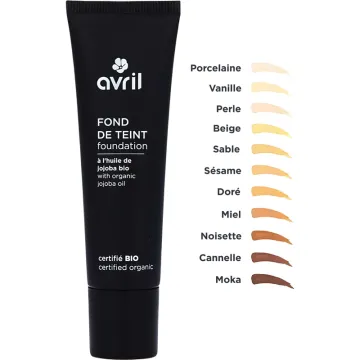
The golden rule: test the shade along the jawline or on the upper neck, where the skin is closest to the face. Never test on the wrist or the back of the hand, as the skin tone there differs significantly. Check in natural light near a window; never under artificial lighting, which alters color perception. Identify your undertone: warm undertone (greenish veins on the wrist, skin that tans in the sun) with foundations that have a “warm” or “golden” base; cool undertone (bluish veins, skin that reddens) with foundations that have a “cool” or “rosy” undertone; neutral undertone. Plan for seasonal changes in skin tone: have two shades on hand (a light one for winter, a slightly darker one for summer) and adjust them by mixing them during the transition.
The finish of the foundation determines the overall effect of the makeup. The choice depends on skin type, age, and the desired result.
A matte foundation provides a shine-free finish and keeps the look in place over time. It’s particularly suitable for oily and combination skin types that want to control shine, and for occasions where long-lasting wear is a priority. One thing to keep in mind: on dry or mature skin, a matte finish can accentuate fine lines and dry patches. A luminous (or “dewy”) foundation provides a subtle glow and a rejuvenating “healthy glow” effect. It is suitable for dry, normal, and mature skin types looking to revitalize their complexion and achieve a radiant look. The satin or velvety finish, which is somewhere in between, remains the most versatile choice, suitable for most skin types. For combination skin, some users apply a matte foundation to the T-zone and a luminous product sparingly on the cheekbones.
Daily use of foundation is by no means mandatory. It’s primarily a matter of personal preference, context, and actual need.
For skin with an uneven complexion or visible imperfections, a lightweight foundation can provide significant visual comfort on a daily basis and boost self-confidence. For even-toned skin, a BB cream, tinted moisturizer, or skincare product with built-in SPF offers a lighter alternative—sufficient for casual days or working from home. The key is to tailor the coverage to the situation: full coverage for events or formal occasions, and a light “second-skin” finish for everyday wear. What matters more than daily makeup use is a solid skincare routine beforehand (cleansing, moisturizing, sun protection) and thorough makeup removal in the evening to preserve skin health in the long term.
Makeup removal is probably the most important step in your skincare routine. Foundation that isn’t properly removed clogs pores, promotes breakouts, and damages skin quality over time.
The double-cleansing method has proven effective. Start with an oil-based makeup remover (oil, balm, or two-phase cleanser) that effectively dissolves pigments, sunscreen, and long-wearing, water-resistant foundation. Gently massage the product into dry skin for one minute, then emulsify with a little water to transform the oil into a milk, and rinse. Follow up with a gentle water-based cleanser (gel, foam, milk, micellar water) suited to your skin type to remove any remaining residue and impurities. Gently focus on the area around the nose, the hairline, and the jawline—areas where foundation tends to accumulate. Finish withmoisturizer and an eye cream. The full selection is available in the facial makeup removers category, and the natural makeup removers selection is available for those seeking clean formulas.