What is articular cartilage, and why doesn't it regenerate on its own?
Articular cartilage is an avascular connective tissue—lacking blood vessels and nerves—that covers the ends of bones in joints. This lack of blood supply explains its very limited ability to regenerate spontaneously: a cartilage injury does not heal like a skin wound. This is why preventive care is far more effective than repair. Our joint pain product line offers the appropriate chondroprotective ingredients.
- Composition: 65–80% water, type II collagen (structure), proteoglycans (compressive strength), chondrocytes (the only cells in cartilage, present in small numbers)
- Nutrition: through absorption of synovial fluid during movement—immobility deprives cartilage of nutrients and accelerates its degradation
- Partially irreversible: Advanced cartilage degradation cannot be completely reversed—the strategy is to slow progression and relieve symptoms
- For established conditions (stages 2–4), see our pages on osteoarthritis and joint pain
What are the early signs of cartilage degradation?
Detecting cartilage degradation early is crucial—the early stages can still be managed with chondroprotective supplements and lifestyle changes.
- Mechanical pain: occurring during physical activity or at the end of the day, relieved by rest—different from inflammatory pain that persists at night
- Short-lived morning stiffness (< 30 minutes): a sign of early osteoarthritis—to be distinguished from prolonged stiffness (> 30 min), which points to inflammatory arthritis
- Joint crepitus (crackling) during movement—painless in the early stages, painful in advanced stages
- Difficulty walking down stairs involving the knees—a classic early sign of patellar chondropathy or femorotibial osteoarthritis
- If these symptoms persist for more than 6 weeks, a medical consultation and X-ray evaluation are warranted
Which chondroprotective agents help preserve cartilage?
Chondroprotective supplements act on the mechanisms of cartilage degradation and synthesis—their effectiveness is dose- and duration-dependent.
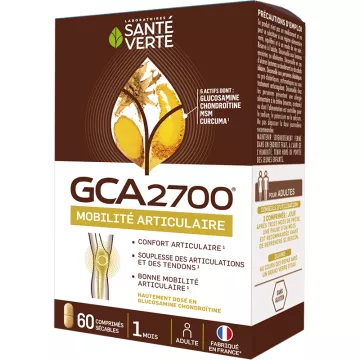
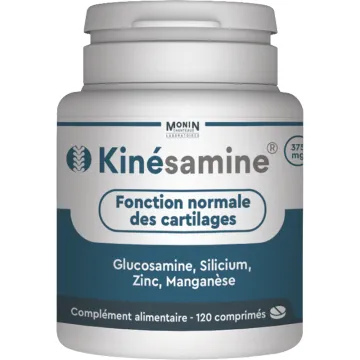
- Glucosamine: a precursor to cartilage proteoglycans—stimulates synthesis by chondrocytes—1,500 mg/day—a treatment course of at least 3 months is needed to assess the effect
- Chondroitin: inhibits metalloproteinases (enzymes that break down cartilage)—retains water in the cartilage matrix— chondroitin product line
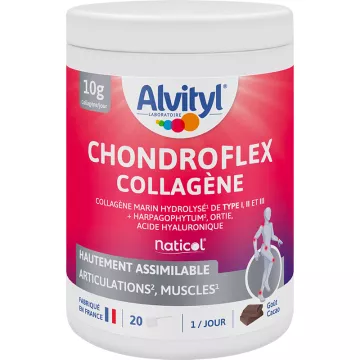
- Hydrolyzed marine type II collagen: directly supplies the amino acids that make up cartilage collagen — provides glycine, proline, and hydroxyproline — joint collagen line
- Vitamin C: an essential cofactor for collagen synthesis (proline hydroxylation) — often overlooked, yet essential for collagen’s effectiveness
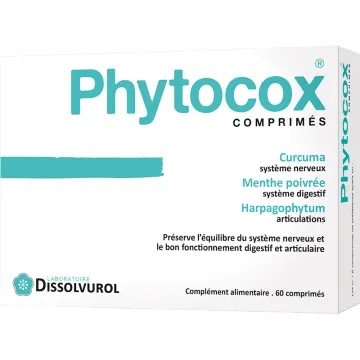
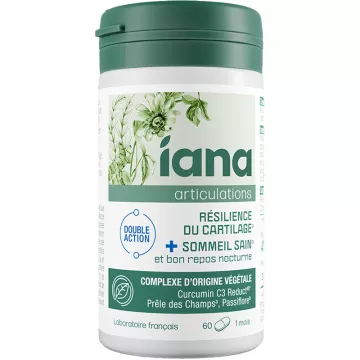
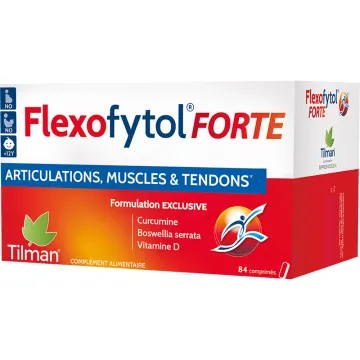
- Turmeric (curcumin): inhibits cartilage degradation pathways (NF-kB, MMP-13) — anti-inflammatory for the synovial membrane — bioavailability needs to be optimized
How can you protect your cartilage in the long term?
Preserving cartilage is a long-term effort that combines several approaches complementary to supplements—our joint comfort page details these comprehensive strategies.
- Body weight: Losing 5 kg reduces pressure on the knee by 15 to 25 kg with each step — weight management is the most effective chondroprotective measure
- Appropriate physical activity: swimming, cycling, Nordic walking—maintains cartilage nutrition through imbibition without mechanical overload—inactivity is just as harmful as overloading
- Avoid repetitive movements involving extreme loads: prolonged kneeling, frequent deep squats, carrying heavy loads while bent over—factors that accelerate wear and tear
- Hydration: Cartilage is 65–80% water — at least 1.5 to 2 L per day
- A diet rich in vitamin C (citrus fruits, kiwi, bell peppers), omega-3s (fatty fish), and antioxidants—protects chondrocytes from oxidative stress