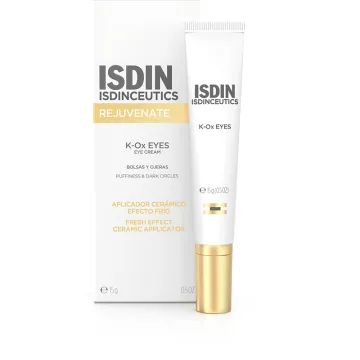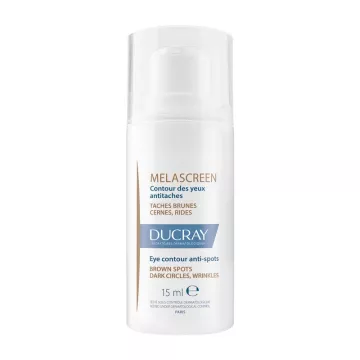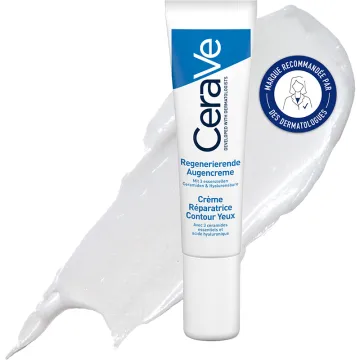
Not all under-eye bags are the same—two radically different mechanisms require distinct approaches. Fat bags (pseudo-hernias of orbital fat) result from the thinning of the orbital septum with age—they are permanent, cannot be reduced by cosmetics, and require blepharoplasty. Watery bags (periorbital edema) result from an accumulation of interstitial fluid beneath the thin suborbital skin—they are temporary, most pronounced in the morning and reduced by evening, and respond to decongestant treatments, venotonics, and drainage techniques. This distinction entirely determines the choice of treatment.
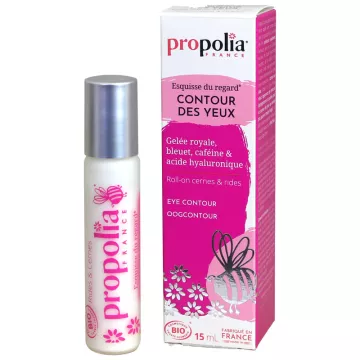
A saponosidic triterpene derived from horse chestnuts,escin is the best-documented plant-based venotonic for periorbital edema. It reduces capillary permeability by inhibiting endothelial hyaluronidase, stimulates venous and lymphatic return, and inhibits pro-inflammatory prostaglandins. Propolia Eye Contour Roll-On combines topical escin with the draining effect of the cooling roll-on applicator. When taken orally (40 to 150 mg/day), its effectiveness against venous edema has been documented in several randomized clinical trials.
Arnica (Arnica montana) is used in homeopathy at low dilutions (5 to 9 CH) to accelerate the resolution of periorbital hematomas and reduce local inflammation—which is relevant for post-traumatic purplish dark circles or puffiness associated with chronic venous stasis. When applied topically (as a cream or gel containing 3–15% mother tincture), its helenalin exerts a direct anti-inflammatory and anti-edematous effect. Never apply to broken skin or in contact with the ocular mucosa.
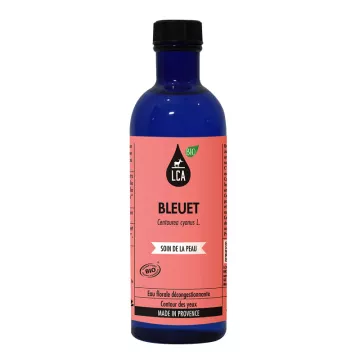
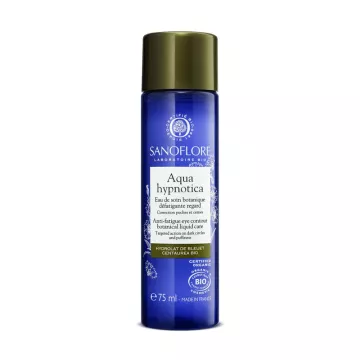
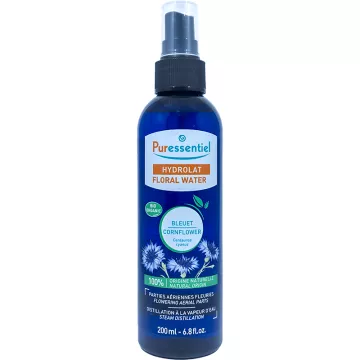
Menthol activates the TRPM8 receptors in the periorbital skin, creating a local reflex vasoconstriction that immediately reduces puffiness—this is the active principle behind “refreshing” eye contour treatments such as Jonzac Rehydrate. Cornflower hydrosol (Centaurea cyanus, pH 4.5–5) exerts a mild astringent effect on the superficial suborbital capillaries. When applied as a cold compress for 5 minutes in the morning, its decongestant effect and soothing properties for the eyes are well-documented.
Royal jelly (10-hydroxy-2-decenoic acid, 10-HDA) inhibits NF-kB and stimulates periorbital dermal fibroblasts—its anti-inflammatory action reduces the capillary fragility responsible for recurrent under-eye bags. High-molecular-weightsodium hyaluronate forms a hygroscopic film that reduces periorbital TEWL—better-hydrated skin is more resistant to the accumulation of interstitial fluid responsible for morning under-eye bags.
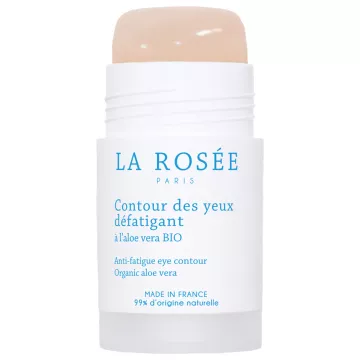
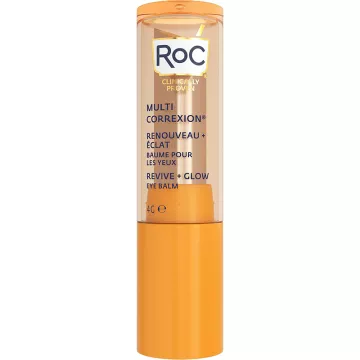
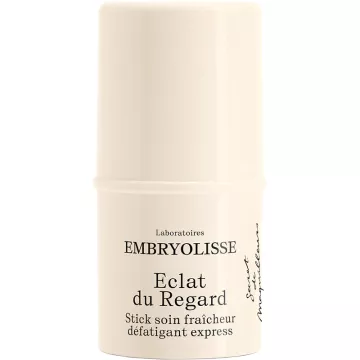
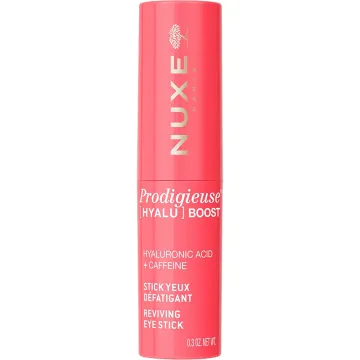
In addition to topical active ingredients, drainage techniques enhance and accelerate the reduction of watery puffiness. Manual lymphatic drainage of the suborbital area: three light presses with the fingertips (index or ring finger) from the inner corner toward the outer corner, then toward the temple up to the preauricular gland—this path follows the natural lymphatic drainage of the suborbital area toward the preauricular lymph nodes. Repeated 5 times each morning, it reduces interstitial edema in 3 to 5 minutes. The cooling roll-on (La-Rosée Anti-Fatigue Stick) combines this mechanical drainage technique with cold-induced vasoconstriction—clinically proven to reduce morning puffiness after just 15 days of regular use.