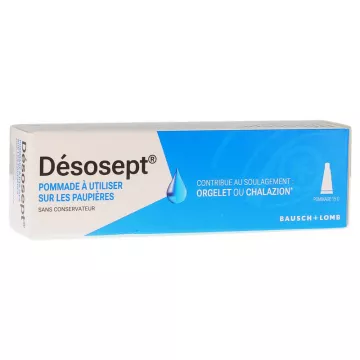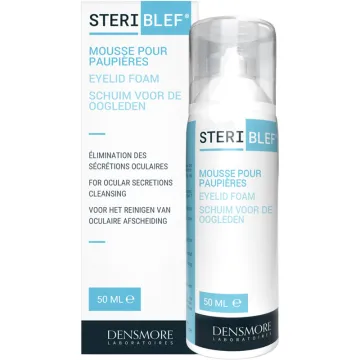


Although often confused,a stye and a chalazion are two distinct eyelid conditions. A stye is an acute infection of an eyelash follicle or a Zeiss gland caused by Staphylococcus aureus —it forms at the free edge of the eyelid, is painful, and progresses within a few days to a purulent collection. A chalazion, on the other hand, is a chronic, aseptic inflammation of a Meibomian gland—located deeper within the eyelid, painless or only slightly painful, and developing slowly over several weeks. A poorly treated stye can develop into a chalazion due to persistent obstruction of the follicle.
Moist heat is the recommended first-line treatment before resorting to topical antibiotics. Applied at 38–40 °C for 5 to 10 minutes, 3 to 4 times a day, it liquefies the contents of the infected gland, promotes maturation and spontaneous drainage, and improves local microcirculation. Comparative studies show that this is sufficient to resolve 70 to 80% of uncomplicated styes within 5 to 7 days. You should never lance or squeeze a stye yourself—there is a risk of pre-septal cellulitis due to the spread of infection to the entire eyelid.
As a broad-spectrum natural antiseptic, propolis is the most well-documented active ingredient against Staphylococcus aureus —the bacterium responsible for 90% of styes. Its phenolic esters (CAPE, artepillin C) inhibit the growth of S. aureus, including certain MRSA strains, according to in vitro studies. When applied topically as eye drops containing 5–10% dry extract, it complements treatment with compresses. Its anti-inflammatory action (NF-kB inhibition) reduces eyelid erythema and edema. Usage: Always use under the guidance of a pharmacist; never apply undiluted to the ocular mucous membranes.
Chamomile (Matricaria chamomilla) is the go-to soothing active ingredient for natural eye care. Its azulene and alpha-bisabolol inhibit the release of histamine and pro-inflammatory leukotrienes—reducing itching and eyelid erythema. An infusion cooled to 37–38 °C can be used as a compress. Caution: Cross-allergy with the Asteraceae family is possible—test first.
Calendula (Calendula officinalis) has healing and mild antiseptic properties. Its flavonoids (quercetin) and triterpenes (faradiol) reduce inflammation and accelerate epidermal repair following natural drainage. Use only as a floral water or diluted aqueous extract—never use an alcohol-based preparation in contact with the eyes.
Recurrent styes (more than 2–3 episodes per year) often indicate local immune weakness. Vitamin C (500 mg to 1 g/day) supports the anti-staphylococcal response by stimulating neutrophil phagocytosis and strengthening the eyelid epithelial barrier. Epidemiological studies link vitamin C deficiency to an increased susceptibility to Staphylococcus skin infections. A 4- to 8-week course of treatment may be recommended to prevent recurrences, in addition to strict eyelid hygiene.
Most styes resolve with local care. The “Irritated Eyes” page details additional care measures to promote eyelid comfort. An ophthalmological consultation is required immediately if the stye does not improve after 7 days, if the swelling spreads to the entire eyelid or the periorbital region, if a fever develops, if vision becomes blurred, or if recurrences are frequent. These signs may indicate preseptal cellulitis, which requires systemic antibiotic therapy or surgical drainage.