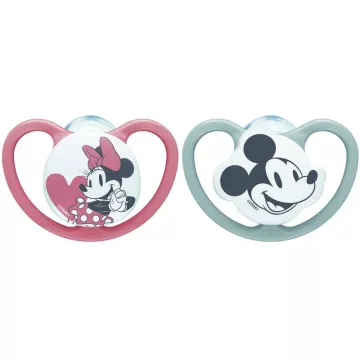
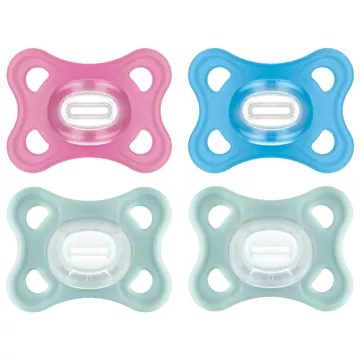
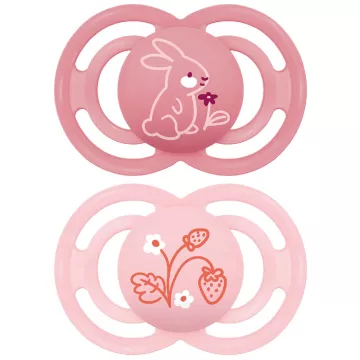
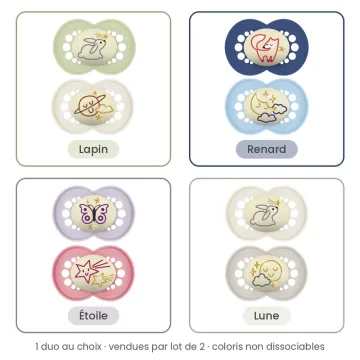
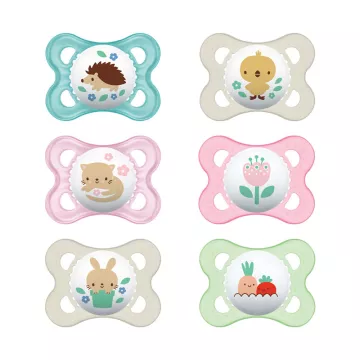
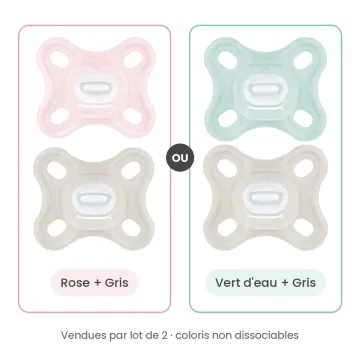
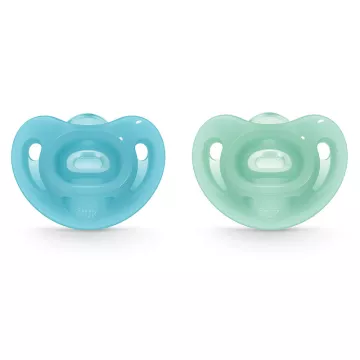
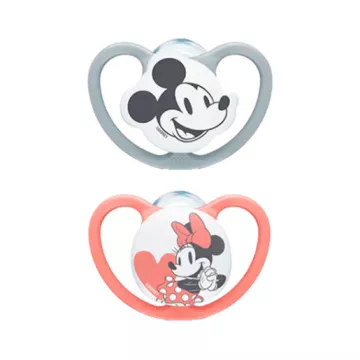
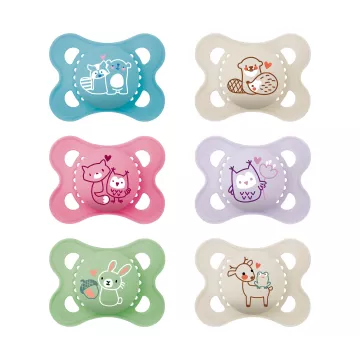
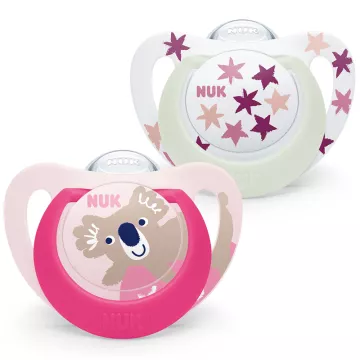
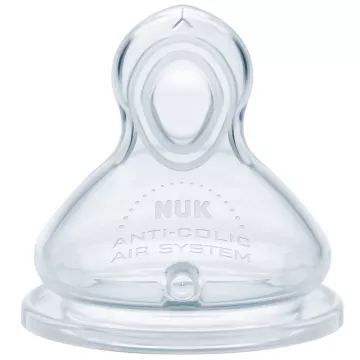
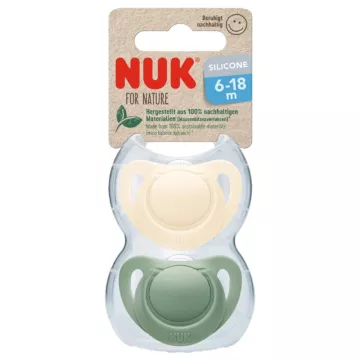
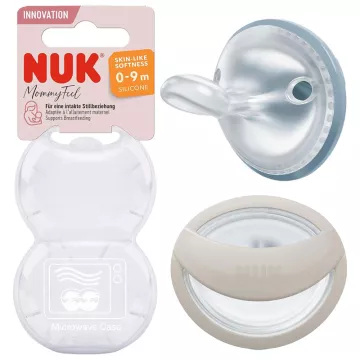
A silicone pacifier is a pacifier whose nipple—and sometimes the collar—is made of food-grade silicone, a medical-grade synthetic polymer particularly suited for baby care products. Silicone is distinguished by its transparency, safety, thermal stability, and chemical inertness.
Now the dominant material on the market, silicone offers a smooth, flexible texture that provides a comfortable sucking experience for infants. It does not absorb odors or flavors, does not yellow over time, and remains stable through repeated sterilization cycles. It is one of the materials best tolerated by babies, including those with sensitive skin or a predisposition to allergies. Additional resources are available regarding infants and infant colic in general.
Dummies are made from three main materials:
Silicone remains the most common choice in French pharmacies today due to its combination of safety, durability, and tolerability.
Several criteria help guide the selection of an appropriate silicone pacifier:
For breastfed babies, consulting a pediatrician or lactation consultant can help you choose a shape that best mimics the mechanics of breastfeeding. For babies who feed voraciously and for spitting up in general, specific resources are available.
Several labels and certifications guarantee that silicone pacifiers sold in pharmacies are free of controversial substances:
Silicone pacifiers sold in pharmacies and drugstores consistently meet these criteria. Products without certification, sold at very low prices, or on unverified platforms should be avoided as a precaution.
Impeccable hygiene is essential for the infant’s health and safety:
Silicone withstands repeated sterilization cycles particularly well without degrading, which is a significant advantage over latex.
Using a silicone pacifier during the teething period (generally from 4–6 months to 2–3 years) is safe and can even provide comfort in addition to appropriate teething rings. The smooth, soft texture of silicone is gentle on sensitive gums. Some pacifiers feature subtle raised patterns or nubs that gently massage sore gums.
However, the teething period requires extra caution: emerging teeth can damage the nipple more quickly. Daily inspection is necessary to check for cracks, holes, or other signs of damage. Replacement should then be more frequent, sometimes every 3 to 4 weeks. For irritated gums and sensitive gums in general, specific products are available.
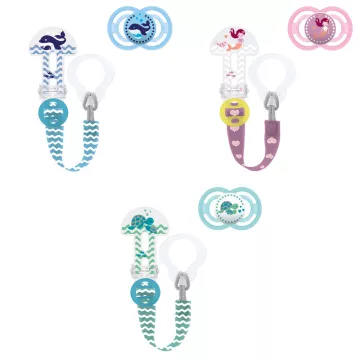
A pacifier clip can be useful during the day to prevent the pacifier from falling on the ground or getting lost, especially during walks or outings. Several precautions should be taken when choosing one:
The pacifier clip is strictly prohibited during sleep and at night: serious risk of strangulation. It must always be removed before bedtime and before any nap, without exception. Specific resources are available regarding children’s sleep and infant formula in general.
Silicone pacifiers designed for premature babies feature a smaller, thinner, and lighter nipple, tailored to the size of the mouth and the limited sucking strength of a premature newborn. They support the development of the non-nutritive sucking reflex, an essential step toward feeding independence and oral maturation.
Their use is generally supervised by the neonatal team in the hospital setting and then continued at home under pediatric supervision. The transition to a standard 0–6-month size is made gradually once the baby reaches sufficient weight and maturity, following medical advice. Your pharmacist remains a valuable resource to help you choose the right silicone pacifier for your child, in addition to regular pediatric follow-up.