The term “big eater” is an affectionate way of referring to an infant who has a significantly above-average appetite, with frequent feedings and a constant desire to be fed. This behavior is usually a sign of good health and growth, since every child has their own feeding rhythm.
To understand this behavior, it’s important to remember that for an infant, eating is not just about nourishment: sucking also fulfills a need for comfort, warmth, and security. This dual role—both nutritional and emotional—partly explains why some babies feed so frequently. Additional resources are available regardingfeeding babies and infants in general.
There are several signs that can help you identify a baby who eats a lot:
It remains essential to distinguish between a genuine nutritional need and a request for comfort. This distinction guides the appropriate response and prevents overfeeding. Consulting with a pediatrician or lactation consultant can help clarify the situation on a case-by-case basis.
Managing a voracious baby relies on observation and adaptation.Feeding on demand remains the method recommended by the WHO and the French Society of Pediatrics: the breast is offered whenever the baby shows a need, without a fixed schedule. This approach supports milk production and strengthens the mother-child bond.
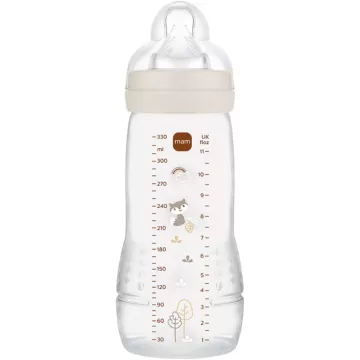
For bottle-fed babies, short breaks during feedings (burping halfway through, slowing down the pace) allow the baby to feel full and prevent overfeeding. Choosing a nipple with an age-appropriate flow rate is essential: a flow rate that is too fast encourages air swallowing and rushed feedings.
A few guidelines can make daily life easier:
A baby who eats a lot does not necessarily have an increased risk of becoming overweight in the future. During the first few months, infants naturally regulate their calorie intake based on their growth needs, particularly when breastfed, when self-regulation is more pronounced.
Monitoring the growth charts (weight, height, head circumference) in the health record remains the gold standard. A steady progression along the growth charts—even above average—indicates healthy growth. It’s the trend over time that matters, rather than a single number.
In cases of very rapid weight gain or a break in the growth curve, the pediatrician will assess the baby’s intake and feeding patterns and rule out any potential medical causes. Parents should not feel guilty in this context: a baby’s appetite is not a sign of parental failure.
The amount of milk consumed varies considerably from one child to another. For breastfed babies, regulation is natural: the infant nurses until satisfied, and milk production adapts to demand. No measurement is possible or necessary; reliable indicators are weight gain, the number of wet diapers (5 to 6 per day), and wakefulness between feedings.
For bottle-fed babies, the recommended amounts are:
A baby with a hearty appetite may consume more than these amounts without it being a cause for concern, provided that growth remains normal. Appert’s rule (weight in grams / 10 + 250 = daily intake in ml) is only a general guideline. Paying attention to the infant’s cues takes precedence over calculated volumes. For infant formula and organic infant formula in general, specific resources are available.
Distinguishing between true hunger and comfort sucking allows you to respond appropriately. Signs of hunger include: hands brought to the mouth, empty sucking motions, active search for the breast (rooting reflex), increasing restlessness, and crying (a late sign). The feeding is then vigorous, prolonged, and soothing.
Comfort sucking manifests differently: slower and less effective sucking, the jaw does not swallow regularly, and calm is quickly achieved without an actual need for food. It often occurs when falling asleep, during episodes of pain (teething, colic), stress, or fatigue.
Several alternatives satisfy the need to suck without overfeeding: an age-appropriate pacifier, the thumb, being carried, cuddling, rocking, or a stroll in a stroller. These strategies provide comfort without leading to unnecessary food intake. The breast can, of course, be offered for a non-nutritive feed without any risk to a breastfed baby.
Spitting up is common in babies who feed heartily, especially when feedings are quick or the amounts are large. This is due to the immaturity of the lower esophageal sphincter and results from simple milk reflux, without significant discomfort for the baby. It usually goes away between 6 and 12 months.
There are several steps you can take to minimize spitting up:
A medical consultation is necessary in cases of very frequent regurgitation accompanied by intense crying, poor weight gain, respiratory problems, refusal to eat, or projectile vomiting: these signs may indicate pathological gastroesophageal reflux requiring treatment. For regurgitation and colic in infants in general, specific resources are available.
Frequent breastfeeding or bottle-feeding a voracious baby can be exhausting for parents, particularly the mother who is breastfeeding. Several strategies can help preserve energy and well-being:
The period of frequent feedings is temporary: feeding needs generally stabilize around 3–4 months, and the introduction of solid foods around 4–6 months brings a more predictable routine. Your pharmacist remains a valuable resource to support you through these early stages, in addition to pediatric follow-up and medical consultations when necessary. Specific resources are available forbreastfeeding in general.