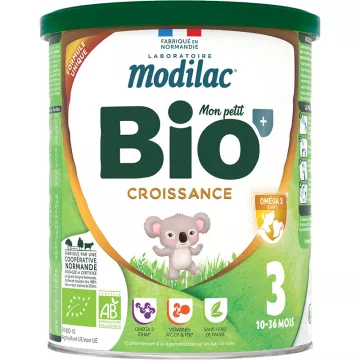
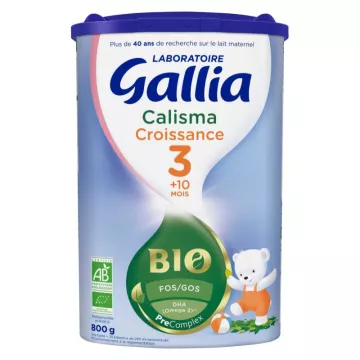
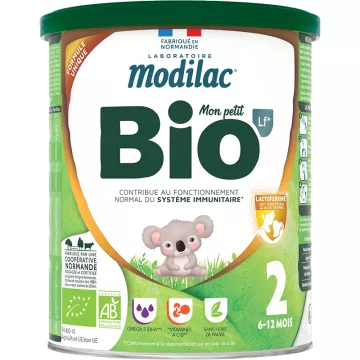
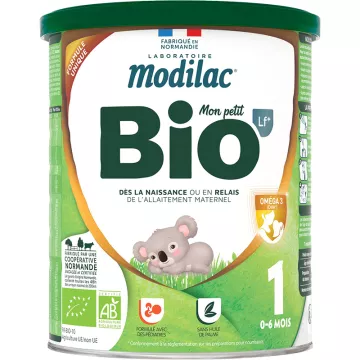
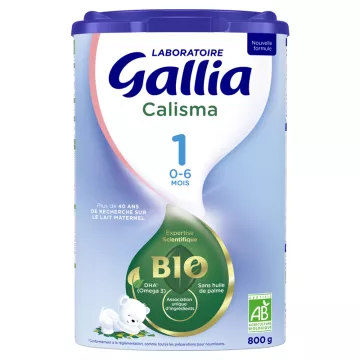
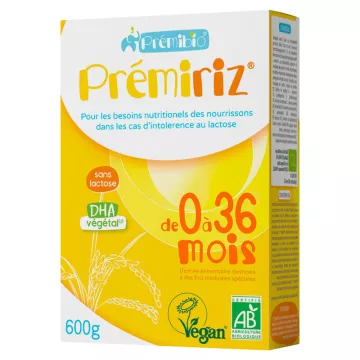
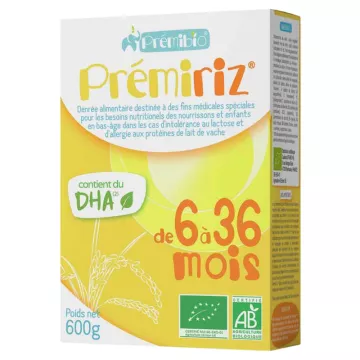
Organic infant formula is a formula for infants produced in accordance with European organic farming standards. Its composition meets the same strict nutritional requirements as conventional infant formulas, as outlined in the European regulation on infant nutrition, but with additional environmental and agricultural specifications.
Specifically, dairy cows are fed a diet derived from organic farming (at least 60% forage) and raised under conditions that respect animal welfare, without the routine use of antibiotics. Plant-based ingredients (oils, lactose, vitamins) must also come from organic sources. Synthetic pesticides, GMOs, and chemical fertilizers are prohibited in the cultivation of raw materials. For infant formula in general, additional resources are available.
The main benefit of organic infant formula lies in limiting exposure to pesticide residues, antibiotics, and controversial substances. While conventional infant formulas also comply with strict safety standards, organic production methods offer an additional guarantee that ingredients come from controlled and traceable sources.
Nutritionally, organic infant formulas meet exactly the same requirements as conventional formulas: proteins, fats, carbohydrates, vitamins, minerals, and trace elements are provided in the same age-appropriate proportions. Most current organic formulas also include DHA (omega-3), ARA, and prebiotics to support brain development and intestinal maturation. Conversely, no studies have demonstrated any objective nutritional superiority of organic over conventional formula for infants. The choice is therefore based more on environmental and ethical considerations than on proven health benefits.
Several criteria help guide the choice of an organic infant formula suitable for your baby:
A pediatric consultation is still recommended for the first prescription and in case of difficulties. Frequent changes in brand or formula without medical advice should be avoided: they can disrupt the infant’s digestive tolerance. For infant colic in general, specific resources are available.
In France, the AB (Agriculture Biologique) label and the European Euroleaf logo (white leaf on a green background) guarantee that at least 95% of the ingredients of agricultural origin are produced using organic methods. These certifications are issued by accredited independent certification bodies (Ecocert, Bureau Veritas, Certipaq, among others).
European regulations require regular inspections throughout the entire supply chain: livestock farming, milk collection, processing, and packaging. Beyond organic certification, some brands offer additional commitments (traceable French supply chain, biodynamic farming with the Demeter label, palm oil-free, and nanoparticle-free). Carefully reading the label allows you to identify these commitments and make an informed choice.
Organic infant formulas are, by nature, free of artificial colors, synthetic flavors, and chemical preservatives. However, like all infant formulas, they must contain added vitamins and minerals (often of synthetic origin but compliant with European regulations) to meet the baby’s nutritional needs.
Some organic formulas also include prebiotics (GOS and FOS fibers) or probiotics (Bifidobacterium, Lactobacillus) to support the gut microbiome. These additives are strictly regulated. Conversely, the best organic formula formulations contain no palm oil, no added sugars, and no sweeteners: lactose and plant-based fatty acids from organic sources form the basis of these products.
Once a can of organic infant formula is opened, it must be consumed within 2 to 4 weeks, depending on the brand (check the packaging for details). Beyond that, the nutritional quality deteriorates and the microbiological risk increases.
To preserve the freshness of the powder, store it in a dry, cool place (at room temperature, away from heat), away from light and moisture. The container must be sealed tightly after each use. The measuring spoon should be kept outside the container, clean and dry, to prevent moisture from entering the powder. A container stored under unsuitable conditions (kitchen humidity, exposure to heat) may become contaminated even before the expiration date.
Yes,mixed feeding —combining breast milk and organic infant formula—is perfectly possible. This practice can be helpful when returning to work, in cases of insufficient milk supply, to share feedings with the other parent, or simply as a family choice. The introduction of the bottle should be done gradually to maintain milk production and ease the transition.
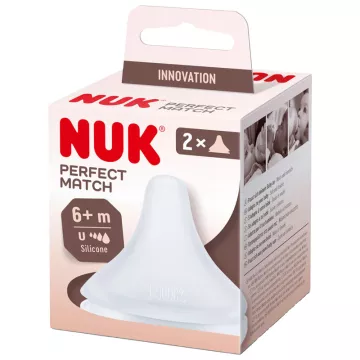
Several guidelines make this combination easier: Maintaining at least one breastfeeding session per day helps stimulate milk production; if the goal is to maintain it, introducing the bottle ideally between 3 and 6 weeks prevents nipple confusion; choosing a slow-flow nipple more closely mimics breastfeeding. In cases of exclusive breastfeeding, organic infant formula may be used occasionally for outings or when the mother is away. Specific resources are available forbreastfeeding and the introduction of solid foods in general. Your pharmacist remains a valuable resource to guide you in choosing and using organic infant formula, in addition to regular pediatric follow-up.