What is shoulder immobilization, and in what cases is it prescribed?
Shoulder immobilization is a controlled restriction of movement in the glenohumeral joint—essential for protecting repaired structures (tendons, ligaments, joint capsule) and promoting proper healing. If improperly managed, immobilization can lead to adhesive capsulitis (frozen shoulder). Our line of joint collagen supplements supports tendon recovery during this phase.
- Shoulder dislocation: following emergency reduction of the humeral head—immobilization sling for 3–6 weeks—80–90% risk of recurrence in young patients < 25 years of age → stabilizing surgery is often indicated
- Fracture of the proximal humerus: sling or rotator cuff brace for 4–8 weeks depending on displacement—surgery if the fracture is displaced
- Rotator cuff tear: post-tendon repair surgery — abduction brace (arm held away from the body) for 6 weeks — zero tension on the sutures is essential for tendon healing
- Acromioclavicular ligamentoplasty: repaired severe acromioclavicular sprain — sling for 4–6 weeks
- Duration varies depending on the indication: non-displaced fracture = 3–4 weeks — repaired rotator cuff tear = 6 weeks — never discontinue treatment prematurely, as this may lead to re-tearing
Types of splints and slings for shoulder immobilization
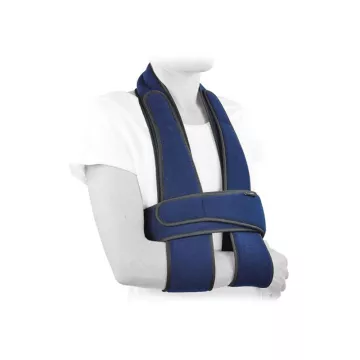
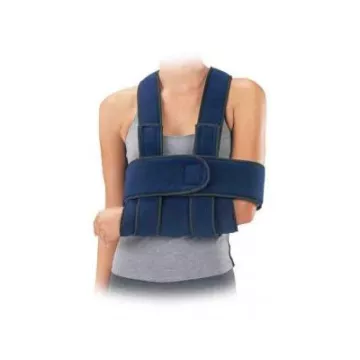
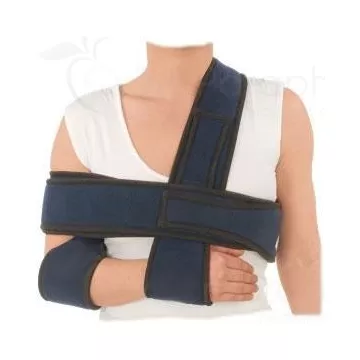
- Simple sling: arm flexed at 90°, forearm held against the torso — for minor fractures, grade 1–2 acromioclavicular sprains, reduced dislocations — wear for 2–6 weeks
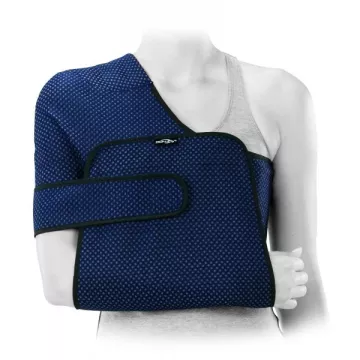
- Abduction brace (rotator cuff): pad that keeps the arm abducted from the body at 30–60° — for surgical repairs of the rotator cuff — provides maximum tendon unloading
- Stabilization brace: external rotation limiter—for recurrent dislocations awaiting surgery—keeps the humeral head within the glenoid cavity
- Triangular bandage: emergency first aid—suspected dislocation or fracture pending imaging—temporary support before medical evaluation
- Must be fitted by a healthcare professional—a device that is too tight compresses the nerves of the brachial plexus (tingling throughout the arm = warning sign)
Natural supplements to support recovery during and after immobilization
Tendon and ligament healing in the shoulder benefits from targeted nutrition—particularly important because the rotator cuff tendons are naturally poorly vascularized. Find these active ingredients in our joint collagen and sports wellness product lines.
- Hydrolyzed marine collagen + vitamin C: amino acids that are precursors to tendon collagen (type I)—take 30–60 minutes before physical therapy—maximum effectiveness within 12 weeks post-surgery—see our post-operative page
- Omega-3 (EPA/DHA): reduce post-surgical neuroinflammation — promote flexible healing — check with your surgeon (mild anticoagulant effect)
- Magnesium: reduces compensatory muscle spasms in the trapezius and cervical muscles that overload the immobilized shoulder — 300–400 mg/day
- B vitamins (B6, B12): support the brachial plexus — particularly useful if nerve compression is associated with the injury (tingling in the arm)
- Protein 1.5–2 g/kg/day: building blocks for tendon and muscle repair — do not neglect protein intake during immobilization to limit muscle atrophy
Risks of Prolonged Immobilization and Shoulder Rehabilitation
- Adhesive capsulitis (frozen shoulder): a feared complication of prolonged immobilization—fibrous retraction of the joint capsule—pain + severe limitation of all movements—prevention through early mobilization once medically cleared
- Muscleatrophy: wasting of the rotator cuff muscles (supraspinatus, infraspinatus)—begins after 2–3 weeks of immobilization—muscle electrostimulation may be prescribed during immobilization
- Progressive rehabilitation: Phase 1 (immobilization + gentle mobilization of the elbow/wrist/hand) → Phase 2 (passive shoulder movements) → Phase 3 (assisted active movements) → Phase 4 (active strengthening of the rotator cuff)
- Rotator cuff tendinitis is a long-term complication if rehabilitation is inadequate—eccentric strengthening of the external rotators is essential
- Return to sports and overhead arm activities: at least 4–6 months after surgical repair—never before medical clearance