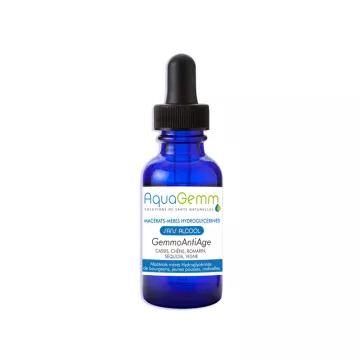
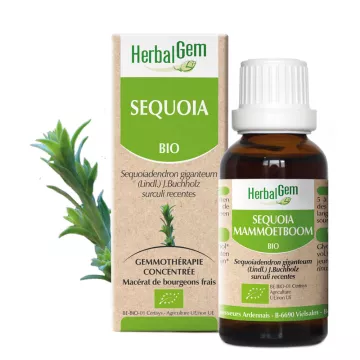
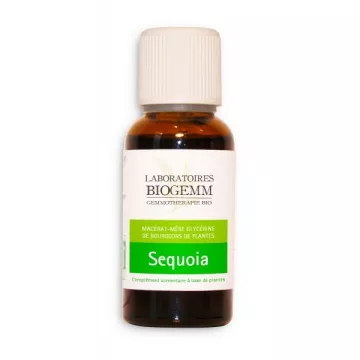
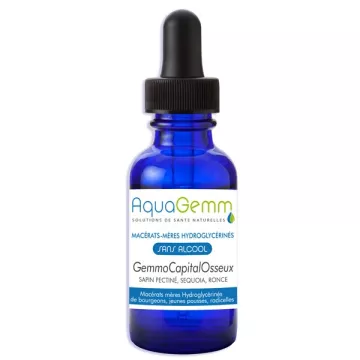
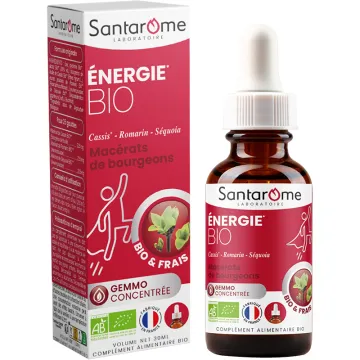
The giant sequoia (Sequoia sempervirens) is the conifer most commonly used in gemmotherapy to promote vitality in older adults and support joint health. Its bud macerates concentrate the growth factors, steroidal phytohormones, and trace minerals present in the meristem—the active growth tissue. It stands out from other coniferous gemmotherapy remedies due to its specific tropism for the musculoskeletal system, male vitality, and cognitive functions. Explore our gemmotherapy and alcohol-free gemmotherapy product lines.
What is sequoia gemmotherapy?
The sequoia is used in gemmotherapy in the form of a glycerin macerate made from the buds of Sequoia sempervirens —the only species used (not to be confused with Sequoiadendron giganteum, the giant sequoia). Gemmotherapy uses the buds and young shoots of trees, which concentrate the active growth compounds—phytohormones, auxins, and gibberellins—found exclusively in the meristem. The redwood stands out for its content of phytosterols (β-sitosterol, stigmasterol) and organic silica, which explain its preferred use for supporting bone and joint health. See also our line of fluid extracts for herbal medicine.
Sequoia and Joint Comfort in Gemmotherapy?
Sequoia is one of the leading gemmotherapy remedies for joints and bones.
- Sequoia’s phytosterols support cartilage health—combine with vitamin D3 and organic silicon for a complementary effect on bone
- Support for bone mineral density—particularly important after age 50 due to hormonal changes
- Combine in gemmotherapy with black currant (Ribes nigrum) for comprehensive support of joint comfort and relief from joint pain
- See also boswellia and the line of joint supplements
- Take for 3 weeks to 3 months depending on individual needs—take a break, then repeat if necessary
Sequoia and male vitality?
Sequoia is the most commonly used gemmotherapy remedy for male vitality—its phytosterol profile is the basis for this traditional use.
- The phytosterols (β-sitosterol, stigmasterol) in sequoia have a structure similar to that of steroid hormones—hence their traditional effect on male vitality and energy
- Supports physical vitality and helps manage chronic fatigue in men—particularly after age 50
- Andropause: Sequoia macerate is one of the most recommended gemmotherapy remedies in natural support regimens—with no hormonal claims, as documented by controlled clinical studies
- Combine with Sequoia sempervirens macerate + Scots pine (Pinus sylvestris) macerate + rosemary (Rosmarinus officinalis) macerate in male vitality regimens
- Hormone-dependent conditions: contraindicated—phytosterols may modulate the local hormonal environment
Sequoia and cognitive function?
The effects of sequoia on cognitive function are part of its overall “anti-aging” properties.
- Antioxidant action of sequoia phytosterols and tannins: protection of neuronal cell membranes against oxidative stress
- Supports mental focus and working memory—in gemmotherapy regimens for active seniors
- Combine with Ginkgo biloba (Ginkgo biloba) and rosemary for comprehensive cognitive support
- Effects not documented by controlled clinical studies—use based on gemmotherapy tradition and in vitro data
How to use sequoia macerate?
Sequoia bud macerate is used according to standard gemmotherapy protocols.
- Standard glycerin macerate: 5 to 15 drops in a glass of water, twice daily, 15 to 20 minutes before meals
- Alcohol-free formulas: see our alcohol-free gemmotherapy line—suitable for people avoiding alcohol
- Treatment duration: 3 weeks to 3 months depending on the indication—followed by a 2- to 3-week break, after which the treatment may be repeated
- Gemmotherapy combinations: sequoia + black currant (joints), sequoia + Scots pine (male vitality), sequoia + ginkgo biloba (cognitive function)
- See our complete line of supplements for seniors and energy/vitality
Precautions and contraindications?
Sequoia macerate is well tolerated—there are a few important contraindications to be aware of.
- Pregnant and breastfeeding women: not recommended—phytosterols may interfere with hormonal balance
- Hormone-dependent conditions (breast, prostate, or uterine cancer being treated with hormone therapy): avoid—medical advice is required
- Current hormone therapy: Inform your doctor before starting a course of treatment
- Insomnia or palpitations: reduce the dose or shift the evening dose to early afternoon
- Choose certified organic macerates—which guarantee the buds are free of pesticides