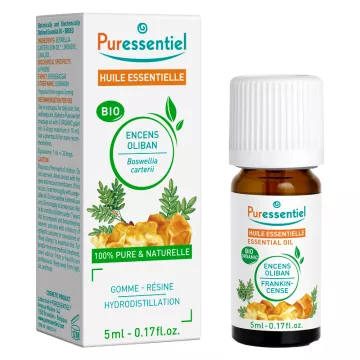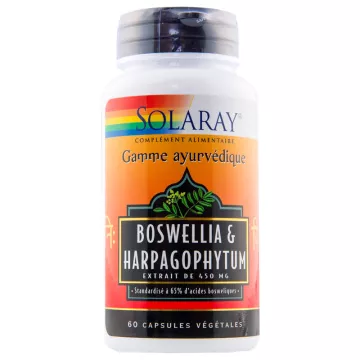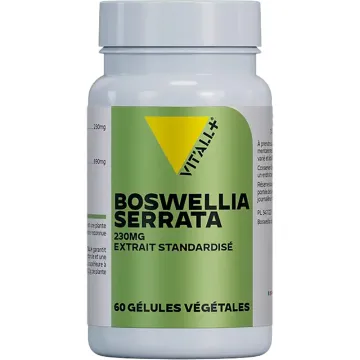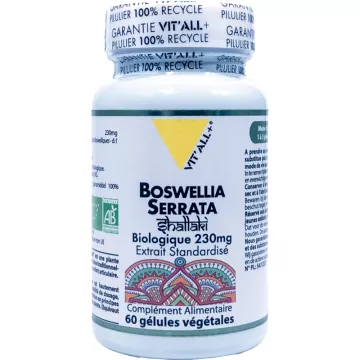
Boswellia, also known as Indian frankincense, is a resin derived from trees of the Boswellia genus. Used for millennia in traditional Ayurvedic medicine, it is best known today as a dietary supplement for joint comfort. Its reputation stems from its active compounds, boswellic acids, which are currently the subject of research. It is important to establish a clear framework from the outset: Boswellia is a herbal dietary supplement, not a medication. While it is traditionally and widely used to support joint health, it is not a substitute for a medical diagnosis or treatment. People suffering from chronic joint pain should be under medical supervision; Boswellia can, at most, be used as a complementary treatment, following consultation with a healthcare professional. It is part of a holistic approach to joint health, alongside a healthy lifestyle.
Boswellia contains boswellic acids, compounds studied for their effects on certain inflammatory pathways, particularly the enzyme 5-LOX. Research on these mechanisms is encouraging but still needs to be confirmed by larger studies. What we can cautiously say is:
However, we must avoid jumping to conclusions: promising data does not mean that Boswellia “treats” a disease. It is not a substitute for medical care for diagnosed inflammatory conditions.
Joint comfort is the most common use of Boswellia. It is traditionally used to support the well-being of people experiencing joint discomfort, such as in casesof osteoarthritis,arthritis, or rheumatism, and to support mobility. Research is being conducted on this topic, but it would be imprudent to claim that it “slows cartilage degeneration” or that it is “as effective as anti-inflammatory drugs (NSAIDs)”: these claims go beyond what the data can establish with certainty, and Boswellia is not a substitute for prescribed treatment. Persistent, severe, or progressive joint pain requires a medical diagnosis, particularly in the case of rheumatoid arthritis, which necessitates rheumatological follow-up. Boswellia can be used as a complementary treatment alongside this care, but should never be used as a substitute for it. Other herbs that support joint health, such as turmeric orharpagophytum, are sometimes used in combination.
Boswellia is available in several forms, to be chosen according to your needs:
The effects, when felt, develop gradually, usually over several weeks of regular use. Always follow the dosage recommended by the manufacturer and, ideally, consult a healthcare professional to tailor the use to your specific situation, especially if you are currently undergoing treatment.
Boswellia is generally well tolerated but requires careful consideration. Potential side effects may include digestive issues (nausea, diarrhea), skin reactions, or headaches; starting with a low dose allows you to assess your tolerance. Regarding drug interactions, caution is advised: Boswellia may interfere with anticoagulants, anti-inflammatory drugs (NSAIDs), and the hepatic metabolism of certain medications—it is therefore essential to consult a doctor or pharmacist before combining it with any treatment. It is not recommended during pregnancy and breastfeeding, or for people allergic to resins. People with chronic conditions (digestive, intestinal, or joint-related) should not self-medicate with it but should discuss its use with their doctor. This caution is especially important since Boswellia is often taken by people already on medication.
When choosing a Boswellia supplement, several quality criteria should guide your decision:
Available at pharmacies, natural product stores, and specialty shops. Note that Boswellia (frankincense) is also used in perfumery and aromatherapy for its resinous notes. Regardless of the product you choose, seeking professional advice before your first course of treatment remains the best guarantee of safe and appropriate use, particularly for those already undergoing medical treatment or living with a chronic condition.