What is a respiratory balm, and how does it work?
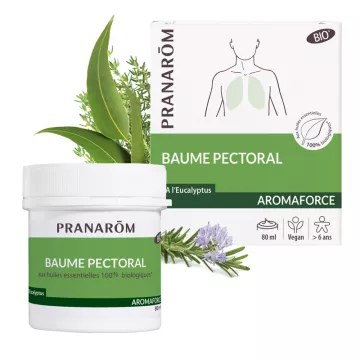
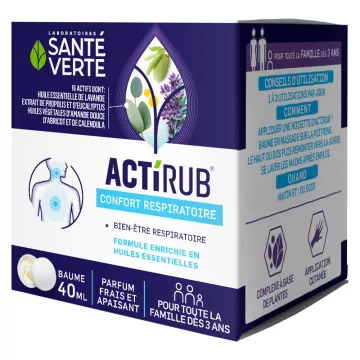
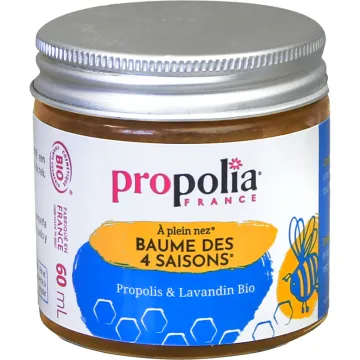
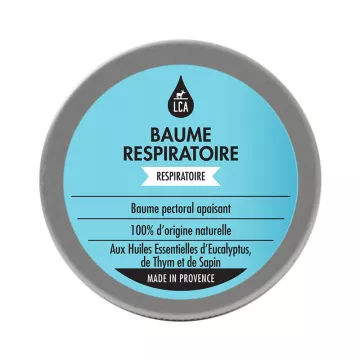
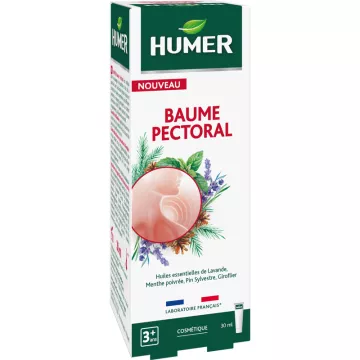
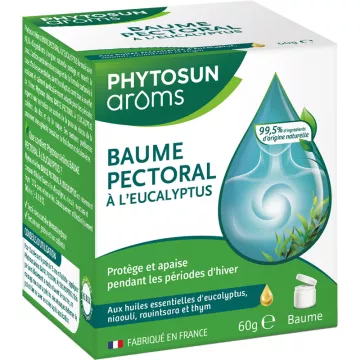
Respiratory balm is a semi-solid topical preparation composed of active essential oils dispersed in an oily base (beeswax, shea butter, vegetable oil). When applied to the chest, back, or under the nostrils, it releases aromatic vapors that reach the respiratory tract directly through passive inhalation. Respiratory comfort products are available in the Respiratory Care line and among the respiratory essential oils in the store.
- Dual mechanism of action: inhalation of vapors released by skin heat (local effect on the respiratory mucous membranes—decongestion, thinning of secretions) — percutaneous absorption of aromatic molecules (moderate systemic action—antispasmodic, anti-inflammatory) — synergy of both pathways for optimal respiratory comfort
- Most commonly used essential oils:
- Eucalyptus globulus: 1,8-cineole — mucolytic, decongestant, anti-bronchitic — the most extensively documented forrespiratory congestion
- Peppermint: menthol — sensation of freshness and easier breathing — mild local anesthetic
- Thymol or linaloolthyme: expectorant and bronchial antiseptic
- Scots pine: alpha-pinene — expectorant, bronchial decongestant
- Camphor: local circulatory stimulant, warming — contraindicated for people with asthma
- Main indications: acute viral bronchitis — colds and congestion of the upper and lower respiratory tracts — bronchial congestion — dry, irritating nighttime cough — for symptomatic relief, never as a substitute for medical treatment
How to use the respiratory balm effectively and safely?
- Adult application: a walnut-sized amount of balm on the chest (sternum) and back (interscapular area)—massage in gentle circular motions until absorbed—apply a small amount under the nostrils (not inside the nostrils)—ideally in the evening at bedtime to benefit from its effects throughout the night—repeat morning and evening during the acute phase
- Gentle inhalation: breathe in the vapors rising from the application area — this can also be done by placing a small amount of balm in hot water (steaming bowl) and inhaling for 5 to 10 minutes, with your head covered by a towel — do not use over high heat (boiling pot)
- Safe DIY preparation: Melt 20 g of beeswax + 30 g of shea butter in a double boiler — remove from heat — add 10 drops of eucalyptus essential oil + 5 drops of peppermint essential oil + 5 drops of Scots pine essential oil + 5 drops of linalool thyme essential oil — pour into a jar and let cool — store away from heat and light (6 to 12 months)
- Shelf life: store-bought balm: check the best-by date after opening — DIY balm without preservatives: 6 to 12 months in an airtight jar away from heat and light — discard if the smell becomes rancid or if the texture changes
What are the contraindications and precautions for respiratory balm?
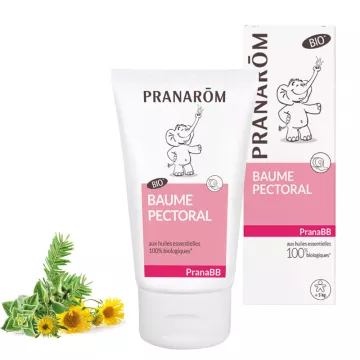
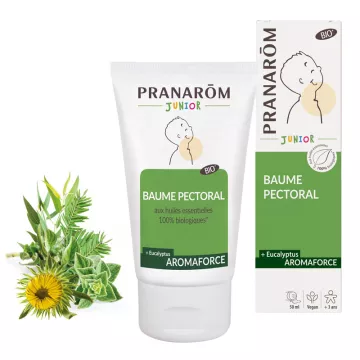
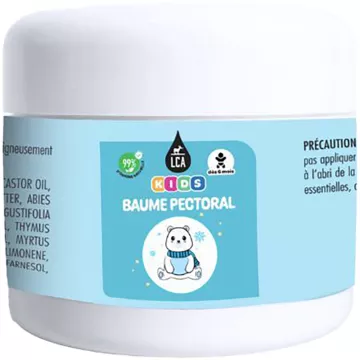
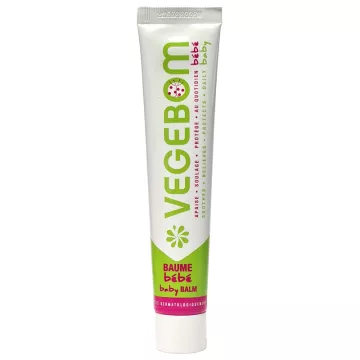
- Children: Peppermint (menthol) and Eucalyptus globulus essential oils are contraindicated for children under 7 years of age when applied to the chest or inhaled (risk of laryngeal spasm and bronchospasm) — For infants and children under 7 years of age, specific formulas without menthol or Eucalyptus globulus are available—see the Baby Respiratory Comfort line — Eucalyptus radiata is better tolerated by children ages 6 and up, according to aromatherapists’ recommendations
- Pregnant women: Most essential oils found in respiratory balms are contraindicated during the first trimester and are not recommended without medical advice during the second and third trimesters—consult a doctor or pharmacist before use
- Asthma and bronchial hyperreactivity: Camphor and certain terpenes may trigger or worsen bronchospasm—avoid or use with extreme caution under medical supervision—opt for camphor-free formulas
- Skin allergies: Perform a patch test on the inner elbow 48 hours before any widespread application—discontinue use if redness, itching, or irritation occurs—essential oils may cause contact reactions in sensitized individuals
- Never apply to the face, nasal mucous membranes, or damaged or irritated areas—do not ingest—keep out of reach of children