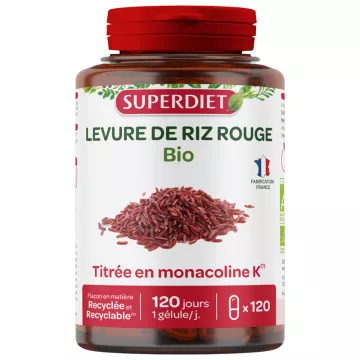
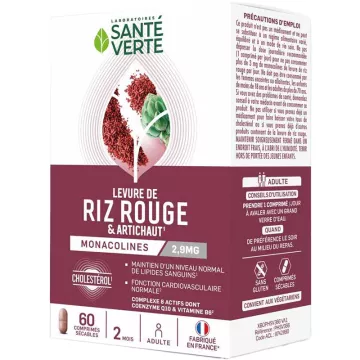
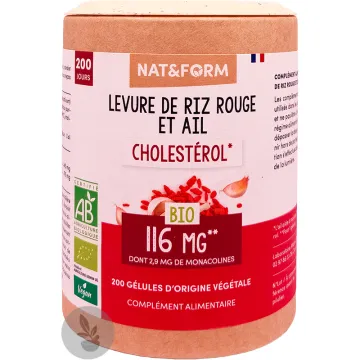
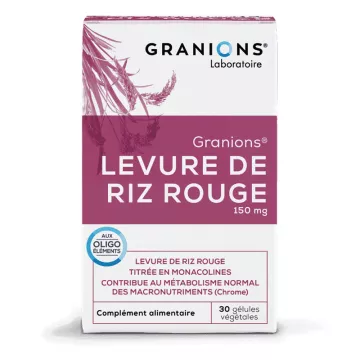
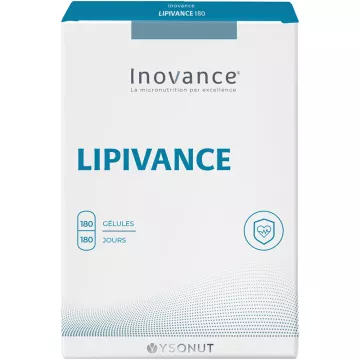
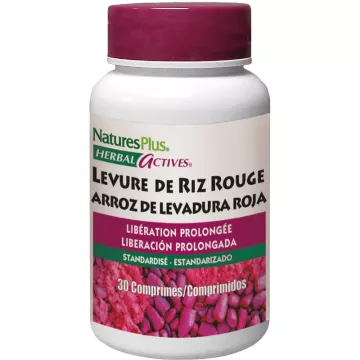
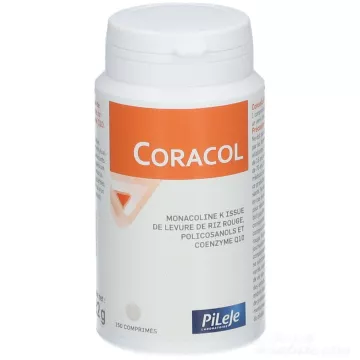
Red yeast rice (Monascus purpureus) is a dietary supplement derived from the fermentation of rice that has been used for centuries in traditional Chinese medicine. It contains monacolins, including monacolin K, which has a structure similar to that of the statin lovastatin. For this reason, its use is strictly regulated in Europe and requires consultation with a healthcare professional.
Red yeast rice is produced by the fermentation of rice using the mold Monascus purpureus. It contains monacolins, phytosterols, and antioxidants. It is primarily a dietary supplement and should not be confused with a cholesterol-lowering medication.
In Europe, EU Regulation 2022/860 limits the dose of monacolins to less than 3 mg per day; any dose equal to or greater than 3 mg is prohibited. The previous cholesterol claim, based on 10 mg, is therefore no longer permitted. The label must include mandatory warnings.
In 2025, the EFSA concluded that the safety of these monacolins has not been established, even at doses below 3 mg per day.
Monacolin K acts on the same enzyme as statins, HMG-CoA reductase. It therefore carries the same risks as a statin and is not an alternative to prescribed treatment. Never substitute this supplement for medication: managing cholesterol and cardiovascular health requires medical supervision.
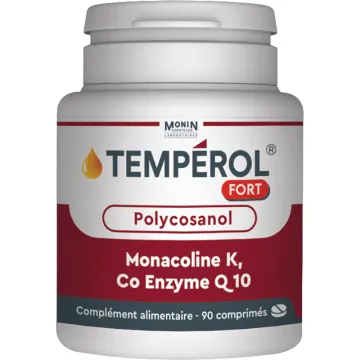
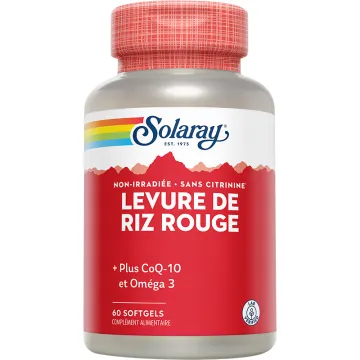
Formulations often combine red yeast rice with other nutrients, though this does not eliminate its risks.
Although it is of natural origin, red yeast rice acts like a statin and can cause serious side effects.
It is contraindicated in cases of liver or kidney disease, when taking statins or anticoagulants, as well as during pregnancy and breastfeeding. Medical supervision is essential.
Quality and safety are paramount. Choose a product guaranteed to be free of citrinin, a toxin produced by certain molds that is harmful to the kidneys and liver. Check for traceable origin, ensure the monacolin content complies with the European limit of less than 3 mg per day, and opt for formulas that combine red yeast rice with coenzyme Q10. If you are undergoing treatment or have a health condition, consult your pharmacist before taking this supplement. Content reviewed by Arnaud, Ph.D. in Pharmacy.