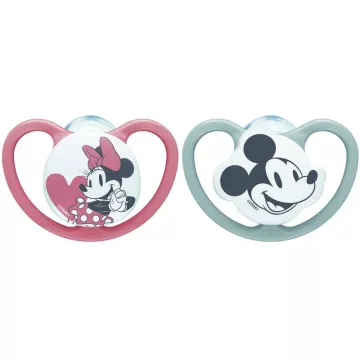
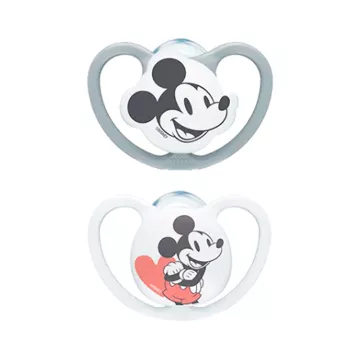
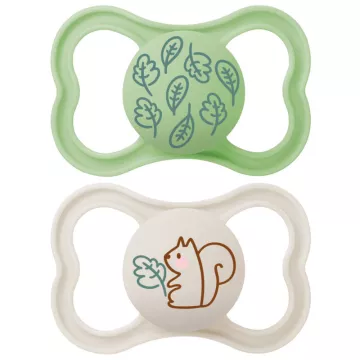
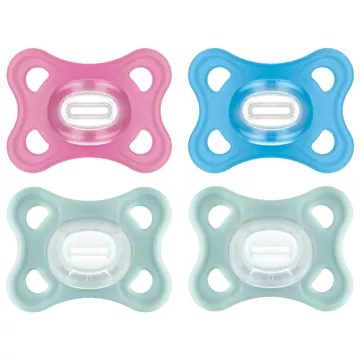
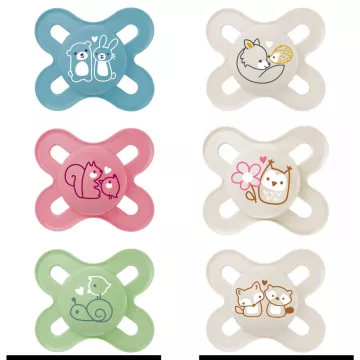
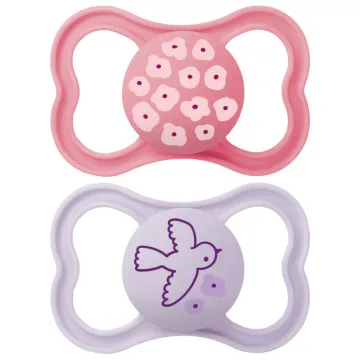
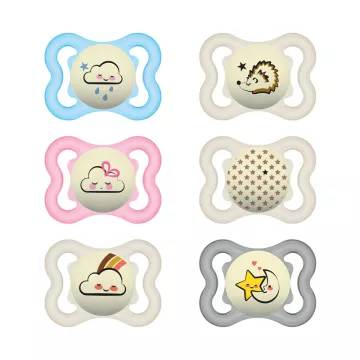
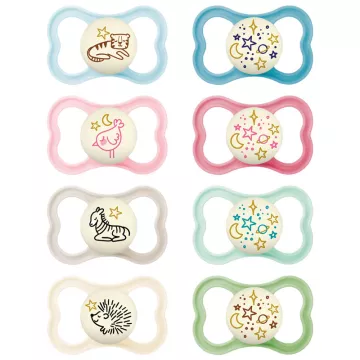
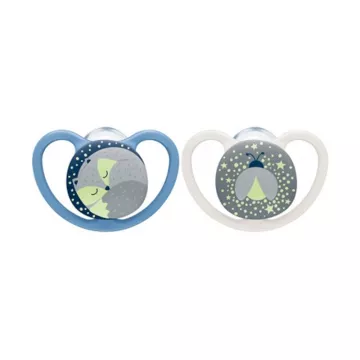
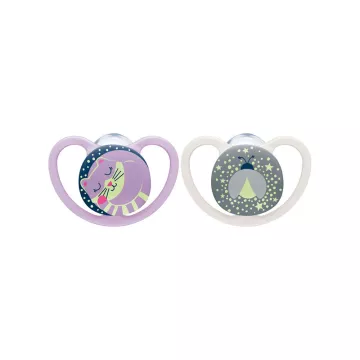
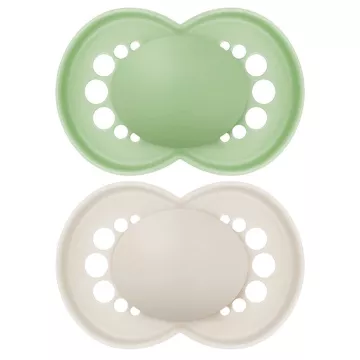
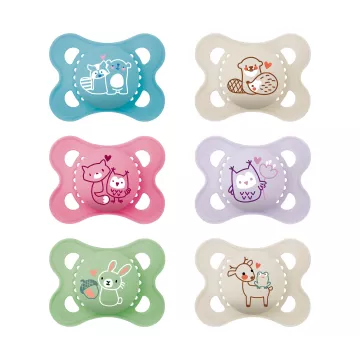
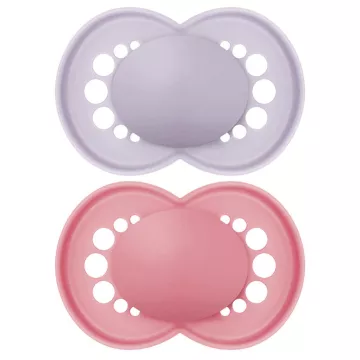
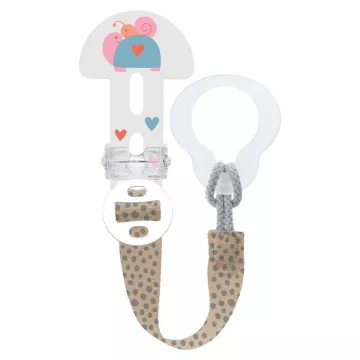
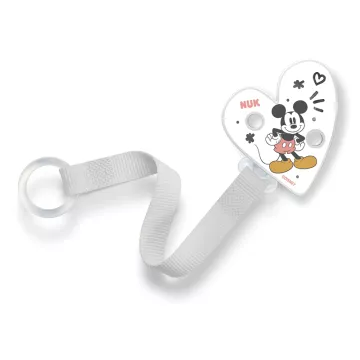
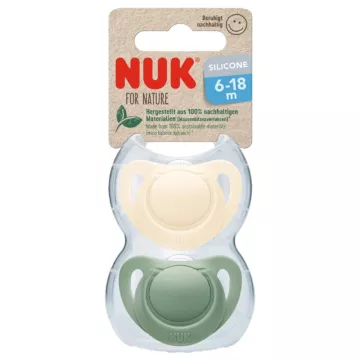
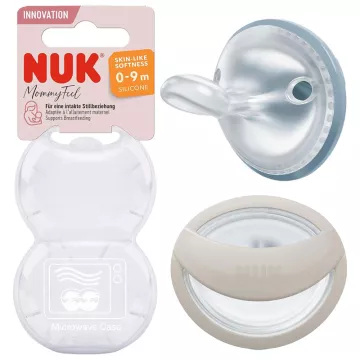
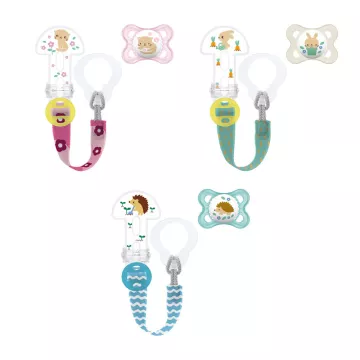
A pacifier meets a fundamental physiological need: non-nutritive sucking. Beyond feeding, infants have a natural need to suckle, which provides comfort, soothing, and a sense of security. This sucking activates relaxation mechanisms and promotes sleep.
The documented benefits are numerous: soothing when crying, helping the infant fall asleep, relieving minor discomforts, and providing a sense of security in unfamiliar situations. Several studies have also documented a protective effect of using a pacifier to help a baby fall asleep against sudden infant death syndrome (SIDS), which is why its use is included in prevention guidelines.
However, pacifiers should never be forced on a baby: some babies refuse them and find comfort through other means (thumb-sucking, a security blanket starting at 6 months, being carried). For infants and infant colic in general, additional resources are available.
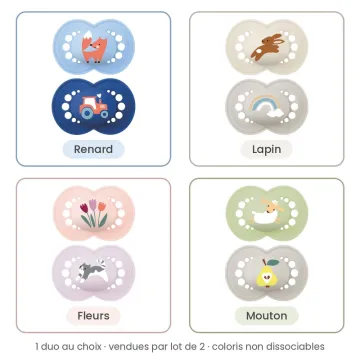
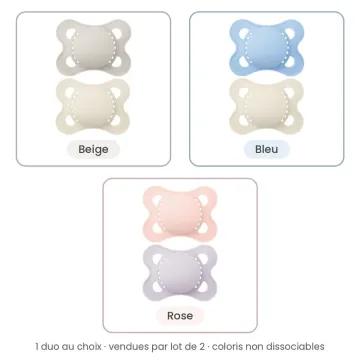
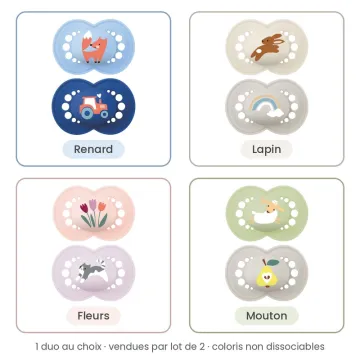
Several criteria guide the choice of a suitable pacifier:
It’s often necessary to try several models before finding one that your baby accepts. The shape and material that work best vary depending on individual preferences: some babies accept silicone right away, while others prefer the softness of natural latex. For spitting up in general, specific solutions are available.
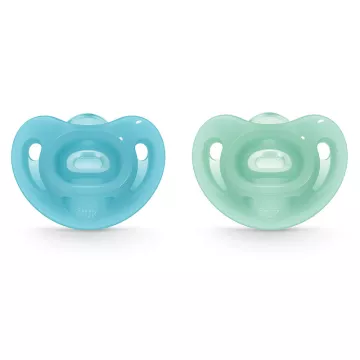
Silicone is now the most widely used material: it’s transparent, odorless, hypoallergenic, durable, and easy to clean and sterilize. It lasts longer than latex and is particularly well-suited for sensitive babies or families who prefer a standardized product. It feels slightly firmer to the touch.
Natural latex (rubber) is more flexible and feels warmer to the touch; babies often prefer it because its softness resembles that of the mother’s breast. However, it deforms more easily, wears out faster (yellowing, loss of elasticity), and remains sensitive to heat and light. It is contraindicated in cases of known or suspected latex allergy (rare in infants but possible).
No material is inherently superior to another: the choice depends on the baby’s acceptance and family preferences. Rotating several identical silicone pacifiers generally makes maintenance easier.
Most pediatricians and lactation consultants recommend introducing a pacifier oncebreastfeeding is well established, usually after 3 to 6 weeks of age. This precaution reduces the risk of nipple-pacifier confusion in breastfed babies, who might develop an improper latch at the breast after using a pacifier.
For bottle-fed babies, a pacifier can be introduced earlier without any particular drawbacks. The need for non-nutritive sucking becomes apparent in the first few weeks through empty sucking motions or seeking the breast between feedings. Specific resources are available forbreastfeeding and for babies who tend to gulp their food.
Introduce the pacifier during a calm moment, ideally at bedtime when the baby is relaxed but drowsy. If the baby refuses the pacifier right away, don’t insist: simply try again a few days later, perhaps with a different style.
Moderate, time-limited use of a pacifier does not significantly affect an infant’s teeth. Orthodontic risks mainly arise with prolonged use beyond 2–3 years: open bite (the front teeth no longer touch), high-arched palate (a palate that is high and concave), crooked teeth, delayed speech development, and impaired articulation of sounds.
Choosing a physiognomic or orthodontic-shaped pacifier limits the impact compared to traditional round pacifiers. The duration of use remains the most decisive factor: the longer and more intensive the use, the greater the risk. A visit to a pediatric dentist around age 2–3 allows for an assessment of any potential effects and helps tailor a weaning schedule. For general gum irritation, specific remedies are available.
Impeccable hygiene is essential for the child’s health and safety:
Having several identical pacifiers to rotate makes maintenance easier and reduces the risk of breakage. For infant formula in general, specific resources are available.
According to current recommendations, using a pacifier at night is considered safe and even beneficial. Several studies have documented that using a pacifier to help a baby fall asleep has a protective effect against sudden infant death syndrome (SIDS), which is why it is now included in preventive measures.
However, several precautions are necessary:
Specific resources are available regarding children’s sleep in general.
Pediatric dentists recommend gradual weaning between the ages of 2 and 4 at the latest to minimize oral health risks and promote healthy language development. Beyond this age, possible consequences include an open bite, a high-arched palate, delayed language development, impaired articulation, and recurrent middle ear infections.
Several strategies for gradual weaning can ease the transition:
A visit to a pediatric dentist around age 2–3 allows for an assessment of any potential oral health impacts and helps customize the weaning schedule. Your pharmacist remains a valuable resource to support these different stages, in addition to regular pediatric follow-ups.