What is nasal irritation, and what causes it?
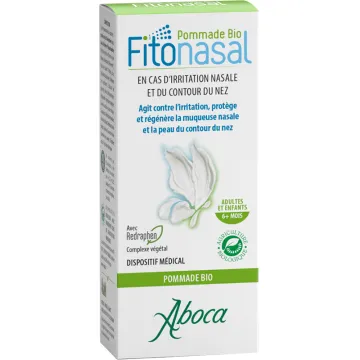
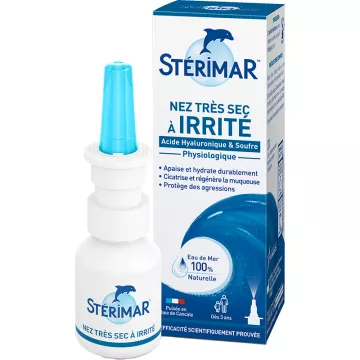
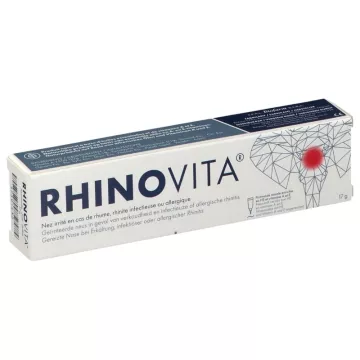
Nasal irritation refers to inflammation or sensitization of the nasal mucosa, manifesting as a tingling sensation, burning, dryness, itching, or sneezing. The nasal mucosa, rich in blood vessels and nerve endings, is on the front line against inhaled irritants—its weakening compromises mucociliary clearance and the local immune barrier. Products for dry nose care andnasal hygiene are available in the store.
- Allergens: pollen, dust mites, animal dander, mold—allergic irritation is accompanied by intense itching, repeated sneezing, and a clear, watery discharge—seasonal or year-round depending on the trigger
- Viral infections: rhinovirus (common cold), flu — irritation and a burning sensation in the first few hours — progressing to mucus discharge and congestion — difference from allergies: possible presence of fever, absence of itching, yellowing mucus
- Pollutants and physical irritants: tobacco smoke (active and passive), air pollution (NO₂, fine particulate matter), household products (VOCs), excessively dry air (humidity < 40%), air conditioning, forced-air heating — direct chemical or physical irritation of the nasal epithelium
- Drug-induced rhinitis: excessive use of decongestant nasal sprays (vasoconstrictors such as oxymetazoline, xylometazoline) for more than 3 to 5 days — rebound congestion and chronic irritation — a vicious cycle requiring gradual withdrawal under medical supervision
- Dehydration, cold air at high altitudes, prolonged time on an airplane — nasosinus polyps (chronic bilateral irritation and obstruction)
What natural remedies can relieve nasal irritation?
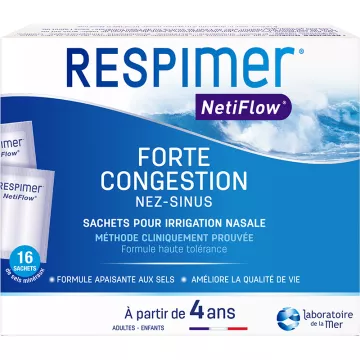
- Isotonic nasal irrigation: a top priority — rinsing with seawater or saline solution — removes allergens, irritants, and viruses — moisturizes the dry mucous membrane — see nasal irrigation — 2 to 4 times a day as needed
- Eucalyptus steam inhalation: hot water at 42–45 °C, 2 to 3 drops of diluted Eucalyptus globulus essential oil — cineole soothes and reduces inflammation in the mucous membranes — gently moisturizes and decongests — not recommended for children under 7
- Aloe vera gel: apply a thin layer to the entrance of the nostrils—soothes, heals, and moisturizes irritated mucous membranes—quickly relieves tingling and burning sensations—a preliminary tolerance test is recommended
- Coconut oil: forms a protective, moisturizing film on the sides of the nose and the insides of the nostrils — prevents dryness in dry or cold environments — has emollient and mildly antibacterial properties (lauric acid)
- Room humidifiers: Maintain indoor humidity between 40% and 60%—prevents mucous membrane dryness—clean the reservoir regularly to prevent mold growth
How can you prevent nasal irritation on a daily basis?
- Limit the use of decongestant sprays: never use for more than 3 to 5 consecutive days—in cases of established medication-induced rhinitis, gradually taper off use and replace with a saline spray and nasal corticosteroid as directed by a doctor
- Indoor air quality: ventilate for 10 minutes in the morning and evening — avoid irritating chemical household products — clean air conditioning and heating filters — use HEPA air purifiers if you have allergies
- General hydration: 1.5 to 2 L/day to maintain natural moisture in the mucous membranes—hot herbal teas and broths in winter
- See a doctor if: you have repeated nosebleeds — facial pain — persistent one-sided nasal congestion — severe irritation that does not respond to usual treatments — suspected allergic or medication-induced rhinitis requiring specific treatment