What is a dry nose, and what causes it?
A dry nose (xerorhinia) is characterized by dryness of the nasal mucosa, caused by insufficient mucus production or excessive evaporation of water from the mucous film. The weakened mucous membrane loses its ability to filter and provide immune defense, increasing vulnerability to infections. Products for irritated noses andnasal hygiene are available in the store.
- Environmental factors: dry indoor air (central heating, air conditioning—humidity < 40%)—cold winter air—high altitude—prolonged exposure to air-conditioned environments (airplanes, offices)
- Drying medications: first-generation antihistamines (marked anticholinergic effect reducing mucus secretion) — prolonged use of vasoconstrictor nasal decongestants (medication-induced rhinitis with progressive mucosal atrophy) — tricyclic antidepressants — certain antihypertensives — diuretics
- Medical conditions: atrophic rhinitis (degeneration of the mucosa with crusting and atrophy of the turbinates) — Sjögren’s syndrome (an autoimmune disease affecting all mucous membranes—nasal, oral, ocular dryness) — chronic dehydration — mucosal aging (mucus production decreases with age)
- Complications of a dry nose: epistaxis (nosebleeds) due to weakened submucosal capillaries — nasal crusts and ulcers — recurrent ENT infections (lack of protective mucus) — hyposmia (partial loss of smell)
What natural treatments and remedies are available for a dry nose?
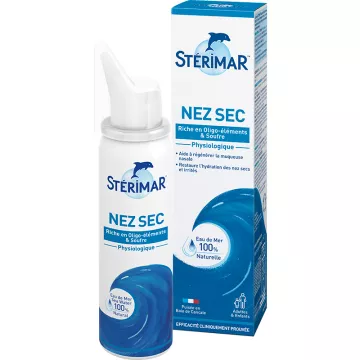
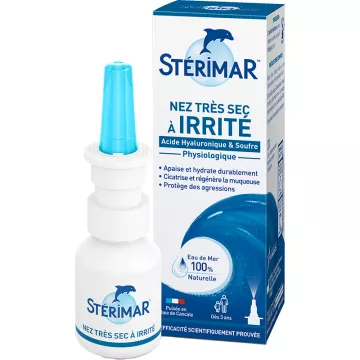
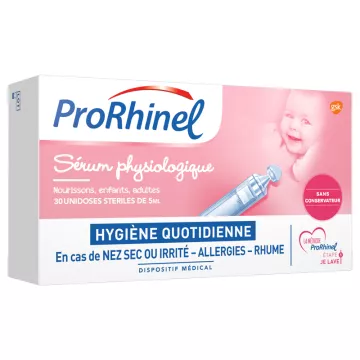
- Isotonic nasal spray or seawater: rehydration and gentle cleansing of the mucous membrane — 3 to 4 times a day — see nasal irrigation — choose gentle sprays with a fine mist for fragile mucous membranes
- Vaseline (petrolatum): occlusive film applied in a thin layer at the entrance to the nostrils — retains moisture and protects the compromised mucous membrane — particularly beneficial when used at night — do not apply deeply to avoid the risk of lipoid pneumonia (inhalation)
- Aloe vera gel: moisturizing, soothing, and healing—relieves burning and stinging—apply a light layer at the entrance to the nostrils—a preliminary tolerance test is recommended
- Coconut oil: forms an emollient and protective oily film — lauric acid has mild antibacterial properties — prevents the sides of the nose and nostrils from drying out — apply a thin layer 1 to 2 times a day
- Mild steam inhalation: directly moisturizes the mucous membranes — hot water at 42–45 °C for 10 minutes — avoid essential oils that can irritate very dry or fragile mucous membranes — a hot shower for passive inhalation is also effective
- Room humidifier: Maintain humidity at 40–60%—essential in winter (heating) and summer (air conditioning)—clean the reservoir regularly (to prevent mold)
What dietary habits and precautions can help prevent a dry nose?
- Hydration: 1.5 to 2 L of water and herbal teas per day — the primary way to maintain the natural moisture of the mucous membranes — chamomile tea (mild anti-inflammatory) or hot peppermint tea
- Vitamin A: essential for the renewal and differentiation of nasal epithelial cells — deficiency is associated with mucosal dryness — sources (liver, egg yolk, carrots, sweet potatoes)
- Omega-3 EPA-DHA: maintains the fluidity of epithelial cell membranes — reduces mucosal inflammation — eat fatty fish twice a week or take a supplement of 2 to 3 g per day
- Medication precautions: If a dry nose is caused by a medication (antihistamine, decongestant), do not stop taking it without medical advice—report the symptom to your prescribing physician for possible adjustment
- Consult an ENT specialist if: recurrent nosebleeds — thick, foul-smelling crusts (atrophic rhinitis) — dryness associated with dry mouth and dry eyes (Sjögren’s syndrome evaluation) — symptoms persisting for more than 4 weeks despite treatment