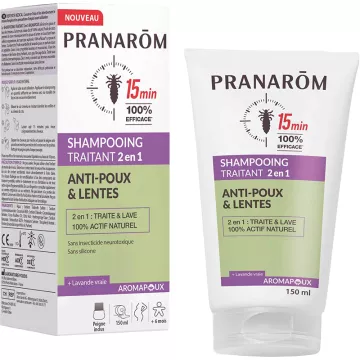
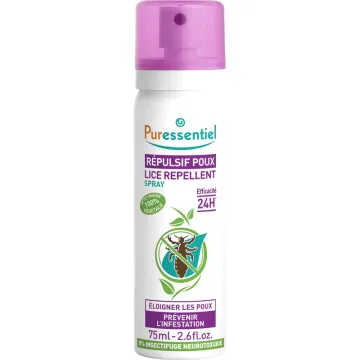
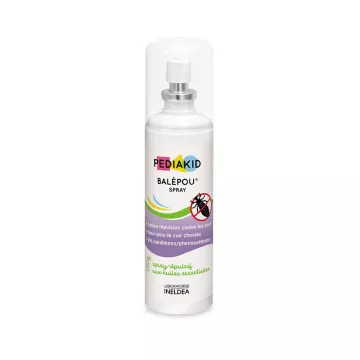
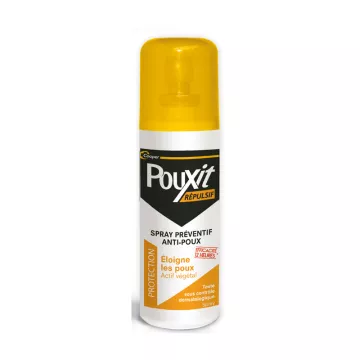
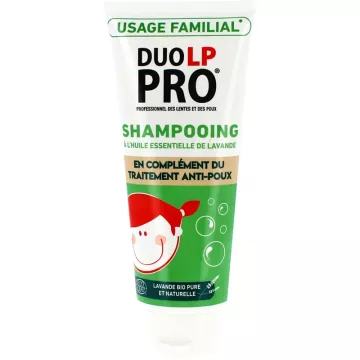
A lice repellent is a product formulated to prevent lice from infesting the scalp by discouraging them from settling there—not to eliminate them once they are present. It contains ingredients whose smell or taste is unpleasant to the parasites, creating an environment less conducive to their attachment. It comes in the form of sprays, lotions, or shampoos, to be applied preventively during high-risk periods. It is this preventive function that fundamentally distinguishes it from a curative treatment. The repellent is by no means a substitute for vigilance and regular hair checks: it serves as a supplementary measure to be incorporated into a careful hair care routine rather than as foolproof protection.
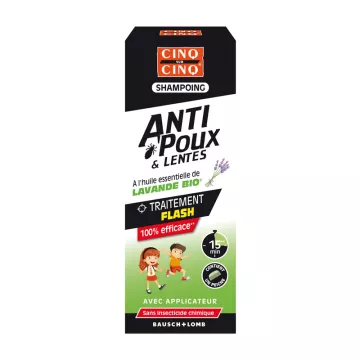
This distinction is essential to ensure you use the product correctly:
Using a repellent on a head that’s already infested is pointless: it won’t kill the existing lice. Conversely, a treatment isn’t meant to be used continuously as a preventative measure. Properly identifying your situation helps avoid common mistakes in usage.
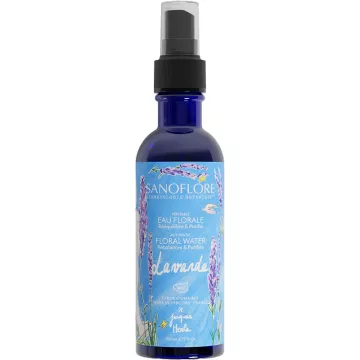
Repellents primarily rely on natural active ingredients known for their repellent properties:tea tree, lavender, and neem are frequently used for their deterrent scent. Oily substances like coconut oil can also make the hair less conducive to lice attachment. Some repellents contain synthetic active ingredients known to be effective. Important: these active ingredients—and especially essential oils—are potent and must be carefully measured; products formulated for this purpose offer a controlled dosage, which is safer than a rough homemade mixture. The effectiveness of repellents is limited and varies from person to person: they reduce the risk but do not eliminate it. It is essential to check the ingredients and the minimum age for use specified by the manufacturer before making a purchase.
For optimal effectiveness, apply the repellent according to the manufacturer’s instructions. Generally, spray the product onto clean, dry hair, ensuring thorough coverage of the entire scalp and hair shafts, paying special attention to the nape of the neck and the area around the ears—areas where lice tend to congregate. Consistency is key: reapply at the recommended intervals, as the repellent effect wears off over time and with washing. Protection is therefore all the more effective when applied consistently during high-risk periods, such as the school year. The repellent can generally be used with other hair care products (shampoos, conditioners), but should ideally be applied last, to clean, dry hair, to prevent it from being diluted. Check the manufacturer’s specific instructions regarding product combinations.
Most repellents are designed for use by children, who are the primary targets of infestations, but precautions are necessary. Always check the minimum age specified by the manufacturer: some products, particularly those containing essential oils, are not suitable for young children. For infants and toddlers, whose skin and scalps are particularly sensitive, choose products specifically formulated for their age group that contain no irritating active ingredients, and always consult a pediatrician or healthcare professional before use. Essential oils, in particular, are not recommended for young children or pregnant women. Performing a skin test on a small area before applying the product more widely for the first time helps detect any potential sensitivity. Gentleness and safety take precedence over effectiveness for the youngest children, for whom close supervision remains the best form of prevention.
Although rare, allergic reactions to repellents are not impossible, especially with essential oils or concentrated active ingredients: itching, redness, or rashes may occur. A skin test on a small area before widespread application is recommended, particularly for children and those with sensitive scalps. As for homemade remedies, it is possible to prepare a repellent using essential oils (tea tree, lavender) diluted in water or a vegetable oil. However, the effectiveness of these preparations varies, and they have not been approved by health authorities. Getting the essential oil concentration right is tricky, and the risk of irritation is higher than with a commercially formulated product. For children, it’s best to stick to products specifically designed for them and always test for tolerance first.
Repellents are only one part of effective prevention, which relies primarily on simple measures. Avoid sharing personal items: brushes, combs, hats, scarves, and helmets. Tie back long hair, especially in group settings. Regularly check children’s heads, especially when they return from school or after group activities, and after any reported cases in the classroom. A thorough comb-through allows for early detection of a nascent infestation, which is much easier to treat than an established one. Teaching children not to share hats and accessories complements these measures. It is the combination of vigilance, good habits, and, if necessary, a repellent during high-risk periods that offers the best protection against lice, rather than any single product alone.