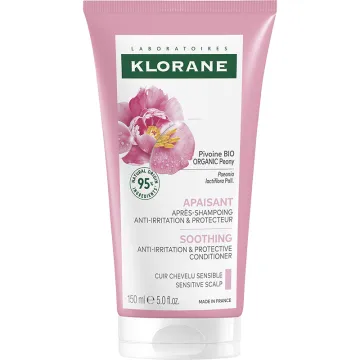
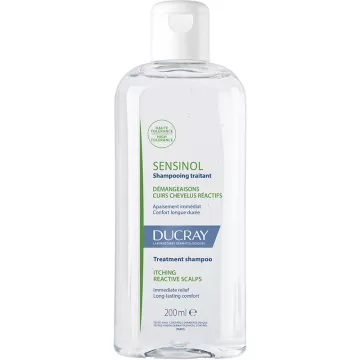
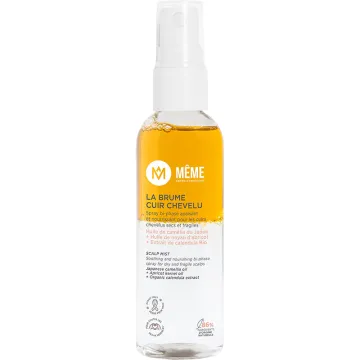
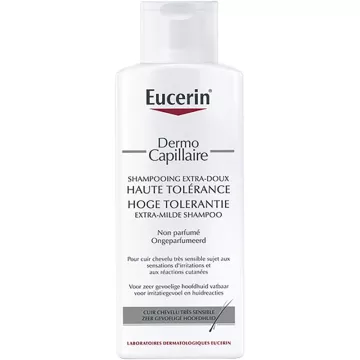
A sensitive scalp reacts more strongly than average to hair care products, water, or friction, though this does not necessarily indicate an active irritation. It is characterized by a recurring tendency toward tightness, mild tingling, or discomfort after washing, which calls for a routine focused on tolerance rather than treating a specific symptom. This sensitivity may be permanent (constitutional predisposition) or occur in phases, particularly during seasonal changes or periods of stress. Choosing a suitable gentle shampoo is the first step in this high-tolerance routine.
Several factors contribute to a sensitive scalp: a naturally thinner skin barrier, washing too frequently or with water that’s too hot, the use of products containing harsh surfactants, or a general atopic predisposition. The simultaneous presence of dandruff can complicate the situation and requires determining whether the discomfort stems from the sensitivity itself or from an associated dandruff imbalance, as both require different approaches.
A shampoo suitable for a sensitive scalp should have a simple formula, free of harsh sulfates and excessive fragrance, with a pH close to that of the scalp. Certified formulations, such as organic shampoos, often limit the number of potentially irritating ingredients while respecting the scalp’s natural hydrolipidic film. It’s recommended to test a new product over a few washes before making it a permanent part of your routine.
Certain ingredients should be limited for people with sensitive scalps: powerful foaming sulfates, silicones that can cause long-term occlusion, concentrated synthetic fragrances, and drying alcohol in styling sprays. Rinsing withthermal water after shampooing can provide immediate relief, especially during temporary flare-ups of sensitivity caused by stress or seasonal changes.
Space out washes as much as your scalp allows, use lukewarm water rather than hot, and gently massage with your fingertips rather than scrubbing vigorously to maintain skin tolerance on a daily basis. Drying should also be gentle: avoid direct and prolonged heat from a hair dryer at the roots.Rhealba oats, a leading soothing active ingredient, can be looked for in the ingredients of hair care products to gently support this routine without causing dryness.
Sensitivity that progresses to visible redness, intense itching, marked flaking, or associated hair loss warrants a dermatological consultation, as these signs may indicate an underlying condition requiring a diagnosis. A conditioner that is not well tolerated and consistently triggers a reaction should also be reported and removed from your routine until you receive medical advice.