What is knee osteoarthritis, and which compartments of the knee does it affect?
Knee osteoarthritis is the most common site of osteoarthritis—it affects 65% of people with osteoarthritis over the age of 65. Its distinctive feature is its compartmentalized distribution, which determines the choice of treatment. Discover our range of joint support products to help your knees from the very first signs of discomfort.
- Medial femorotibial compartment: the most common—pain on the inner side of the knee, genu varum (bowlegs)—exacerbated by being overweight and walking on uneven terrain
- Lateral femorotibial compartment: less common—genu valgum (knock-knees)—often associated with ligament laxity
- Femoro-patellar compartment: pain under the kneecap, when going down stairs, or after prolonged sitting—often associated with patellar chondropathy in young people
- Tricompartmental knee osteoarthritis (all 3 compartments) represents the most advanced stage — strong indication for surgery
- Specific risk factors: high BMI (each kilogram × 3 to 5 increases pressure on the knee), history of meniscectomy, pathological limb alignment (varus/valgus)
What supplements are recommended for knee osteoarthritis?
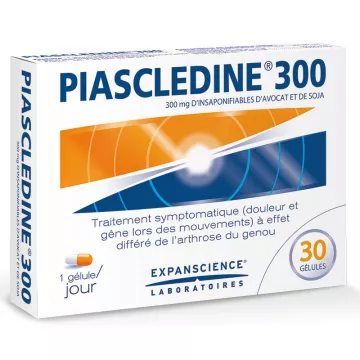
Chondroprotective active ingredients are better documented for knee osteoarthritis than for any other joint—the main clinical studies (GAIT, GUIDE) used knee osteoarthritis as a model. Find these formulas in our joint pain product line.
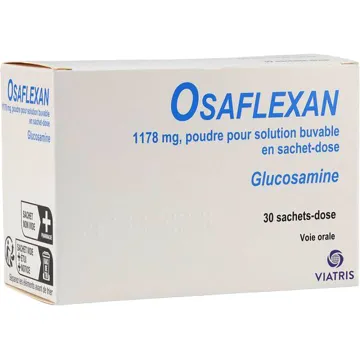
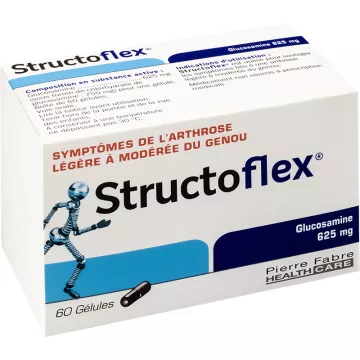
- Glucosamine 1,500 mg/day: the most robust clinical data for knee osteoarthritis—improves comfort and reduces morning stiffness as early as 4–6 weeks—minimum 3-month treatment course
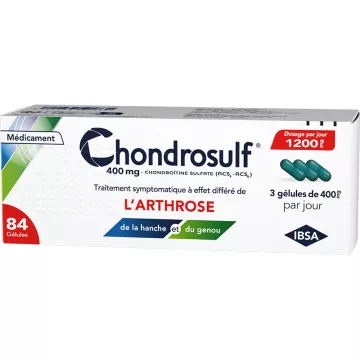
- Chondroitin 800–1,200 mg/day: inhibits metalloproteinases and reduces joint space narrowing over the long term— chondroitin product line
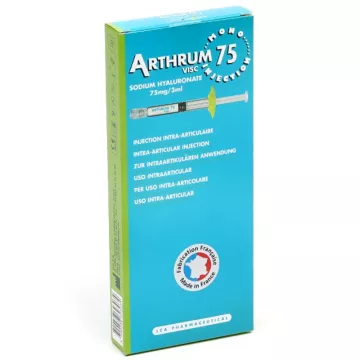
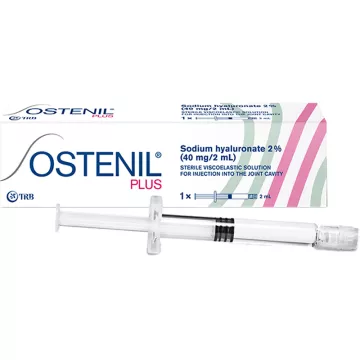
- Oralhyaluronic acid: improves the viscosity of synovial fluid — bioavailability of low-molecular-weight forms — as a temporary measure or in addition to injectable viscosupplementation
- Turmeric (curcumin) + boswellia: comparative efficacy to NSAIDs in several studies on knee osteoarthritis — without the gastrointestinal side effects of NSAIDs
- Omega-3 (EPA/DHA): reduction in synovial inflammation — complementary benefit to structural chondroprotectants
Muscle strengthening and orthotics: mechanical approaches to knee osteoarthritis
Mechanical correction is just as important as supplementation in knee osteoarthritis—two complementary approaches to reducing stress on the cartilage.
- Quadriceps strengthening: the most important muscle for knee stability—each additional kilogram of quadriceps strength reduces intra-articular pressure—closed-chain exercises (leg press, half-squats) are better tolerated than leg extensions on a bench
- Hamstring strengthening: antagonists of the quadriceps—the agonist/antagonist balance is crucial for joint stability and the prevention of meniscal injuries
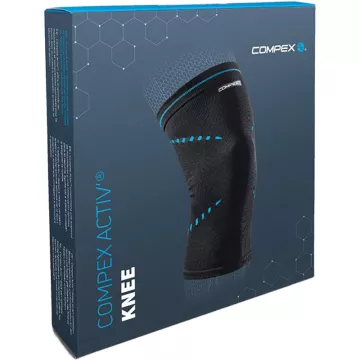
- Knee unloading brace (valgus brace): for medial femorotibialknee osteoarthritis—transfers stress from the arthritic compartment to the healthy compartment—significantly reduces pain while walking
- Orthotic insoles with an external wedge: an alternative to braces—correct varus and redistribute plantar pressure—prescribed by a podiatrist
- Shock-absorbing shoes: shock-absorbing insoles — reduce peak impact pressure on the cartilage with each step
When to choose between a unicompartmental knee replacement and a total knee replacement?
When conservative treatments and injections are no longer sufficient, two surgical options are available depending on the affected compartment and the patient’s profile—to be discussed with an orthopedic surgeon in addition to using our joint pain product lines.
- Unicompartmental Knee Replacement (UKR): for isolated gonarthrosis affecting a single compartment—less invasive than total knee replacement—faster recovery (4–6 weeks)—more natural feel—can be converted to a total knee replacement if osteoarthritis progresses
- Total Knee Replacement (TKR): for bicompartmental or tricompartmental knee osteoarthritis—complete replacement of the articular surfaces—lifespan of 15–20 years—satisfaction rate of 80–85%—recovery time of 3–6 months
- Tibial valgus osteotomy: an option for younger patients (< 60 years) with medial knee osteoarthritis and genu varum — corrects the limb axis without a prosthesis — preserves bone mass
- Common indications for surgery: disabling pain at rest and at night, low functional score, stage 4 on X-ray, failure of conservative treatments lasting > 6 months