0
Menu
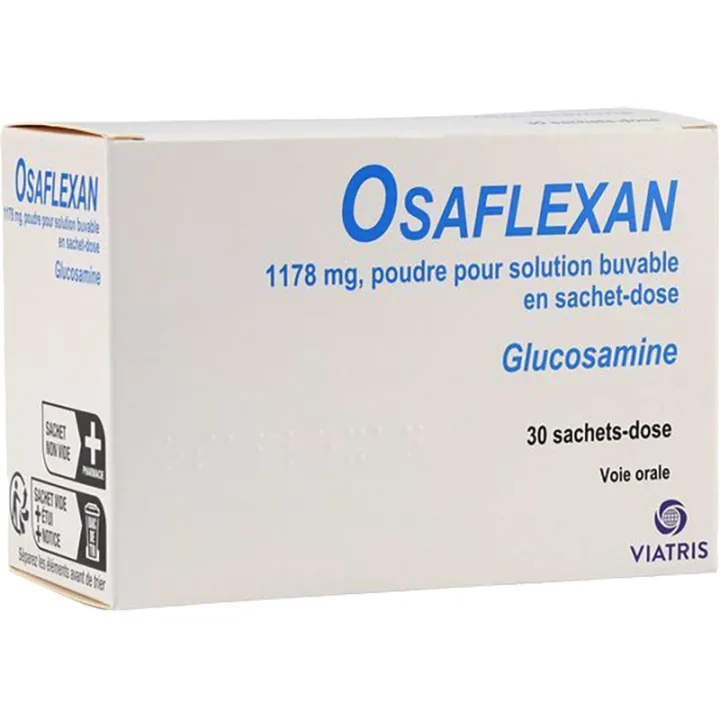
Osaflexan 1178 mg Glucosamine 30 sachets
Over-the-counter medication

Osaflexan 1178 mg Glucosamine 30 sachets

Brand : Mylan Viatris Mylan Viatris
product contains :

Osaflexan 1178 mg sachets are a glucosamine-based treatment to relieve the symptoms of osteoarthritis of the knee. It acts deep down to improve mobility and reduce joint discomfort. Ideal as a regular treatment to regain flexibility and ease of movement in everyday life.

€19.35 EXCL. VAT €21.29 INCL. VAT
This product is an over-the-counter medication. Please consult the package insert before ordering online.
Replenishment in progress Pre-order Secure payment
Reference : 3400939701820
You must be logged in to add this product to a list. Customer login
See delivery conditions

Our doctors of pharmacy advise you

Chondrosulf 400MG CAPSULES 84 Juniper -€2.00 Chondrosulf 400MG CAPSULES 84 Juniper
€21.99 €23.99
Shipped within 24h
Structum 500MG BOX 60 CAPSULES Structum 500MG BOX 60 CAPSULES
€16.99
Shipped within 24h
FLECTOR Tissugel HEPARIN plaster DRUG -€1.50 FLECTOR Tissugel HEPARIN plaster DRUG
€10.45 €11.95
Add to cart
Shipped within 24h
SYNOVIAL JOINT 4CH 7CH 9CH drinkable drops Homeopathy Boiron SYNOVIAL JOINT 4CH 7CH 9CH drinkable drops Homeopathy Boiron
7 C Dilution 60 ml +
€12.31
Add to cart
In stock - preparation within 1 to 2 working days

When should Osaflexan 1178 mg be used to relieve osteoarthritis of the knee?

When your knee becomes stiff and painful when you wake up or after a long walk, it's often a sign of osteoarthritis that's slowly taking hold. This medication acts as a support for your joint, a little like feeding a worn-out cushion to make it supple again. Its aim is not to act immediately, but to support your body over time, so that your movements become more fluid.

Glucosamine, its active ingredient, acts as a "building material" for cartilage. Think of your cartilage as a shock-absorbing sponge: with age and wear, it becomes thinner. By providing this component, you help your body to maintain this essential structure, which in turn contributes to daily joint comfort.

When taken regularly, this treatment helps to support mobility and limit the sensation of locking in the knee. As a result, you can resume certain simple activities, such as climbing stairs or getting up from a chair, with greater ease. This gradual action requires patience, as it is part of a long-term process.

It's important to understand that this drug does not target sudden or intense pain. Rather, it acts as a long-term ally to alleviate the chronic discomfort associated with mild to moderate osteoarthritis. It's a support, not an immediate solution.

As a complement, combining this treatment with a product like Flector Gel 1% Antalgique provides targeted local action, reinforcing the overall effectiveness on joints by combining different mechanisms to optimize cartilage support and protection.

How to use this product

Take 1 sachet a day: Pour its contents into a large glass of water (approx. 250 ml), mix, then consume the solution with a meal to promote good digestive tolerance.

Treatment is intended for adults only. The first effects may appear after several weeks, sometimes longer. If no improvement is felt after 2 to 3 months, medical advice is recommended before continuing.

Give your opinion on the advice for use and dosage of Osaflexan 1178 mg with our partner Avis Vérifiés after your purchase.

Precautions

  • For adults only
  • Not suitable for pregnant women
  • Not recommended during breast-feeding
  • Do not use to treat acute pain
  • Ask your doctor for advice in case of associated pathology
  • Follow recommended treatment duration

What is the composition of this joint comfort medication?

The active substance is :
Glucosamine sulfate. Each sachet contains 1884 mg of glucosamine hydrochloride and anhydrous sodium sulfate, equivalent to 1500 mg glucosamine sulfate or 1178 mg glucosamine.

Other ingredients include :
aspartam (E951), sorbitol (E420), citric acid (E330), macrogol 4000.

Packaging :

Box of 30 sachets. Available at the best price from our online pharmacy.

Our expert advice on Osaflexan 1178 mg to relieve osteoarthritis of the knee

To optimize the effects, combine taking Osaflexan with gentle, regular physical activity such as walking or cycling. Cartilage loves movement: it stimulates its natural nutrition. Remember, too, to maintain a stable weight to limit pressure on the knee. Last but not least, take your medication regularly: consistency makes all the difference with this type of treatment.

FAQ

How long does it take to feel the effects?
Effects are not immediate. It generally takes several weeks of regular use to see an improvement.

Can I take this treatment if I'm in severe pain?
No, this medication is not suitable for acute pain. It acts on the background, not as an emergency treatment.

Is it suitable for all types of osteoarthritis?
It is mainly indicated for mild to moderate osteoarthritis of the knee. Medical advice is recommended for other types of osteoarthritis.

Pharmacovigilance Report an adverse drug reaction(s)

Download PDF leaflet

NOTICE

ANSM - Updated on : 09/05/2025

Product name

OSAFLEXAN 1178 mg, powder for oral solution in dose sachet

Glucosamine

Sidebar

Please read this leaflet carefully before taking this medicine, as it contains important information for you.

Always take this medicine exactly as it is prescribed by your doctor, pharmacist or pharmacist.

- Keep this leaflet. You may need to read it again.

- Ask your pharmacist for any advice or information you may need.

- If you have any further questions, ask your doctor, pharmacist or nurse.

- Talk to your doctor or pharmacist if you experience any of these side effects. This also applies to any side effects not mentioned in this leaflet. See section 4.

- You should contact your doctor if you do not feel any improvement or if you feel less well after 30 days.

What does this leaflet contain?

1. What is OSAFLEXAN 1178 mg, powder for oral solution in a sachet and what is it used for?

2. What do I need to know before taking OSAFLEXAN 1178 mg, powder for oral solution in a sachet?

3. How should I take OSAFLEXAN 1178 mg, powder for oral solution in a sachet?

4. What are the possible side effects?

5. How to store OSAFLEXAN 1178 mg, powder for oral solution in a sachet?

6. Package contents and other information.

1. WHAT IS OSAFLEXAN 1178 mg, powder for oral solution in a sachet AND WHAT IS IT USED FOR?

Pharmacotherapeutic class - ATC code: M01AX05

OSAFLEXAN contains glucosamine, which belongs to the group of drugs known as other non-steroidal anti-inflammatory and anti-rheumatic agents.

OSAFLEXAN is used to relieve symptoms associated with mild to moderate osteoarthritis of the knee.

2. WHAT DO I HAVE TO KNOW BEFORE TAKING OSAFLEXAN 1178 mg, powder for drinkable solution in a sachet?

Never take OSAFLEXAN 1178 mg, powder for oral solution in a sachet:

- if you are allergic to glucosamine or to any of the other components of this medicine listed in section 6.

- if you are allergic to shellfish, as the active substance, glucosamine, is extracted from them.

Warnings and precautions

Talk to your doctor or pharmacist before taking OSAFLEXAN 1178 mg, powder for oral solution in a sachet if you :

- have diabetes or impaired glucose tolerance. More frequent blood glucose checks may be necessary when you start taking OSAFLEXAN.

- have a known risk factor for cardiovascular disease (e.g. hypertension, diabetes, hypercholesterolemia or smoking); abnormal hypercholesterolemia has been observed in some patients treated with glucosamine.

- suffer from asthma. When you start taking OSAFLEXAN, you should be aware that symptoms may worsen.

You should immediately stop taking OSAFLEXAN and consult your doctor if you develop symptoms of angioedema: sudden swelling of the face, tongue and/or pharynx, difficulty swallowing, or allergic reactions accompanied by breathing difficulties.

Children and teenagers

Not applicable.

Other medicinal products and OSAFLEXAN 1178 mg, powder for drinkable solution in sachet-dose

Tell your doctor or pharmacist if you are taking, have recently taken or may take any other medicines.

Precautions should be taken if OSAFLEXAN is to be taken in combination with other drugs, in particular:

- Certain types of medication used to prevent blood clotting (e.g. warfarin, dicoumarol, phenprocoumon, lacenocoumarol and fluindione). The effect of these drugs may be stronger when used with glucosamine. Patients on such concomitant therapy should therefore be monitored very closely when starting or stopping glucosamine therapy.

- tetracycline (antibiotic).

Nonsteroidal anti-inflammatory drugs (NSAIDs) may be administered with glucosamine sulfate.

OSAFLEXAN 1178 mg, powder for oral solution in dose sachet with food, drink and alcohol

OSAFLEXAN should be taken with meals.

Pregnancy and breast-feeding

If you are pregnant or breast-feeding, think you may be pregnant or are planning to become pregnant, ask your doctor or pharmacist for advice before taking this medicine.

OSAFLEXAN should not be used during pregnancy.

OSAFLEXAN should not be used during breast-feeding.

Sportsmen

Not applicable.

Driving and use of machinery

The effects on the ability to drive vehicles and use machines have not been studied.

If you experience dizziness or drowsiness during treatment with OSAFLEXAN, you should not drive or operate machinery.

OSAFLEXAN 1178 mg, powder for oral solution in a sachet, contains laspartame, sodium and sorbitol.

- OSAFLEXAN contains 2.5 mg daspartam (E951) in each sachet. Laspartam contains a source of phenylalanine. This can be dangerous for people with phenylketonuria (PKU), a rare genetic disorder characterized by an accumulation of phenylalanine that cannot be eliminated properly by the body.

- OSAFLEXAN contains 2029 mg sorbitol (E420) in each sachet. Sorbitol is a source of fructose. If your doctor has informed you that you (or your child) have an intolerance to certain sugars, or if you have been diagnosed with hereditary fructose intolerance (HFI), a rare genetic disorder characterized by the inability to break down fructose, talk to your doctor before you (or your child) take or receive this medication.

- This medicine contains 151 mg sodium (the main component of table salt) in each sachet. This is equivalent to 7.6% of the maximum recommended daily allowance of sodium for an adult.

3. HOW DO I TAKE OSAFLEXAN 1178 mg, powder for oral solution in a sachet?

Always take this medicine exactly as instructed in this leaflet or as directed by your doctor or pharmacist. Check with your doctor or pharmacist if in doubt.

Dosage

The usual dose is 1 sachet (1178 mg glucosamine) once a day, orally, with meals.

Dissolve the sachet powder in a glass of water (250 ml) and drink.

Glucosamine is not indicated for the treatment of acute pain symptoms. Symptoms (particularly pain) may not be relieved for several weeks, or even longer. If there is no relief after 2 or 3 months, further treatment with OSAFLEXAN should be reconsidered.

Use in children and adolescents

OSAFLEXAN should not be used in children and adolescents under 18 years of age.

If you have taken more OSAFLEXAN 1178 mg, powder for oral solution in a sachet, than you should have :

Consult your doctor or pharmacist immediately.

If you have taken large amounts of OSAFLEXAN, you should consult your doctor or hospital. Signs and symptoms of glucosamine overdose may include headache, dizziness, confusion, joint pain, nausea, vomiting, diarrhea or constipation. Stop taking glucosamine as soon as these signs appear.

If you forget to take OSAFLEXAN 1178 mg, powder for oral solution in a sachet:

Do not take a double dose to make up for the one you forgot to take. If it is almost time for your next dose, disregard the missed dose and continue taking OSAFLEXAN as scheduled.

If you stop taking OSAFLEXAN 1178 mg, powder for oral solution in a sachet:

Talk to your doctor if a change in your treatment could be considered.

If you have any further questions about the use of this medicine, ask your doctor or pharmacist for more information.

4. WHAT ARE THE POSSIBLE SIDE EFFECTS?

Like all medicines, this drug may cause undesirable effects, but they do not occur systematically in everyone. Stop taking this medicine and contact your doctor immediately if you experience symptoms of angioedema, such as swelling of the face, tongue and/or throat and/or difficulty swallowing, hives and difficulty breathing.

The following adverse reactions have been reported:

Common (up to 1 in 10 people):

o Headache,

o Fatigue,

o Nausea,

o Abdominal pain,

o Indigestion,

o Diarrhea,

o Constipation

o Flatulence

o Drowsiness

Uncommon (up to 1 in 100 people):

o Rash

o Erythema

o Pruritus

o Reddening.

Undetermined frequency (frequency cannot be estimated on the basis of available data):

o Allergic reactions (Hypersensitivity)

o Swelling of legs, feet and ankles,

o Poorly controlled diabetes

o Dizziness,

o Asthma/Worsened asthma

o Vomiting

o Fluctuation in International Normalized Ratio (INR) and elevation of liver enzymes.

o Jaundice.

Hypercholesterolemia has been reported, but no causal link has been demonstrated.

Reporting side effects

If you experience any side effects, please tell your doctor, pharmacist or nurse. This also applies to any side effects not mentioned in this leaflet. You can also report adverse reactions directly via the national reporting system: Agence nationale de sécurité du médicament et des produits de santé (ANSM) and the network of Centres Régionaux de Pharmacovigilance - Website: https: //signalement.social-sante.gouv.fr

By reporting adverse reactions, you are helping to provide more information on drug safety.

5. HOW TO CONSERVE OSAFLEXAN 1178 mg, powder for oral solution in a sachet?

Keep out of sight and reach of children.

Do not use this medicine after the expiration date indicated on the case and sachet after EXP. The expiration date refers to the last day of that month.

Store at a temperature not exceeding 30°C.

Do not dispose of any medicine down the drain or in the household waste. Ask your pharmacist to dispose of any medicines you no longer use. These measures will help protect the environment.

6. CONTENTS AND OTHER INFORMATION

What OSAFLEXAN 1178 mg, powder for oral solution in a sachet, contains

- The active substance is :

glucosamine sulfate.

Each sachet contains 1884 mg of glucosamine hydrochloride and anhydrous sodium sulfate, equivalent to 1500 mg glucosamine sulfate or 1178 mg glucosamine.

- Other ingredients include

aspartam (E951), sorbitol (E420), citric acid (E330), macrogol 4000.

What is OSAFLEXAN 1178 mg, powder for oral solution in a sachet, and what does it contain?

This medicine comes in the form of a white, crystalline powder for oral solution.

Each box contains 30 or 90 sachets.

Not all presentations may be marketed.

Marketing authorization holder

COOPER CONSUMER HEALTH B.V.

VERRIJN STUARTWEG 60

1112AX DIEMEN

NETHERLANDS

Marketing authorization holder

COOPERATION PHARMACEUTIQUE FRANCAISE

PLACE LUCIEN AUVERT

77000 MELUN

Manufacturer

ROTTAPHARM LTD

DAMASTOWN INDUSTRIAL PARK

MULHUDDART

DUBLIN 15

IRELAND

or

SIGMAR ITALIA S. P.A

VIA SOMBRENO 11

24011 ALME

ITALY

Drug names in member states of the European Economic Area

[to be completed subsequently by the owner].

The last date on which this leaflet was revised was :

[to be completed at a later date by the owner].

Other

Detailed information on this product is available on the ANSM (France) website.

FAMILY VIDAL

OSAFLEXAN

Updated January 29, 2021
Drug family : Slow-acting antiarthrosic

Indications

This drug contains a substance naturally present in cartilage and synovial fluid.

It is used in the symptomatic treatment of osteoarthritis of the knee.

Presentations

OSAFLEXAN: powder for drinkable solution; box of 30 sachets-dose
Optional prescription - Not reimbursed - Free price

Prices do not include dispensing fees.

Composition

p sach
Glucosamine1178 mg
Aspartam+
Sorbitol+
Sodium141 mg

Contraindications

Do not use if you are allergic to shellfish (the active substance is obtained from shellfish).

Warning

Precautions should be taken in cases of diabetes, asthma or high blood cholesterol.

This medicine contains a significant amount of salt (sodium).

Attention : conducteurDizziness and drowsiness may occur. Make sure you tolerate this drug before driving or operating hazardous machinery.

Drug interactions

Tell your doctor or pharmacist if you are taking an oral anticoagulant.

Fertility, pregnancy and breast-feeding

The effect of this drug during pregnancy or breast-feeding is not well known: it is not recommended for pregnant or breast-feeding women.

Directions for use and dosage

This medicine may be taken with or without meals.

The contents of the sachet should be dissolved in a glass of water.

Usual dosage :

  • Adults over 18: 1 sachet per day.

Advice

The analgesic effect of this drug is delayed: it may only appear after several weeks of treatment. If no effect has appeared after 2 or 3 months, you should see your doctor again.

In the case of osteoarthritis of the knee, it is advisable to avoid being overweight and to take appropriate exercise (swimming, walking, etc.) to maintain joint mobility.

Possible side effects

Common (1-10% of patients): headache, fatigue, nausea, abdominal pain, difficult digestion, constipation or diarrhea.

Uncommon (less than 1% of patients): rash, itching, hot flush.

Undetermined frequency: dizziness, vomiting, aggravation of asthma, edema, urticaria, increase in blood cholesterol levels, change in blood sugar levels.

LEXICON

allergy

Skin reaction (itching, pimples, swelling) or general discomfort following contact with a particular substance, the use of a medicine or the ingestion of a food. The main forms of allergy are eczema, urticaria, asthma, angioedema and allergic shock (anaphylactic shock). Food allergy can also lead to digestive problems.

analgesic

Drug that acts against pain. Analgesics act either directly on the pain centers in the brain, or by blocking the transmission of pain to the brain.

Synonym: analgesic.

anticoagulant

A drug that prevents blood clotting, thus preventing the formation of clots in blood vessels.
Anticoagulants are mainly used to treat or prevent phlebitis and pulmonary embolism, particularly after surgery. They are also used to prevent the formation of clots in the heart during rhythm disorders such as atrial fibrillation, or in patients with artificial heart valves.
There are three categories of anticoagulants:

  • direct oral anticoagulants (DOACs), which specifically block certain enzymes involved in coagulation, such as thrombin or factor Xa. Their use usually requires no blood monitoring.
  • anti-vitamin K (AVK) drugs, which block the action of vitamin K, and whose effectiveness must be regularly monitored by a blood test known as INR.
  • injectable anticoagulants, derived from heparin. Their use requires regular measurement of blood platelets.

Anticoagulants should not be confused with antiaggregants such as aspirin, which fight blood clots by a different mechanism and do not have the same indications.

See article: Anticoagulant treatments

osteoarthritis

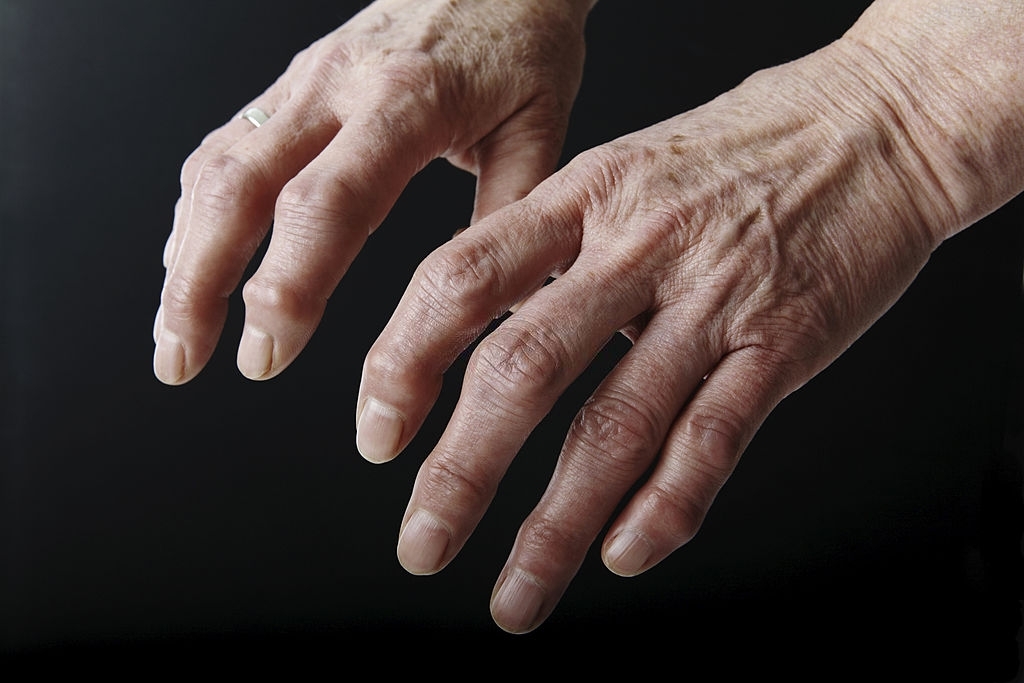
Wear and tear of cartilage, responsible for joint pain and limited movement.

See article: Osteoarthritis and rheumatism

asthma

Disease characterized by difficulty in breathing, often resulting in wheezing. Asthma, whether permanent or acute, is caused by narrowing and inflammation of the bronchial tubes.

See article: Asthma

cholesterol

Main fat circulating in the blood. It is used in the body as a raw material, notably for cell envelopes and the synthesis of steroid hormones. Excess cholesterol is eliminated in the bile, but it can also accumulate in the arteries, forming atherosclerotic plaques.

See article: Cholesterol

constipation

Slowing of intestinal transit resulting in fewer bowel movements.

See article: Constipation in adults or Constipation in babies and children

diabetes

A general term for diseases characterized by profuse urination and intense thirst. Used alone, the word diabetes generally refers to diabetes mellitus, which corresponds to a disturbance in the body's regulation of sugars by insulin. It is characterized by an increase in sugar (glucose) in the blood and its possible presence in urine. There are two types of diabetes mellitus: type 1, or insulin-dependent diabetes, which requires treatment with insulin injections, and type 2, or non-insulin-dependent diabetes, which can initially be treated with oral antidiabetics.

See article: Type 1 diabetes or Type 2 diabetes

diarrhea

The strict medical meaning of diarrhea is "the emission of stools that are too frequent and abundant". In fact, common sense equates diarrhea with the notion of frequent, liquid stools. Normally, stools are pasty, but the emission of liquid or barely-formed stools, with no associated pain or particular disorder, is not pathological. Diarrhea occurs when liquid stools are repeatedly passed during the day, and the need for them is urgent or painful.

Many drugs can accelerate intestinal transit and make stools more liquid, without this undesirable effect being a real cause for concern.

Antibiotics can alter the digestive flora, essential for digestion, and cause diarrhoea, which is more or less uncomfortable but benign. The effect may appear immediately or after a few days' treatment. A serious and exceptional form of diarrhea, pseudomembranous colitis, may be observed after antibiotic treatment; this condition is characterized by the emission of mucus and false membranes (resembling flaps of skin) associated with abdominal pain; constipation may replace the initial diarrhea. Pseudomembranous colitis may occur several days after antibiotic treatment has stopped, and requires urgent medical advice.

See article: Diarrhea and gastroenteritis in adults or Diarrhea and gastroenteritis in children

skin rash

Appearance of pimples or patches on the skin. These lesions may be caused by food or medication, and may reflect an allergy or toxic effect. Many viruses can also cause rashes: rubella, roseola and measles are the best known.

undetermined frequency

The frequency of an adverse reaction is described in official documents as follows:

  • Very frequent: seen in more than one patient in 10
  • Common: occurring in less than one patient in 10 but more than one patient in 100
  • Uncommon: occurring in less than one patient in 100 but more than one patient in 1000
  • Rare: occurs in less than one patient in 1000 but more than one patient in 10000
  • Very rare: occurs in less than one patient in 10,000
  • Undetermined frequency: adverse reaction too rare to be able to state its frequency, or concerning a very old drug for which no studies are available to quantify its frequency of occurrence.
blood glucose

Quantity of sugar present in a liter of blood. It usually varies between 0.6 and 1.1 g/l (3.3 mmol/l to 6 mmol/l) in fasting subjects. A diagnosis of diabetes should be considered when blood sugar levels exceed 1.2 g/l (6.6 mmol/l).

Consult the article: Monitoring blood glucose levels in type 1 diabetes or Controlling blood glucose levels in type 2 diabetes.

salt

A chemical substance, the best known of which is sodium chloride, or table salt. Diet salt does not contain sodium, which is generally replaced by potassium.

See article: Salt, friend or foe?

sodium

Mineral substance that can form salts, notably with chlorine (sodium chloride, or table salt).

sorbitol

Sorbitol is a sugar found in certain fruits (prunes, for example). Because it has fewer calories than industrial sugar (sucrose), it is used as a sweetener (under the acronym E420) but also as a stabilizer, for example in certain medicines. During digestion, sorbitol is converted into fructose (fruit sugar). Some people have difficulty digesting fructose, and consequently experience intestinal problems (diarrhoea) when ingesting products containing sorbitol.

symptomatic treatment

Treatment that eliminates or attenuates the symptoms of a disease without attacking its cause.

urticaria

An eruption of pimples on the skin, most often of allergic origin. The pimples resemble nettle stings and vary in color from pale pink to red. Hives can appear or disappear within minutes, causing intense itching; they can be localized or generalized to the entire skin surface. When urticaria occurs on a daily basis and no cause is found, we speak of spontaneous chronic urticaria.

vertigo

A symptom that may refer to an impression of loss of balance (common sense) or, more strictly, a sensation of spinning around oneself or the environment (medical sense).

See article: Vertigo.

product contains :

Advice from our naturopaths

The place of homeopathy in the treatment of osteoarthritis The place of homeopathy in the treatment of osteoarthritis

Osteoarthritis is a degenerative disease of the joint characterized by destruction of the articular cartilage and marginal osteophytosis . Two forms of osteoarthritis are described: primary osteoarthritis and secondary osteoarthritis . In primary osteoarthritis, there is no clear or precise triggering cause. It mainly occurs in the subject over fifty years, presenting a predisposed ground. Secondary osteoarthritis follows a joint fracture, joint dysfunction of various causes (septic arthritis, malformation, etc.). It can be…

Read the article on the blog
Osteoarthritis of the knees: get moving! Osteoarthritis of the knees: get moving!

Osteoarthritis is caused by deterioration of the cartilage in the joints. This deterioration causes intense pain caused by constant rubbing of the bones. In the majority of cases, this pathological disease affects the hips, spine, fingers and knees. To date, there is no cure for osteoarthritis. Nevertheless, whatever the area affected, specialists agree that regular physical activity helps to relieve…

Read the article on the blog
Risk factors for joint pain Risk factors for joint pain

Osteoarthritis is the main joint pathology, but it is complex because it is influenced by a variety of factors. Age, excess weight, the menopause and other rheumatic conditions such as chondrocalcinosis play a key role in its onset. Genetically, there is a well-established family predisposition. Local factors also contribute to its development. Although the genetic aspect is predominant, the onset…

Read the article on the blog
Natural Health Advice