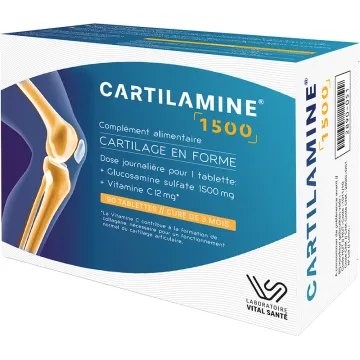
What is joint flexibility, and what does it really depend on?
Joint flexibility is the range of motion a joint can achieve without pain or excessive resistance—it depends not only on cartilage but, above all, on the quality of the periarticular soft tissues: the joint capsule, ligaments, tendons, and muscles. Our joint pain product line and our joint comfort page offer solutions tailored to every need.
- Joint capsule and ligaments: gradually thicken and become fibrotic in the absence of regular use—the main cause of loss of flexibility with age, distinct from cartilage wear
- Tendons: lose their elasticity due to the accumulation of unrepaired microtraumas—they can be maintained through gradual stretching and proper nutrition
- Periarticular muscles: Chronic muscle contracture mechanically limits joint range of motion even if the cartilage is intact
- Joint flexibility is specific to each joint—having flexible hips does not guarantee flexible shoulders
What supplements support the flexibility of joint tissues?
Certain active ingredients specifically target the elasticity of connective tissues—tendons, ligaments, and the joint capsule—beyond just the cartilage.
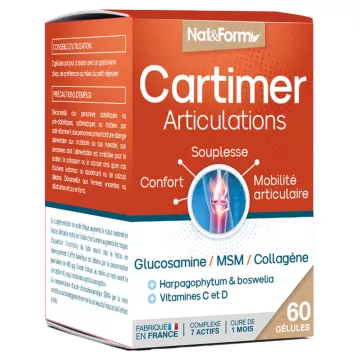
- MSM (methylsulfonylmethane): provides the organic sulfur necessary for the synthesis of collagen disulfide bonds—improves the elasticity and strength of connective tissues—1,000–3,000 mg/day—particularly effective on tendons and ligaments
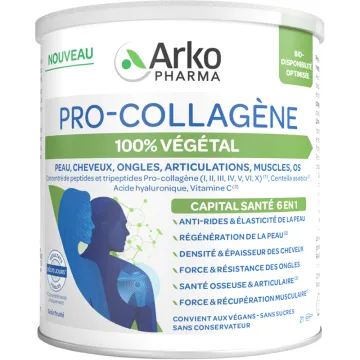
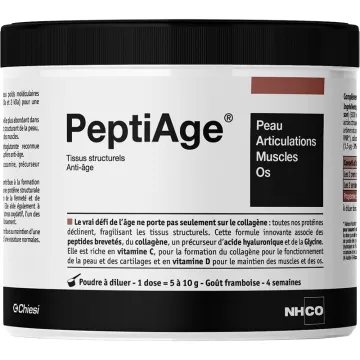
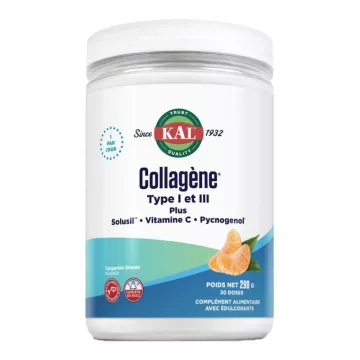
- Hydrolyzed marine collagen: provides the amino acids (glycine, proline) needed for the synthesis of type I collagen (tendons, ligaments) and type II collagen (cartilage)— collagen range for joints
- Omega-3 (EPA/DHA): reduce fibrosis in connective tissues by decreasing pro-fibrotic mediators — indirect “softening” effect on the joint capsule and ligaments
- Vitamin C: an essential cofactor for collagen synthesis — often overlooked, yet it determines the effectiveness of collagen taken as a supplement
- Magnesium: reduces muscle spasms — mechanically increases joint range of motion without directly affecting connective tissues
Which lifestyle habits preserve or impair joint flexibility?
Joint flexibility is highly sensitive to lifestyle—certain habits improve it long-term, while others insidiously impair it.
- Tobacco: Nicotine reduces blood flow to tendons and ligaments (which are already poorly vascularized), slows collagen synthesis, and accelerates the breakdown of connective tissues—a measurable effect on flexibility is seen after just 5 years of smoking
- Alcohol: promotes tissue dehydration and disrupts the protein synthesis necessary for collagen repair—regular consumption is associated with an increased risk of tendinopathies
- Hydration: Connective tissues contain 60–70% water — chronic dehydration reduces their elasticity — a minimum of 1.5 to 2 L/day
- Prolonged inactivity: immobility promotes capsular fibrosis and soft tissue retraction—take active breaks every 45–60 minutes with light joint mobilization
- Inappropriate footwear: frequent wearing of high heels → Achilles tendon retraction and reduced tibiotarsal mobility; insoles without cushioning → repeated microtrauma to weight-bearing joints
How can you maintain joint flexibility based on your activity level?
- Beginners and sedentary individuals: Start with gentle, weight-bearing mobilization exercises (while lying down or in water)—beginner yoga or Pilates 2–3 times a week—never force a cold joint
- Regular exercisers: static stretches held for 30–60 seconds after exercise—work through the full range of motion with each movement rather than doing short, rapid repetitions
- Seniors: Tai Chi and water aerobics are particularly well-suited—they maintain flexibility and proprioception without putting stress on the joints—see our joint care product line
- People with joint conditions: consult a physical therapist to tailor exercises to the specific needs of the affected joint — do not strain an inflamed joint
- Sleep: 7 to 9 hours promote nighttime secretion of GH (growth hormone), which is involved in the repair of collagenous tissues