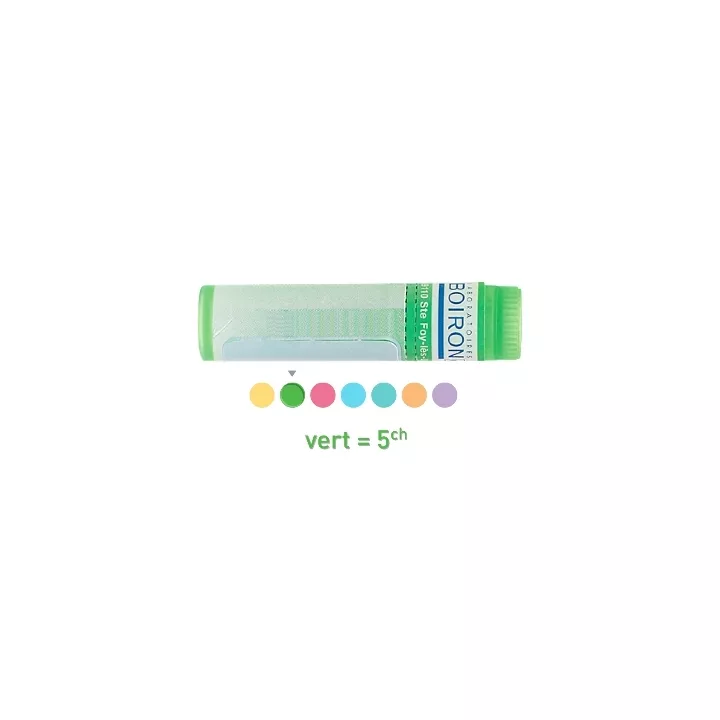
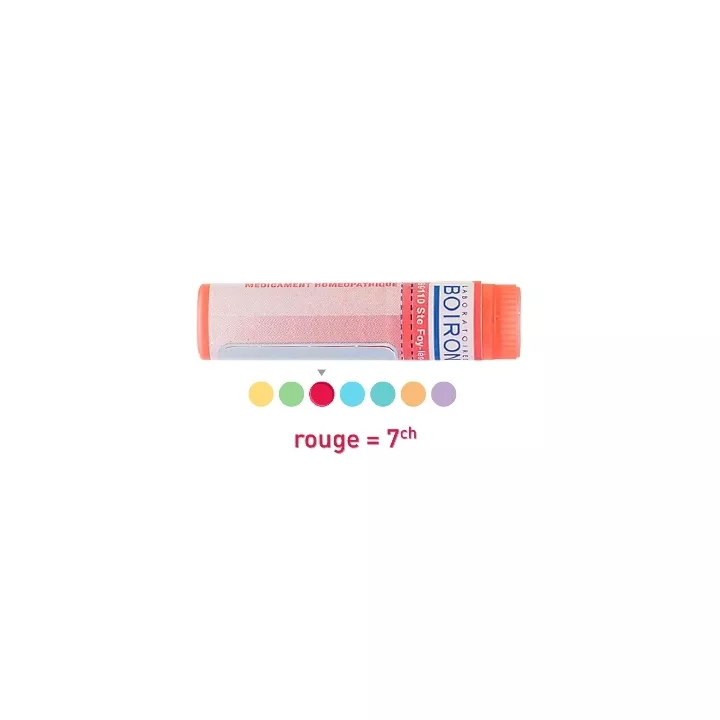
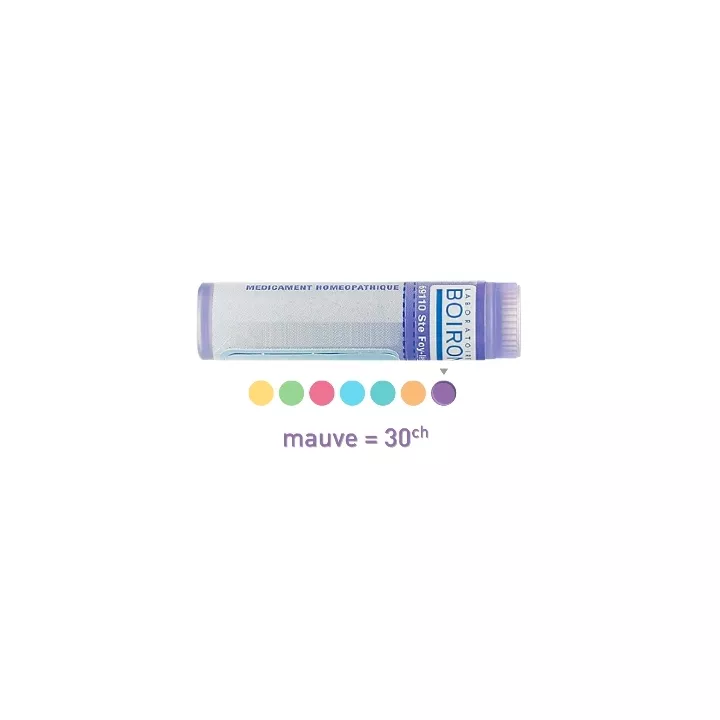
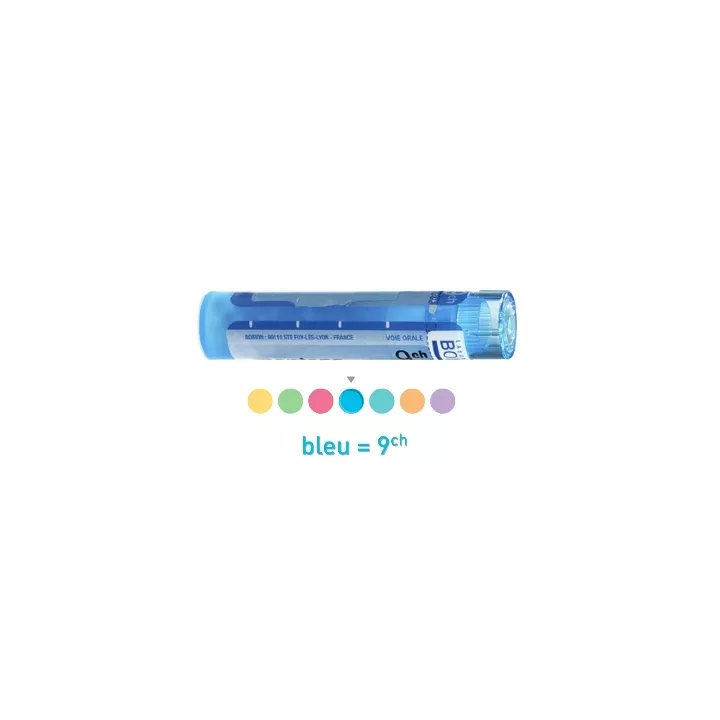
Boiron Aconitum Napellus single-dose homeopathic remedy is available in the following homeopathic dilutions: 5CH, 7CH, 9CH, 12CH, 15CH, 30CH
Aconite, also known as monkshood, is a highly toxic plant. However, through homeopathic processes, it can be transformed into an effective remedy called Aconitum Napellus. This remedy is particularly recommended for treating fever,insomnia, high blood pressure, amenorrhea, neuralgia, heart disease, and behavioral disorders. However, the dilution of Aconitum Napellus to be used depends on the condition and, possibly, the patient’s condition. In most cases, the patient should place 5 granules of this remedy under the tongue for each dose. It should be noted that Aconitum napellus must be used under the supervision of a healthcare professional to minimize any risk of adverse side effects.
French name: ACONIT NAPEL
Registered medication: EH00003
Listed in the pharmacopoeia
Origin: Plant
Presentation of the Aconitum napellus species in single-dose homeopathic preparations
About Aconitum napellus
Aconitum napellus is a homeopathic remedy often recommended for the sudden onset of certain symptoms. It is particularly effective for treating conditions that arise abruptly following an emotional shock, exposure to cold, or exposure to heat. Here are some guidelines and tips for using Aconitum napellus effectively.
When should you consider Aconitum napellus?
When symptoms appear suddenly and with great intensity, Aconitum napellus may be the appropriate remedy. This homeopathic remedy is also effective for treating a sudden, intense fever accompanied by anxiety and restlessness, but without sweating. If sweating occurs, it is advisable to stop taking Aconitum napellus and take Belladonna instead.
Indications for Use of Aconitum napellus
Aconitum napellus is indicated in the following situations:
- Sudden fever: When there is a rapid increase in heart rate, an intense thirst for small amounts of water, and anxiety with restlessness.
- Sunstroke and heatstroke: When the skin becomes red and dry following excessive sun exposure or a significant rise in body temperature.
- Nerve pain: In cases of pain along a nerve, worsened by cold, and accompanied by numbness and tingling.
- Nosebleeds: Aconitum napellus can be used to stop a nosebleed.
- Cardiovascular disorders: In cases of hypertensive crises, increased heart rate, and facial flushing. The affected individual is generally anxious, agitated, and often fears dying.
- Insomnia and nighttime awakenings: When the individual wakes up between midnight and 1:00 a.m. with anxiety and a sensation of body heat without sweating.
- Sudden cessation of menstruation: Aconitum napellus may be used in cases of sudden cessation of menstruation following an emotional shock or exposure to cold.
A Versatile Homeopathic Remedy
Aconitum napellus is a homeopathic remedy with multiple indications. It is particularly effective for treating conditions that develop suddenly and intense symptoms. Feel free to consult a healthcare professional for personalized advice on the use of Aconitum napellus and other homeopathic remedies.
Homeopathic Remedy: Uses and Dosages
Homeopathy is an alternative treatment method that uses minute doses of natural substances to stimulate the body’s natural healing system. This approach is growing in popularity because it is often less invasive than conventional medical treatments.
However, for a homeopathic remedy to be effective, it is important to take it correctly. In this article, we will examine the uses and dosages of a common homeopathic remedy, Aconitum napellus.
Properties of Aconitum napellus in single-dose homeopathic form
Aconitum napellus has a broad spectrum of action against nervous system disorders and inflammatory infections. This single-dose homeopathic remedy from Boiron Laboratories is recommended at the onset of infections such as tonsillitis, bronchitis, and laryngitis…
Other areas of use:
- anxiety attacks
- stress-related rapid heartbeat
- anxiety and high blood pressure
- Feverish state that may be related to exposure to cold.
Indications and Dosage of Aconitum napellus in single-dose homeopathic preparations
Homeopathic remedies can be used for a variety of symptoms; therefore, it is not possible to determine the indications and dosage for a specific preparation. The homeopathic physician selects the appropriate dilution and dosage based on the patient’s health condition and characteristic symptoms.
Uses of Aconitum napellus
Aconitum napellus is a homeopathic remedy commonly used to treat a number of conditions, including:
Fever: Aconitum napellus 9 CH is recommended; take 5 granules every hour until sweating begins. After that, switch to Belladonna 9 CH, taking 5 granules every 2 hours, spacing out the doses as symptoms improve.
Heatstroke or sunstroke: Aconitum napellus 15 CH is recommended; take 5 granules 4 times a day for 24 to 48 hours.
Nerve pain: Aconitum napellus 15 to 30 CH is recommended; take 5 granules 4 to 6 times a day for 15 days.
Cardiovascular disorders: Aconitum napellus 15 CH is recommended; take 5 granules every 3 hours for 1 to 2 days, then gradually space out the doses. Repeat the treatment if necessary.
Sleep disturbances: Aconitum napellus 15 CH is recommended; take 5 granules before bedtime for 15 days. The treatment may be repeated if necessary.
Absence of menstruation following fear or exposure to cold: Use Aconitum napellus according to the “stepwise dosing” technique: 1 dose at 9 CH on the first day, 1 dose at 15 CH on the second day, and 1 dose at 30 CH on the third day.
Dosage of Aconitum napellus
It is important to take the homeopathic remedy correctly for it to be effective. Here are some general guidelines for taking Aconitum napellus:
- Take the remedy away from meals, tobacco, coffee, or mint.
- Let the granules and doses dissolve under the tongue.
Depending on the intended use, recommended dosages may vary. Granules are generally available in bottles containing 80 to 100 granules, and doses are generally available in bottles containing 1 to 2 doses.
It is important to consult a qualified homeopathic practitioner for appropriate homeopathic treatment. Although homeopathic remedies are often considered safe, it is important to take them correctly to achieve the best possible results.
Directions for Use and Instructions for Aconitum napellus Homeopathic Single-Dose Packets
- Twist the tube to dispense the desired number of granules into the cap, then place the granules under the tongue.
- It is recommended that you do not touch the homeopathic granules with your fingers.
- The globules from Aconitum napellus single-dose tubes are taken all at once by allowing them to dissolve slowly under the tongue. If the correct dose is unavailable, take 10 granules of the same dilution.
- Use a mint-free toothpaste (such as Homéodent Boiron).
Packaging and contents of Aconitum napellus homeopathic single-dose granules
Translucent granule tube. Weight: 1 g.
Precautions for using Aconitum napellus in single-dose homeopathic tubes
Warning regarding Aconitum napellus
Contains sucrose.
Store Aconitum napellus homeopathic remedies away from light, heat, moisture, and any sources of fumes or fragrances.
Administering Aconitum napellus homeopathic granules to infants and children
The homeopathic granules should be dissolved in 100 ml of water. Since the granules take a long time to dissolve, you should prepare the mixture in advance.
Aconitum napellus Homeopathy and Pregnancy
Homeopathic remedies have no chemical toxicity, no contraindications, no interactions with other medications, and no adverse effects related to the amount ingested. Pregnant women can use them without any known risk to themselves or their unborn child, but it is best to seek advice.
Frequency of Use for Aconitum napellus Homeopathy
For acute conditions, it is recommended to take homeopathic remedies every hour until symptoms improve. Once symptoms improve, doses should be spaced out to 3 or 4 times a day, then gradually discontinued.
For chronic conditions, remedies in low dilutions (>9CH) are taken 1 to 2 times a day, while constitutional remedies are taken once a week or even once a month. This decision is up to the homeopath.
What to Do If There Is No Improvement Within 24 Hours
Certain conditions cannot be treated with homeopathy through self-medication alone. Their severity requires medical advice, which can be provided by a homeopathic physician. This physician will determine whether your condition can be treated with homeopathy alone or whether your treatment needs to be supplemented with allopathic medicine.