Natural air fresheners made with essential oils differ from conventional sprays in the nature of their fragrance molecules. Conventional sprays contain synthetic fragrances (phthalates, synthetic musks) that can irritate the respiratory tract and release VOCs (volatile organic compounds) into indoor air. Natural fragrances made with essential oils release only biologically active aromatic molecules—most of which have proven antimicrobial, soothing, or invigorating properties. An essential oil odor-neutralizing spray eliminates odors by killing the bacteria responsible for them, rather than simply masking them. To promote sleep, soothing blends of sedative essential oils (lavender, marjoram, petitgrain bigarade) diffused 30 minutes before bedtime significantly improve sleep quality.
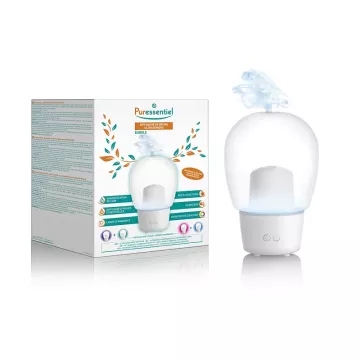
There are four main types of diffusers. The ultrasonic diffuser (mist diffuser) uses vibrations to create a mist of water and essential oils—it humidifies the air while diffusing, making it ideal for bedrooms and dry rooms. The nebulizing diffuser (which uses neither water nor heat) produces a mist of pure, concentrated molecules—the most effective for aromatherapy applications, but it consumes more essential oil. The ventilation diffuser blows air through a pad soaked in essential oil—quiet and convenient. Room spray is the instant solution that requires no equipment; simply spray it directly into the room. For stress-relieving atmospheres, an ultrasonic diffuser in the office is particularly well-suited.
The choice of essential oils for diffusing depends on the desired atmosphere:
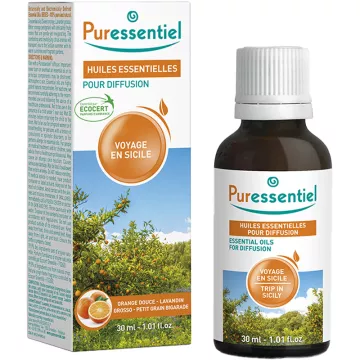
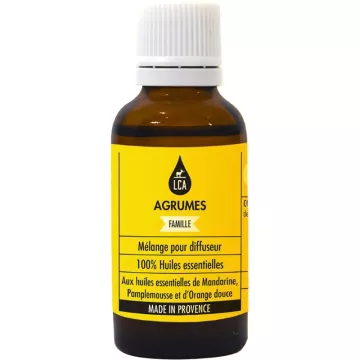
Ready-to-use diffuser blends (Cocooning, Citrus, Journey to Sicily) offer the advantage of an aromatic synergy that’s already balanced and ready to use—without having to measure out or mix individual essential oils. They’re formulated exclusively for atmospheric diffusion. Pure essential oils allow for more customization—creating your own blends and adjusting concentrations. Blends are suitable for beginners, while pure essential oils are best for experienced enthusiasts. For sleep, soothing blends combining mandarin, lavender, petitgrain bigarade, and Roman chamomile create a sedative synergy validated by numerous clinical studies in aromatherapy.
Candles made with natural essential oils (soy wax, beeswax, rapeseed wax) are an aesthetically pleasing alternative to electric diffusers—they release natural aromas through gentle heat and create a simultaneous visual and olfactory atmosphere. Their advantage is their self-sufficiency (no electricity required) and the soothing glow they provide. Their limitation is that they diffuse aromas less effectively than ultrasonic diffusers—heat can degrade certain fragile aromatic molecules. Paraffin candles with synthetic fragrances should be avoided—when burned, they release PAHs (polycyclic aromatic hydrocarbons), benzene, and harmful aldehydes. Petitgrain bigarade is one of the most commonly used essential oils in natural candles due to its elegant woody-floral aroma and its balancing effect on the nervous system.
Diffusing essential oils into indoor air requires following a few simple rules to ensure it is both effective and safe. The recommended duration is 20 to 30 minutes per session, with a 30- to 60-minute break between each session—continuous diffusion saturates the olfactory receptors and can cause headaches. The room must be properly ventilated before and after diffusion. Children under 3 months of age, people with asthma, and pets should be kept out of the room during diffusion. Certain essential oils should not be diffused in the presence of young children (phenols, ketones, aldehydes). Citrus essential oils (bergamot, lemon, orange) and floral essential oils (lavender, geranium) are the safest for daily family use in a diffuser.