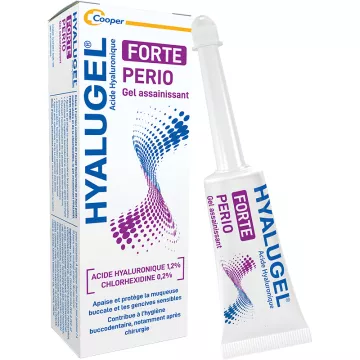
How can I tell if my gums are healthy?
Healthy gums are firm, pink (coral pink), pain-free, and do not bleed when brushing or flossing. Any deviation from these criteria—redness, swelling, bleeding, sensitivity, or recession—indicates inflammation that needs to be addressed promptly. The gums are the first barrier between the oral cavity and the bloodstream: their health determines the health of the teeth and alveolar bones, and, beyond that, cardiovascular and metabolic health. Gum care products and appropriateoral hygiene items are available in the store.
- Early warning signs: bleeding when brushing or flossing (never normal—an early sign of gingivitis)—red or swollen gums—persistent bad breath —gum sensitivity to touch—recession (gums receding, teeth appearing “longer”)
- Progression of gum disease: gingivitis (reversible inflammation of the gums—unremoved plaque—heals with proper oral hygiene and professional cleaning) → periodontitis (irreversible destruction of the alveolar bone and periodontal ligament—requires professional treatment) → tooth loss—stopping the disease at the gingivitis stage prevents all subsequent complications
- Main causes: dental plaque (bacterial biofilm reforms within 24 hours—direct cause)—tartar (calcified, non-removable plaque) — tobacco (3–7 times the risk of severe periodontitis + masks bleeding) — uncontrolled diabetes (bidirectional relationship) — genetics — stress (local immunosuppression)
- Hormonal factors: pregnancy (pregnancy gingivitis in 35–70% of pregnant women), puberty, menopause—dental checkups should be more frequent during these periods
How can you protect and care for your gums on a daily basis?
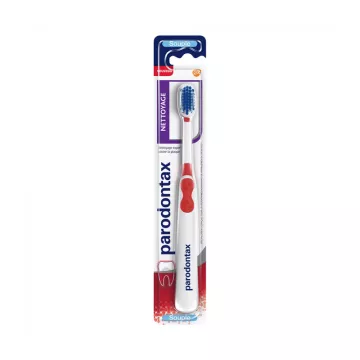
Gum protection relies on daily plaque removal—the only modifiable factor at home. Brushing twice a day (Bass technique, at a 45° angle toward the gingival sulcus) cleans the accessible surfaces;interdental hygiene (floss or interdental brushes) reaches the spaces the toothbrush cannot. Without interdental cleaning, gingivitis can progress even with perfect brushing of the visible surfaces.
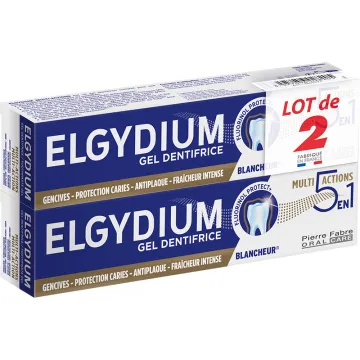
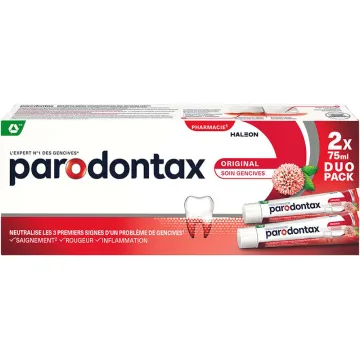
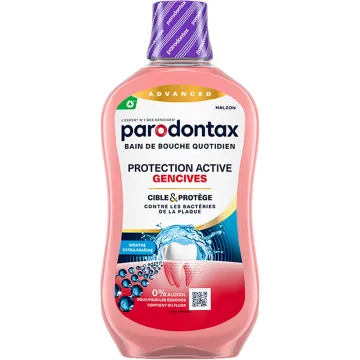
- Products suitable for sensitive or fragile gums: toothpastes without SLS (sodium lauryl sulfate—which can irritate weakened gum tissue), alcohol-free, with aloe vera or allantoin—alcohol-free mouthwash—interdental brushes with ultra-soft bristles—see care products for sensitive and irritated gums
- Complementary natural remedies: propolis mouth spray (antibacterial and anti-inflammatory against gum bacteria) — aloe vera gum gel (soothes inflammation) — oil pulling with coconut oil (reduces bacterial load) — these remedies complement mechanical oral hygiene without replacing it
- Gum-friendly nutrition: vitamin C (gum collagen—a deficiency directly weakens the gums) — vitamin D and calcium (alveolar bone) — omega-3 (fatty fish — anti-inflammatory for the gums) — zinc (mucosal healing) — limit sugar intake between meals
- Role of stress: Chronic stress weakens local immunity and promotes bruxism—stress management techniques (relaxation, adequate sleep) indirectly contribute to gum health
What are the advances in the treatment of gum disease?
Treatments for periodontal disease have evolved considerably. Scaling and root planing (SRP) remains the gold standard treatment recognized by the HAS—it mechanically removes subgingival tartar and pathogenic biofilm adhering to the root. Periodontal surgery (access flaps, guided bone regeneration, gingival grafts) is reserved for refractory cases or significant recessions.
- Periodontal laser: used in conjunction with SSC to decontaminate periodontal pockets—reduces residual bacterial load—less invasive than conventional surgery—not yet a substitute for SSC but a promising adjunct
- Guided Tissue Regeneration (GTR): biological membranes + bone substitutes — allow for partial regeneration of destroyed alveolar bone — indicated for vertical bone defects — results vary depending on the depth and configuration of the defect
- Prevention remains a priority: all these advances treat established damage — prevention through rigorous daily oral hygiene and regular professional checkups (1–2 times a year) remains the most effective and least expensive strategy to avoid reaching this stage