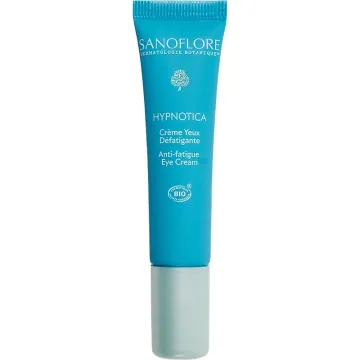
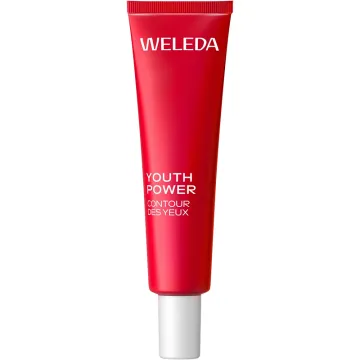
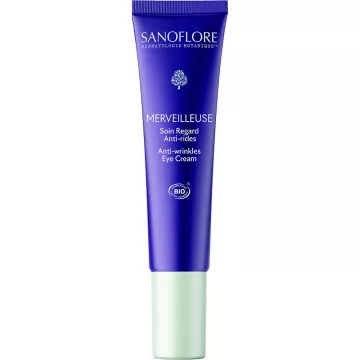
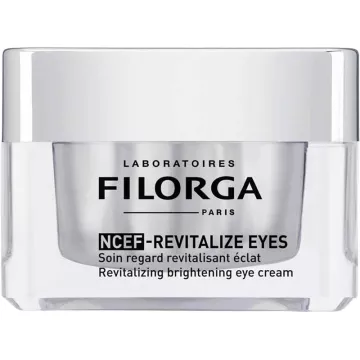
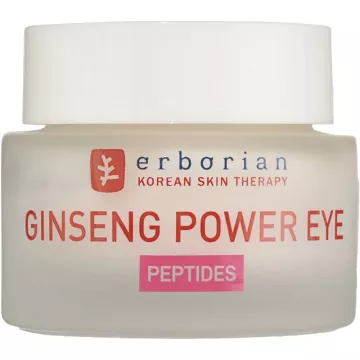
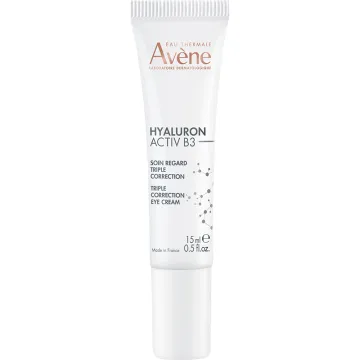
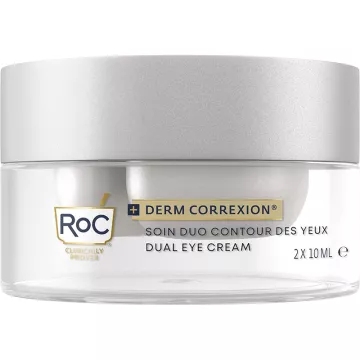
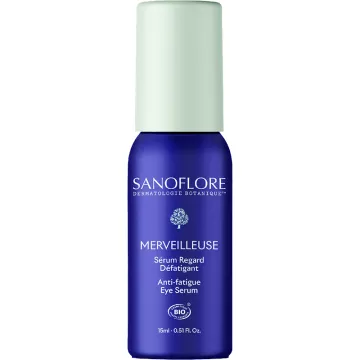
The skin around the eyes is the thinnest on the face (0.5 mm vs. 2 mm on the cheeks), has almost no sebaceous glands, and is subjected to 15,000 to 22,000 blinks per day. These three characteristics make it exceptionally vulnerable to dehydration, oxidative stress, and repeated mechanical strain. Aging around the eyes involves three simultaneous mechanisms: the loss of collagen and elastin (periorbital wrinkles), the thinning of the orbital septum (fat pockets), and venolymphatic stasis (vascular dark circles). Each of these requires distinct active ingredients.
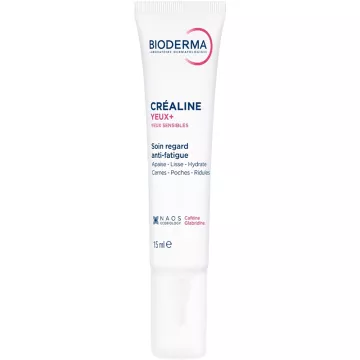
As the gold standard active ingredient in decongestant eye care products, topical caffeine (1–3%) acts on both of these primary mechanisms. Its vasoconstrictive effect on peri-orbital microvessels reduces blood stasis and the bluish appearance of vascular dark circles—as documented by in vivo laser Doppler measurements. Its inhibition of phosphodiesterase activates local lipolysis of suborbital adipocytes, according to randomized clinical studies. It is most effective when applied as a cool gel in the morning—a cold application enhances the vasoconstrictive and decongestant effects.
Signaling peptides (Matrixyl 3000: palmitoyl pentapeptide-4 + palmitoyl tripeptide-1; Argireline: acetyl hexapeptide-3) are the best-tolerated anti-aging active ingredients for the delicate skin around the eyes. They stimulate the synthesis of type I and III collagen in fibroblasts via membrane receptors—without causing photosensitivity or irritation. Argireline also inhibits the release of acetylcholine at the neuromuscular junction, reducing orbicularis oculi expression lines. Effective concentration: 3–10% in a highly bioavailable solution.
Pigmentary dark circles (brown-ochre) differ mechanically from vascular dark circles (bluish). Niacinamide (4–5%) specifically targets this type by inhibiting melanosome transfer—a gentler mechanism than kojic acid or arbutin, with excellent tolerance on the delicate periorbital skin. Randomized studies confirm a 35–68% reduction in hyperpigmentation after 8 weeks of treatment with a 4% concentration. Its synergy with vitamin C (a tyrosinase inhibitor) constitutes the most well-documented combination for treating pigmentary dark circles.
Ceramides (0.01–0.1%) restore the intercellular cement of the periorbital skin and reduce TEWL within 4 to 8 hours. Hydrolyzed marine collagen (peptides < 3 kDa, 2.5 to 10 g/day orally) stimulates peri-orbital dermal fibroblasts and improves skin elasticity around the eyes, according to clinical studies (Proksch, 2014). The combination of topical (ceramides) and oral (marine collagen) treatments is the most comprehensive “inside-out” approach to anti-aging eye care.
The routine adapts to the priority concerns for each decade: