What is ergonomics, and why is it essential for your musculoskeletal health?
Ergonomics is the science of adapting the work environment and tools to the capabilities of the human body—to prevent pain and injuries caused by poor posture and repetitive strain. When not practiced properly, poor ergonomics is the leading cause of lower back pain and neck problems in France. Our line of heating pads and support devices supports an ergonomic approach.
- Musculoskeletal disorders (MSDs): the leading occupational illness in France—tendinitis, lower back pain, carpal tunnel syndrome, neck pain—caused by prolonged static postures, repetitive movements, and poor body positioning
- Computer work: maintaining a static position for several hours—trapezius muscle spasms, neck pain, eye strain—see our page on torticollis
- Lifting: trunk flexion + rotation + load = mechanism leading to a herniated disc—proper lifting techniques are essential
- Benefits of good ergonomics: a 50–70% reduction in work-related absences due to MSDs in companies that have implemented ergonomic programs
Ergonomics of the computer workstation: essential rules
Sitting in front of a screen for 8 hours a day requires a properly adjusted workstation—every centimeter of misalignment results in cumulative muscle strain.
- Screen: top edge at eye level—distance 50–70 cm—slightly tilted backward (10–15°)—avoid glare (natural light from the side, not in front or behind)
- Adjustable chair: lumbar support provided by the backrest—thighs horizontal or slightly downward—feet flat on the floor or on a footrest—armrests that allow the shoulders to relax
- Keyboard and mouse: forearms at a 90° angle, wrists aligned — avoid prolonged flexion or extension of the wrists (risk of carpal tunnel syndrome)
- Active breaks: every 45–60 minutes — stand up, walk for 2 minutes, rotate the neck, and stretch the trapezius muscles — immediate reduction in disc and muscle strain
- Alternating standing positions: height-adjustable desk—alternate between sitting and standing every 30–45 minutes—studies show a 30% reduction in lower back fatigue
Sleep ergonomics: properly fitted pillow and mattress
- Ergonomic pillow: height suited to your sleeping position — side sleeping: thick pillow (fills the space between the shoulder and head) — back sleeping: thin pillow (maintains cervical lordosis) — avoid sleeping on your stomach (prolonged maximum cervical rotation)
- Mattress: firmness suited to body type — neither too soft (pelvic sinking) nor too hard (pressure points on shoulders and hips) — lifespan: 10 years maximum
- Most protective sleeping positions: side-sleeping with a pillow between the knees (reduces lumbar rotation) — back-sleeping with a pillow under the knees (reduces strain on the lumbar discs)
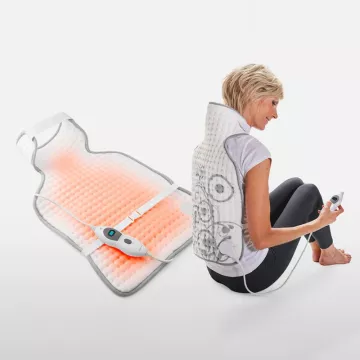
- Cervical or lumbarheat pad: thermal relief before bedtime on areas of tension—preparation for restful sleep
Natural supplements to support ergonomic efforts
- Magnesium: Reduces muscle spasms caused by prolonged poor posture — 300–400 mg/day of bisglycinate — a foundational supplement for sedentary workers
- Omega-3 (EPA/DHA): reduces disc and muscle neuroinflammation caused by repetitive strain — a long-term supplement for physically demanding or sedentary occupations
- Lumbar or cervicalheating patch: portable heat therapy during work hours — relieves muscle tension without interrupting activity
- Regular physical activity: 30 minutes of walking, swimming, or yoga 3–5 times a week — maintains paravertebral muscle tone, which protects the discs and joints
- Ergonomics + supplements + physical activity: combining these three reduces back pain recurrence by 60–70% in primary prevention studies