What Is Low Back Pain, and How Is It Classified?
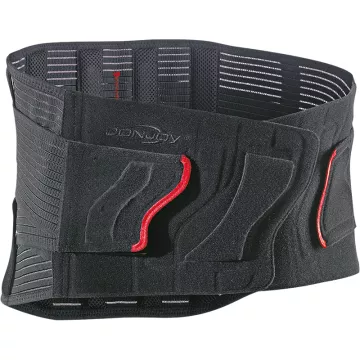
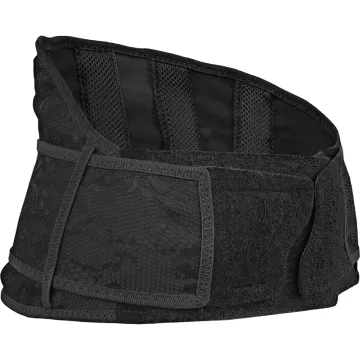
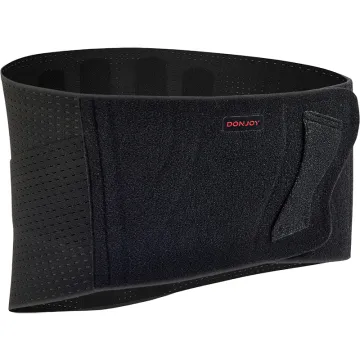
Low back pain refers to pain in the lumbar region (L1–S1)—the leading cause of disability among adults under 50 and the most common reason for seeking care in general practice. Our line of lumbar support belts and our pain-relief products offer support tailored to each individual’s needs.
- Acute low back pain: duration < 6 weeks — often benign (muscle spasm, sudden awkward movement) — spontaneous recovery in 90% of cases — relative rest + NSAIDs + gradual return to activity
- Subacute low back pain: 6 weeks to 3 months — risk of becoming chronic — active physical therapy recommended starting in this phase
- Chronic low back pain: > 3 months — central sensitization mechanisms — multidisciplinary approach essential — see our chronic pain page
- Specific low back pain: < 15% of cases — herniated disc, lumbar spinal stenosis, vertebral fracture, spondyloarthritis, tumor — requires imaging
- Warning signs (red flags): fever + low back pain, unexplained weight loss, nighttime pain at rest, neurological deficit (emergency) — require urgent evaluation
What natural supplements are available for lower back pain?
Natural anti-inflammatory agents and bone-supporting micronutrients provide effective complementary support for recurrent or chronic lower back pain. Find these formulas in our pain relief line.
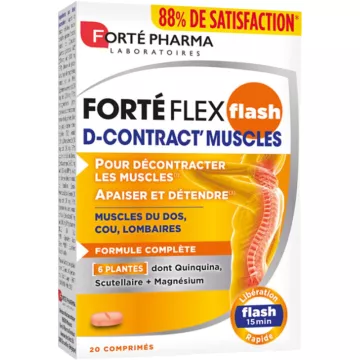
- Magnesium: reduces spasms in the paravertebral muscles (quadratus lumborum, iliopsoas, erector spinae) — 300–400 mg/day of bisglycinate — first-line treatment for muscular lower back pain
- Omega-3 (EPA/DHA): reduce disc-related neuroinflammation and central sensitization in chronic lower back pain — at least 2 g EPA+DHA per day
- Turmeric (curcumin): natural anti-inflammatory — inhibits COX-2 and NF-kB — efficacy comparable to NSAIDs in some studies on low back pain — a bioavailable formulation is essential
- Vitamin D3: Deficiency is associated with diffuse musculoskeletal pain — maintain levels ≥ 30 ng/mL — improves paravertebral muscle strength
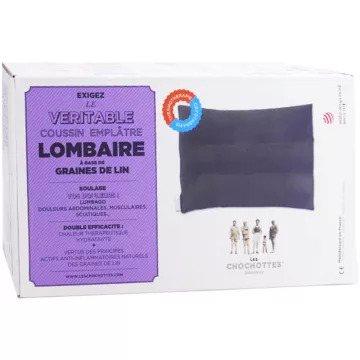
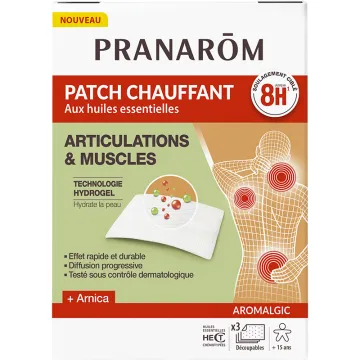
- Lumbar heating patch: localized heat for 8–12 hours — effectiveness comparable to NSAIDs for acute low back pain according to studies — without the gastrointestinal side effects
How can you prevent lower back pain and strengthen your back?
Prevention rests on two pillars: muscle strengthening and ergonomics—the two are complementary and inseparable.
- Core strengthening: transverseabdominis, multifidus,and pelvic floor muscles—protect the discs by stabilizing the lumbar spine—plank, side plank, Dead Bug—3 sessions per week
- Yoga and Pilates: specific poses (bridge, downward-facing dog, child’s pose, cat-cow) — simultaneous strengthening and flexibility — a significant reduction in chronic lower back pain documented in several meta-analyses
- Workplace Ergonomics: monitor at eye level, adjustable chair (maintaining lumbar lordosis), active breaks every 45 minutes — alternate with standing whenever possible
- Lifting technique: bend the knees + keep the back straight + hold the load close to the body — never combine trunk flexion + rotation + lifting a load
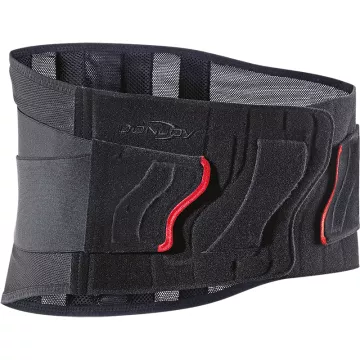
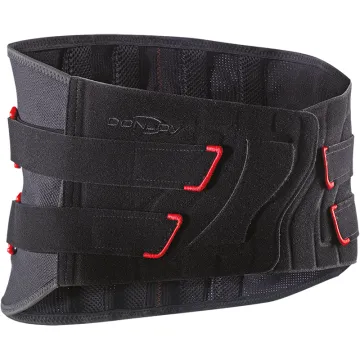
- Lumbar support belt: may be worn during occasional exertion—not recommended for continuous use (weakens the lumbar muscles)—see our selection of lumbar support belts
Herniated Disc and Chronic Low Back Pain: When Should You See a Specialist?
- Herniated disc: protrusion of the nucleus pulposus compressing a nerve root—sciatica (L4–L5 or L5–S1) or cruralgia (L3–L4)—conservative treatment in 90% of cases—surgery if there is progressive neurological deficit or failure to improve after > 3 months
- Narrow lumbar spinal canal: neurogenic claudication (pain while walking relieved by bending forward) — patients over 60 years of age — nerve block injections + physical therapy — surgical decompression if disabling
- Spondyloarthritis: inflammatory lower back pain (nocturnal, improved with exercise) in young patients—see our spondyloarthritis page
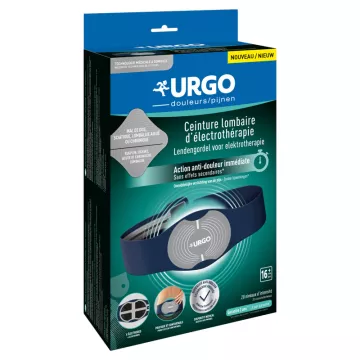
- TENS (transcutaneous electrical nerve stimulation): device for home use on the lumbar region — documented reduction in pain in chronic low back pain
- Refractory low back pain lasting > 3 months: referral to a multidisciplinary center (physician, physical therapist, psychologist, occupational therapist) for a physical rehabilitation program