What is a cervical injury, and how does it occur?
Cervical trauma —commonly known as “whiplash”—is an injury caused by sudden hyperflexion and hyperextension of the cervical spine beyond its normal physiological range of motion. It should be distinguished from torticollis (a mild muscle spasm) and chronic post-traumatic sequelae. Our joint comfort line offers active ingredients to support the recovery phase.
- Mechanism: rear-end collision (the most common cause in car accidents) → hyperextension of the neck followed by rebound hyperflexion—the cervical muscles, ligaments, discs, and vertebrae absorb energy exceeding their resistance threshold
- Injured structures: cervical muscles (SCM, trapezius, splenius), interspinous ligaments, intervertebral discs (possible acute herniation), posterior joints, and the spinal cord in severe cases
- Falls and sports: rugby (tackling), horseback riding (fall), cycling (head impact), contact sports—same mechanisms with varying impact speeds
- Improperly adjusted headrest: the main factor exacerbating cervical displacement during a rear-end collision—a properly positioned headrest (at ear level, 4 cm from the head) reduces the severity of whiplash by 50%
Symptoms, Warning Signs, and Diagnosis of Cervical Trauma
Symptoms of cervical trauma may appear immediately or within 24–72 hours after the impact—some require urgent evaluation.
- Common symptoms: neck pain + stiffness, occipital headaches (headaches at the base of the skull), positional dizziness, fatigue—often with a delayed onset of 6–24 hours
- Neurological symptoms: tingling and weakness in the arms → nerve root or spinal cord compression—require urgent imaging
- Cognitive impairments: difficulty concentrating, short-term memory loss—related to muscle tension disrupting vertebrobasilar blood flow
- Urgent warning signs (emergencies): complete inability to move the neck, motor or sensory deficits in the limbs, swallowing difficulties, initial loss of consciousness
- Evaluation: cervical X-rays (anterior, lateral, oblique views) to rule out fracture or instability — MRI if neurological symptoms are present (disc, ligaments, spinal cord) — CT scan if a fracture is suspected on X-ray
Treatment and natural supplements for cervical trauma
Management combines relative rest, pain relief, and early mobilization—natural remedies reduce cervical inflammation and support soft tissue recovery.
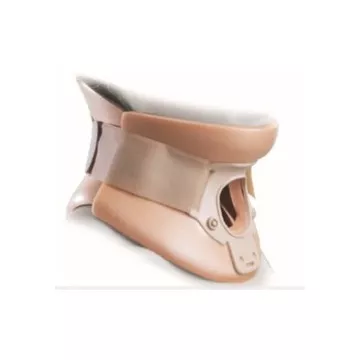
- Cervical collar: recommended for the first 24–72 hours for painful cases — not beyond that, as prolonged immobilization perpetuates muscle spasms and delays recovery — medical reevaluation on days 3–5
- Magnesium: reduces post-traumatic reflex cervical muscle spasms and neuromuscular hyperexcitability—300–400 mg/day
- Omega-3 (EPA/DHA): reduces post-traumatic cervical neuroinflammation—beneficial for associated headaches and dizziness
- Turmeric (curcumin): natural anti-inflammatory for the subacute phases — bioavailable formula (with piperine or liposomal)
- Marine collagen + vitamin C: repair of damaged ligaments and discs — supports continuous collagen synthesis during the consolidation phase
Rehabilitation, post-traumatic stress, and prevention of cervical sequelae
- Early mobilization (Days 3–7): gentle rotations, progressive tilts — more effective than strict rest for functional recovery — cervical physical therapy, 6–10 sessions
- Strengthening of the deep flexors: stabilizing muscles of the cervical spine (longus colli, longus capitis) — isometric exercises + cervical proprioception — prevention of chronic neck pain
- Stress and anxiety: exacerbate cervical muscle tension and slow healing — cardiac coherence, meditation, CBT if anxiety persists — post-accident psychological disorders are common and legitimate
- Return to sports: gradual after medical clearance — avoid contact sports until neurological symptoms have completely resolved — wear an appropriate helmet for high-risk sports
- Persistent cervical trauma lasting > 3 months: risk of chronic post-traumatic neck pain or cervical algodystrophy — referral to a physical therapist or pain center