Deep sleep —stage N3 or deep slow-wave sleep—accounts for 15 to 20 percent of total sleep in healthy young adults. It is the phase that is hardest to interrupt and the most physically restorative. During N3, 80% of the daily quota of growth hormone is secreted, muscles and bones repair themselves, anti-inflammatory cytokines are released, and the brain’s glymphatic system clears out toxic proteins that have accumulated throughout the day. The documented benefits include improvedimmunity, declarative memory, and regulation of carbohydrate metabolism—insufficient N3 significantly increases the risk of type 2 diabetes and obesity.
The duration of N3 naturally decreases with age—it drops from about 20–25% of total sleep at age 20 to less than 5–10% after age 60. Several factors accelerate this decline: drinking alcohol in the evening suppresses N3 in the second half of the night despite the appearance of falling asleep more easily; caffeine consumed after 2 p.m. blocks adenosine receptors that signal sleep pressure, and a sedentary lifestyle deprives the body of one of the few factors that objectively increase N3 duration. Vitamin D deficiency has also been linked to reduced deep sleep in several studies—correcting this deficiency improves the subjective quality of sleep in people with a deficiency, which is particularly common in winter in our part of the world.
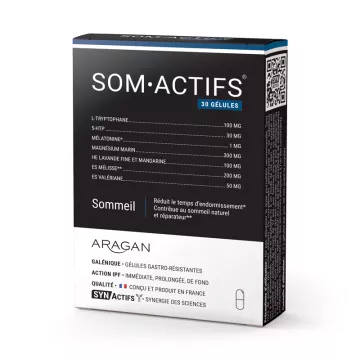
Certain active ingredients have demonstrated a documented effect on the proportion of deep sleep, beyond their simple effect on falling asleep. Magnesium bisglycinate is the best-established: by antagonizing NMDA receptors (excitatory) and activating GABA-A receptors (inhibitory), it reduces nocturnal neuronal hyperexcitability, which keeps the brain in light sleep stages. Organic valerian (standardized for valeric acid) increases the proportion of N3 sleep in randomized 4-week studies—available in single-strain capsules or fresh herb vials. Organic passionflower (flavonoids + harmanes) potentiates GABA-A receptors and reduces micro-awakenings during cycle transitions. N3 is also the window for muscle repair and protein synthesis—athletes who optimize their N3 significantly improve their nighttime athletic recovery.
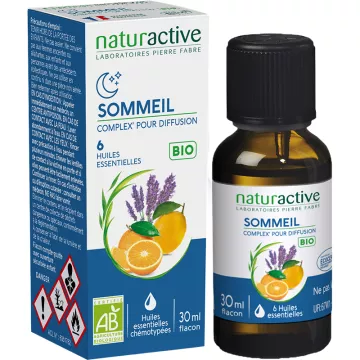
Diffusing essential oils while sleeping has a continuous effect on the quality of N3 through the sense of smell—volatile compounds pass through the nasal mucosa and reach the limbic system without passing through the digestive system. An ultrasonic diffuser programmed to turn off after 30 minutes of sleep is the ideal solution. The most well-documented synergies for deep sleep combine true lavender (linalool, a sedative), marjoram (terpinene-4-ol, a parasympathomimetic), petitgrain bigarade (anxiolytic), and ylang-ylang (slows heart rate). Ready-to-use organic diffusion blends are calibrated for an adult bedroom. If a partner’s snoring disrupts sleep cycles, parallel treatment is necessary—snoring is the leading external cause of reduced N3 in the co-sleeper.
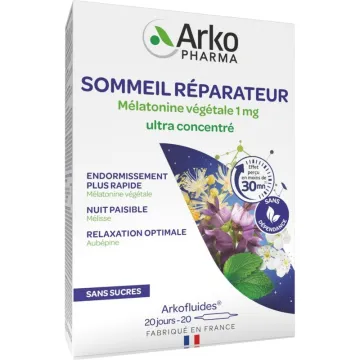
Bulbinum (homeopathic onion extract, 5 or 9CH) is a time-honored remedy for sleep disorders involving difficulty achieving deep sleep—onions have been used since ancient times as a natural sleep aid. Homeopathic sleep disorder kits generally offer 4 to 6 constitutional remedies (Coffea for mental hyperactivity, Ignatia for emotional insomnia, Nux vomica for overwork, Arsenicum for nighttime anxiety) to be tailored to the individual’s profile. Formulas in ampoules made from organic herbs (valerian + passionflower + lemon balm + eschscholtzia in glycerin macerates) offer a fast-absorbing liquid alternative, which is convenient for people who have difficulty swallowing tablets. Memory and cognitive performance the next day are directly correlated with the duration of N3 sleep from the previous night—yet another reason to make it a priority.
A persistent lack of deep sleep despite 4 to 6 weeks of optimized approaches (magnesium, herbs, strict sleep hygiene, essential oil diffusion) warrants a medical consultation. The most common medical causes are obstructive sleep apnea (fragmentation of sleep cycles due to repeated micro-awakenings that drastically reduce N3—to be evaluated via polysomnography as soon as intense snoring or breathing pauses are observed), restless legs syndrome (periodic movements that interrupt N3 sleep, often linked to iron deficiency), and certain medications (benzodiazepines, certain antidepressants, beta-blockers) that suppress deep sleep as a side effect. Targeted laboratory testing (ferritin, vitamin D, TSH) usefully complements the clinical picture before considering a polysomnographic study. Chronic light sleep and a lack of N3 often share the same causes and are managed in the same way.