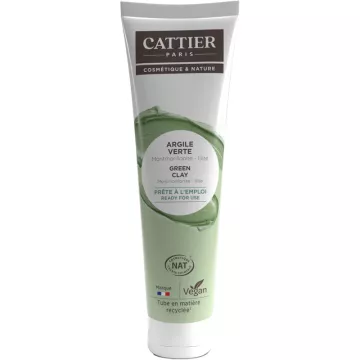
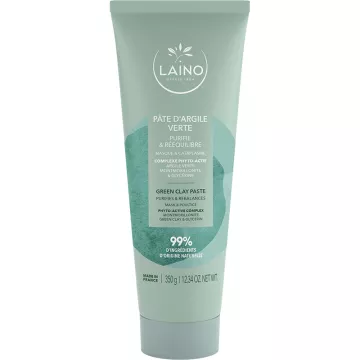
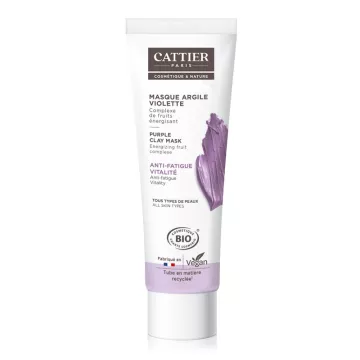
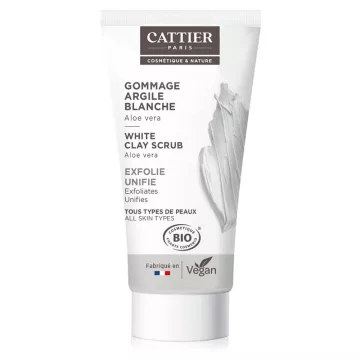
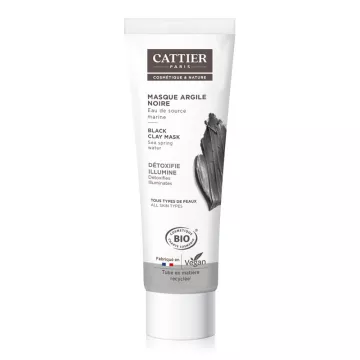
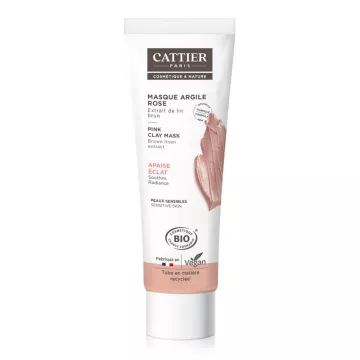
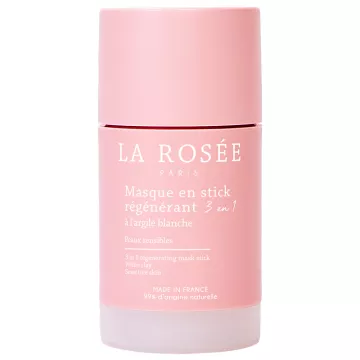
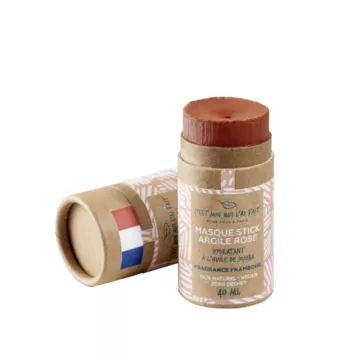
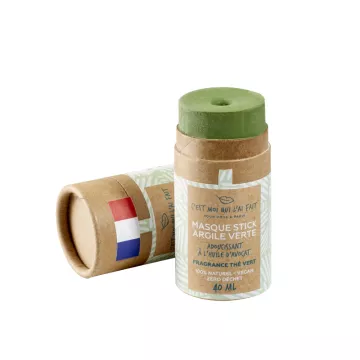
A clay mask offers several cosmetic benefits for the face, thanks to its absorbent and mineral-rich properties.
First, clay helps visibly purify the skin by absorbingexcess sebum and surface impurities, which can minimize the appearance of enlarged pores.
Different types of clay (green, pink, white, rhassoul) provide minerals that visibly support the skin’s comfort and radiance.
Clay also supports visible skin renewal and contributes to a more even-looking skin texture with regular use.
Choose a clay mask based on your skin type to maximize tolerance and effectiveness.
For oily or blemish-prone skin, green clay is particularly valued for its absorbent properties and sebum-regulating action.
For sensitive skin, pink clay is gentler and provides a soothing sensation that is appreciated by those with reactive skin.
White clay (kaolin) remains the gentlest option, ideal for dry or delicate skin that doesn’t tolerate more active clays well.
The frequency of clay mask application depends on skin type and specific needs.
For normal to oily skin: 1 to 2 applications per week to maintain balance and a matte complexion.
For sensitive or dry skin: a maximum of 1 application per week to reap the benefits without drying out the skin.
Adjust the frequency based on your skin’s signals (tightness, shine, redness) to ensure long-lasting skin comfort.
Regular use of a clay mask can visibly improve the appearance of the skin.
Users often notice a visible reduction in excess sebum, the appearance of tighter pores, and a more even complexion.
Improved skin texture is also common: skin feels smoother, softer, and clearer with each application.
Clay’s purifying properties visibly support skin comfort and radiance as part of a regular skincare routine.
There are several precautions to take to get the most out of a clay mask while protecting your skin.
Never let the mask dry completely: this can paradoxically cause dehydration and draw moisture from the skin. Rinse it off before it cracks.
Always apply a moisturizer after rinsing to rehydrate the skin and restore its comfort.
If the mask contains added exfoliating acids (AHAs, BHAs), these active ingredients can make your skin more sensitive to the sun: always use an SPF of at least 30 the day after application.
For best results, start by cleansing your face to remove makeup, oil, and impurities.
Apply an even layer of the clay mask to your face, avoiding the particularly sensitive areas around the eyes and lips.
Leave it on for 10 to 15 minutes, without letting the mask dry completely.
Rinse with lukewarm water using gentle circular motions that lightly exfoliate the skin, then pat dry gently with a soft towel.
Certain cosmetic combinations should be avoided immediately before or after using a clay mask to prevent weakening the skin barrier.
Avoid using products containing strong acids, such assalicylic acid or glycolic acid, immediately before or after a clay mask: this could result in a cumulative stripping effect.
Salicylic acid is not recommended for pregnant or breastfeeding women; glycolic acid increases skin sensitivity to sunlight (use at least SPF 30 the following day).
Also avoid products with a high concentration of denatured alcohol, which can excessively dry out the skin when combined with the absorbent properties ofclay.
Clay masks can be beneficial for acne-prone skin when used as part of a suitable skincare routine.
Green clay, in particular, absorbs excess sebum and can help visibly unclog pores in skin prone to breakouts.
Its purifying properties help promote a clearer complexion, though it is not a medical treatment.
If you havemoderate to severe or persistent acne, consult a dermatologist for appropriate medical treatment; for a selection of targeted products, also browse our acne section.
To effectively incorporate a clay mask into your routine, start by determining the frequency that’s right for your skin type (1 to 2 times a week at most).
After cleansing your face, apply the mask; rinse with lukewarm water before it dries completely.
Follow up with a lotion or toner to rebalance the skin, then a serum and/or moisturizer to nourish and soothe.
This routine can visibly improve the texture and radiance of your complexion over the course of several weeks, as part of a comprehensive skincare regimen.
Certain signs may indicate that a clay mask isn’t suitable for your skin.
Marked redness, a burning sensation, persistent itching, or a rash after application are signs of an intolerance or allergic reaction to an ingredient.
In this case, rinse immediately with cool water, discontinue use, and consult a dermatologist if symptoms persist or worsen.
Always perform a patch test on the inside of your elbow 48 hours before your first full application to the face.