What is a cholagogue, and how does it differ from a choleretic?
A cholagogue stimulates the release of bile from the gallbladder into the duodenum—it causes the gallbladder to contract. A choleretic stimulates bile production by the liver. These two mechanisms are complementary and are often combined in digestive tonics. Our line of detox supplements offers the most targeted cholagogue/choleretic formulas.
- Pure cholagogue: contracts the gallbladder → pushes stored bile into the duodenum → useful after high-fat meals — artichoke, black radish in high doses, boldo
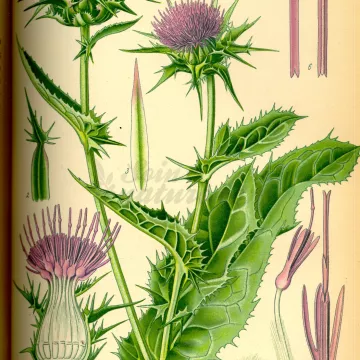
- Pure choleretic: stimulates bile production by hepatocytes → more fluid and abundant bile — rosemary, dandelion, desmodium, milk thistle
- Cholagogue + choleretic: artichoke (dual action)—stimulates both production AND secretion—most commonly used in clinical practice for fat digestion disorders
- ABSOLUTE CONTRAINDICATION: known gallstones → never use a cholagogue — risk of stone migration into the common bile duct → cholangitis or acute pancreatitis — see our page on gallstones
- Main indication: mild functional biliary insufficiency — feeling of heaviness after a high-fat meal — slow fat digestion — postprandial biliary nausea
Main natural cholagogues and their uses
- Artichoke (Cynara scolymus) — cynarin + luteolin: cholagogue + choleretic + mildly hepatoprotective — standardized leaf extract 400–500 mg/day — take 30 minutes before a high-fat meal — Contraindications: Asteraceae allergy and gallstones
- Black radish (Raphanus sativus) — glucosinolates: potent cholagogue — strongly stimulates gallbladder contraction — fresh juice or capsules — reserved for short courses of treatment (max 3 weeks) — formal contraindication if known gallstones
- Turmeric (curcumin + bisabolene): choleretic + mildly cholagogue + anti-inflammatory for the liver — 500–1,000 mg dry extract/day with piperine — take with a meal — Contraindicated in cases of gallstones
- Dandelion (Taraxacum officinale) — taraxacin: choleretic + moderate cholagogue — root as a decoction or extract — mild and well-tolerated action — less potent than black radish
- Boldo (Peumus boldus) — boldine: choleretic + hepatoprotective — use limited to a maximum of 4 consecutive weeks (alkaloids) — Contraindications: pregnancy, breastfeeding, biliary obstruction
Cholagogues and Lipid Metabolism
- Emulsification of fats: bile (bile acids + phospholipids) emulsifies dietary lipids → makes fats accessible to pancreatic lipase → facilitates absorption in the small intestine
- Biliary cholesterol: bile eliminates excess cholesterol (in a non-absorbable form) → cholagogues increase this elimination → indirect support of lipid profile
- Fat-soluble vitamins (A, D, E, K): their absorption depends entirely on bile — bile insufficiency → deficiencies — cholagogues and choleretics restore absorption
- Milk thistle + artichoke combination: synergistic hepatoprotective (silymarin) + cholagogue (cynarin) effects — ideal formula for dietary overload and a sluggish liver
- See our page on liver disorders if symptoms persist or if you have a known liver condition—cholagogues are not a substitute for specialized medical treatment
Dosage, frequency, and precautions
- Optimal timing: Take cholagogues 20–30 minutes before high-fat meals (lunch or dinner)—to stimulate gallbladder emptying before fats reach the duodenum
- 3–4-week course: Most cholagogues are used as a seasonal treatment (fall/spring)—beyond this period, consult a healthcare professional—boldo: max. 4 consecutive weeks
- Possible side effects: mild diarrhea (excessive bile secretion)—abdominal pain if gallstones are undiagnosed—allergic reactions (Asteraceae family for artichoke)
- Pregnancy and breastfeeding: avoid black radish and boldo—artichoke is generally well-tolerated in moderate doses—always consult a doctor or pharmacist before starting any treatment
- Drug interactions: Cholagogues alter the composition of bile → may affect the absorption of certain fat-soluble medications — Take oral anticoagulants and immunosuppressants at least 2 hours apart