What is gallstone disease, and how do gallstones form?
Gallstone disease refers to the presence of stones in the gallbladder or bile ducts, formed by the crystallization of bile components. It affects 10–15% of the adult population in France and remains asymptomatic in 80% of cases. Arnaud, Ph.D. in Pharmacy, emphasizes: any painful biliary attack requires immediate medical attention. See our page on liver disorders for a comprehensive overview of liver conditions.
- Cholesterol stones (80% of cases in France): oversaturation of bile with cholesterol → crystallization — yellow or white stones — promoted by obesity, oral contraceptives, a diet high in saturated fats, and rapid weight loss
- Pigment stones (bilirubinate): accumulation of unconjugated bilirubin → black or brown stones — associated with chronic hemolytic diseases (sickle cell anemia, spherocytosis), cirrhosis, and biliary infections
- Risk factors: the 5 "F"s (Female, Fat, Forty, Fertile, Fair) — women over 40 who are overweight, multiparous, or taking oral contraceptives — also: prolonged fasting, drastic low-calorie diets, total parenteral nutrition
- Choledocholithiasis: migration of the stone into the common bile duct → obstruction → obstructive jaundice + risk of cholangitis — see our jaundice page
- Gallbladder: stores 30–50 mL of bile between meals — contracts with each high-fat meal to release bile into the duodenum — gallbladder hypokinesia = additional lithogenic factor
Symptoms, Complications, and Biliary Emergencies
- Biliary colic: severe pain in the right upper quadrant + radiating along the shoulder blade toward the right shoulder — triggered by a fatty meal — lasts 15 minutes to 3 hours — nausea + vomiting — resolves spontaneously if the stone dislodges
- Acute cholecystitis: stone lodged in the cystic duct → inflammation + infection — persistent pain lasting > 6 hours + fever + Murphy’s sign (pain on right subcostal pressure during inspiration) → surgical emergency
- Angiocholitis: Charcot’s triad (fever + chills + jaundice + pain)—stone in the common bile duct + bacterial infection of the biliary tract → severe sepsis → call 15 immediately
- Acute biliary pancreatitis: migrating stone obstructing the Wirsung duct → severe pancreatic inflammation — piercing epigastric pain → hospital emergency
- Asymptomatic carriers: treatment not recommended unless specific risk factors are present (diabetes, porcelain gallbladder, history of pancreatitis) — ultrasound monitoring
Medical and surgical treatments
- Laparoscopic cholecystectomy: removal of the gallbladder via laparoscopy — standard treatment for symptomatic gallstones — short hospital stay (24–48 hours) — Normal life without a gallbladder (bile flows directly from the liver to the duodenum)
- ERCP (endoscopic retrograde cholangiopancreatography): endoscopic removal of stones from the common bile duct — performed before or during cholecystectomy — treatment for choledocholithiasis
- Ursodeoxycholic acid (UDCA): dissolves small cholesterol stones (< 5 mm) in asymptomatic patients who are not candidates for surgery — duration: 6–24 months — effectiveness limited to radiolucent stones
- Extracorporeal shock wave lithotripsy: shock waves that fragment stones—no longer used in France (frequent relapses)
- Antispasmodics (phloroglucinol) during an attack: symptomatic relief of Oddi’s sphincter spasms during colic—do not treat the stone
Prevention, diet, and important contraindications
- Preventive diet: soluble fiber (25–30 g/day) — unsaturated fatty acids (olive oil, omega-3) — coffee (reduces the risk of cholesterol gallstones) — reduce saturated fats and refined sugars
- Stable weight: avoid rapid weight loss (> 1–1.5 kg/week) → cholesterol supersaturation of bile — prophylactic AUDC sometimes prescribed during bariatric surgery
- FORMAL CONTRAINDICATION: choleretic and cholagogue agents (black radish, boldo, artichoke in high doses) — contraindicated in cases of known gallstones — risk of gallstone migration into the common bile duct → cholangitis or pancreatitis
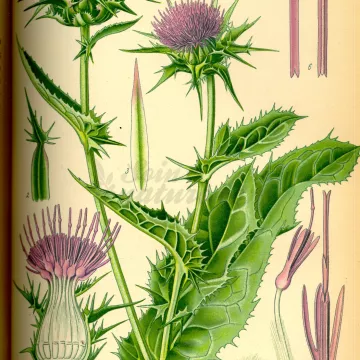
- Milk thistle (silymarin): hepatoprotective — well tolerated by the gallbladder as it is not a significant cholagogue — may be used with caution — medical advice recommended
- See our page on biliary insufficiency for difficulties digesting fats after cholecystectomy — lipase enzymes + bovine bile as a supplement