What is a digestive tonic, and how does it affect digestion?
A digestive tonic is a herbal supplement that stimulates digestive secretions—bile, gastric juices, and pancreatic enzymes—to aid in the digestion of large or high-fat meals. Unlike digestive enzymes (enzyme replacement therapy) and probiotics (gut flora), the tonic acts upstream on the organs responsible for producing these substances. Our line of digestive supplements offers the right formulas.
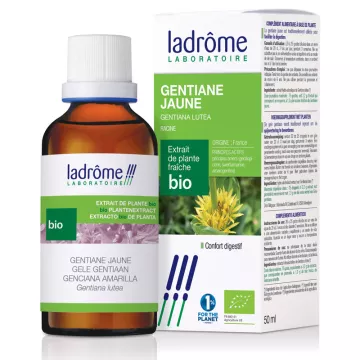
- Bitter herbs (digestive bitters): gentian, blessed thistle, angelica—reflexively stimulate the production of gastric juices and bile via the bitter receptors on the tongue (vagotonic reflex)—take 15–30 minutes before a meal to prepare the stomach
- Choleretic herbs: stimulate bile production by the liver—rosemary, artichoke, dandelion—improve fat digestion + mild diuretic effect
- Cholagogue herbs: promote the flow of bile from the gallbladder to the duodenum — artichoke, black radish, boldo — particularly useful after heavy meals
- Carminative and antispasmodic herbs: peppermint, fennel, ginger, cardamom — reduce gas, bloating, and postprandial intestinal spasms
- Combined formulas: Most digestive tonics combine these three categories—bitter + cholagogue + carminative—to address all stages of digestion
What are the main active ingredients in digestive tonics?
- Artichoke (Cynara scolymus): cynarin and luteolin—choleretic + cholagogue + mild hepatoprotective—recommended for feelings of heaviness after high-fat meals—see our page on difficult digestion
- Black radish (Raphanus sativus): glucosinolates—a powerful bile stimulant—recommended for bile insufficiency and difficult digestion of fatty foods—rule out gallstones (contraindication)
- Rosemary (Rosmarinus officinalis): rosmarinic acid and carnosol — choleretic + hepatic antioxidant + carminative
- Boldo (Peumus boldus): boldine—choleretic and hepatoprotective—use limited in duration (alkaloids)—max 4 consecutive weeks
- Milk Thistle (silymarin) + Turmeric: hepatoprotective + anti-inflammatory + mild choleretic combination — ideal after overeating or excessive alcohol consumption
How and when should you take a digestive tonic?
- Before a meal (15–30 min): bitter herbs (gentian) — triggers the secretory reflex and prepares the stomach — helpful in cases of low gastric acid production (older adults, stress)
- During or after a meal: digestive enzymes, ginger, artichoke, fennel — act on food as it is being digested — relieve post-meal heaviness
- As a 3–4-week course: most digestive tonics are used as seasonal treatments (fall/spring) or after periods of overindulgence—cumulative effectiveness
- Important contraindications: choleretic and cholagogue agents are contraindicated in cases of gallstones (risk of migration)—boldo: max 4 weeks—artichoke is contraindicated in cases of allergy to Asteraceae—pregnant women: avoid rosemary and boldo
- On an empty stomach: certain liquid tonics (bitter elixirs) are taken on an empty stomach in the morning—they stimulate nighttime bile flow and prepare the liver for the day—see our page on improving digestion
Digestive Tonic, Gut Flora, and Overall Well-Being
- Synergy of probiotics + digestive tonics: the tonic improves upper digestion (stomach, bile) — probiotics support colonic fermentation — two complementary actions
- Effects on the microbiota: Proper bile secretion regulates the composition of the colonic microbiota—bile insufficiency promotes the proliferation of anaerobic fermenting bacteria (bloating)
- Reduction of gas and bloating: improved fat digestion + carminative properties of the tonics → fewer fermentable residues reaching the colon — see our digestive comfort page
- Digestive tonics and weight management: improved nutrient absorption + reduced excessive fermentation → less bloating and a flatter stomach — see our detox and weight loss line
- See our page on slow digestion if delayed gastric emptying is a factor — combine with prokinetic ginger