What is the heart muscle, and what makes its structure unique?
The heart muscle (myocardium) is a type of involuntary striated muscle tissue that forms the wall of the heart. Unlike skeletal (voluntary) muscles and smooth (visceral) muscles, the myocardium has unique properties that allow it to contract automatically and rhythmically throughout a person’s life—without ever tiring like a skeletal muscle. Heart-support supplements are available in the cardiovascular health and heart conditions sections of the store.
- Cardiomyocytes: cardiac muscle cells—connected to one another by intercalated discs (gap junctions) that ensure synchronous electrical conduction—have a very limited capacity for regeneration after adulthood (<1% per year)
- Contraction mechanism: electrical signal from the sinoatrial node → release of intracellular calcium (ryanodine receptors in the sarcoplasmic reticulum) → sliding of actin and myosin filaments (cross-bridge cycle) → ventricular contraction (systole) → active relaxation during diastole — each contraction consumes large amounts of ATP (mitochondrial energy)
- Myocardial energy requirements: the heart is the organ richest in mitochondria (30% of cell volume) — consumes 6 to 8 kg of ATP per day — primarily oxidizes fatty acids (60–70%) followed by glucose — coenzyme Q10 is an essential cofactor in the mitochondrial respiratory chain
What conditions affect the heart muscle, and how can they be recognized?
- Myocardial infarction: occlusion of a coronary artery → ischemic necrosis of the myocardium → permanent loss of cardiomyocytes — absolute medical emergency — call 15 immediately in case of: chest pain radiating to the left arm or jaw + cold sweats + nausea + shortness of breath
- Cardiomyopathies: primary disorders of the myocardium — dilated (impaired contractility — enlarged and “flaccid” heart) — hypertrophic (asymmetric thickening — impaired ejection) — restrictive (stiffness of the myocardium) — specialized cardiological care
- Heart failure: inability of the myocardium to maintain adequate blood flow — shortness of breath on exertion and later at rest — lower extremity edema — chronic fatigue — mandatory medical treatment (ACE inhibitors, beta-blockers, diuretics, SGLT2 inhibitors)
- Broken Heart Syndrome (Takotsubo): acute stress cardiomyopathy — transient myocardial shock secondary to intense emotional stress — predominantly seen in postmenopausal women — recovery typically occurs within a few weeks
- Impact of aging: thickening of the myocardial walls — increased diastolic stiffness — decreased contractile reserve — regular cardiological follow-up recommended after age 60
How can you protect the heart muscle naturally?
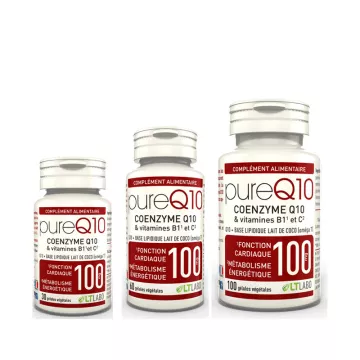
- Coenzyme Q10: cofactor in the mitochondrial respiratory chain of cardiomyocytes—cardiac ATP production—plasma levels reduced by statins and aging—positive studies in heart failure (Q-SYMBIO trial) — 100 to 300 mg/day as ubiquinol (better absorbed) — consult a doctor if you have a treated heart condition
- Magnesium: physiological calcium antagonist — regulates myocardial and vascular excitability — deficiency associated with arrhythmias and hypertension — 300 to 400 mg/day as bisglycinate or malate
- Omega-3 EPA-DHA: maintains the fluidity of cardiomyocyte membranes — reduces myocardial electrical excitability — EFSA health claim regarding cardiac function — 2 to 3 g/day
- Hawthorn: improves coronary perfusion and myocardial contractility — well-established EMA monograph — contraindicated with antiarrhythmics and digoxin (medical consultation essential for patients with heart conditions undergoing treatment)
- See the cardiovascular system section for general prevention — any new or unusual cardiac symptoms → seek medical attention immediately