Caraway or meadow cumin: what exactly is it?
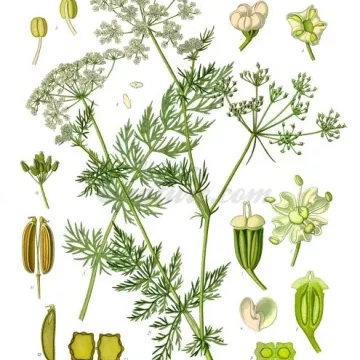
Caraway (Carum carvi) is often confused with cumin—they belong to the same botanical family (Apiaceae) and both have elongated brown seeds. However, the two do not have the same profile or the same uses.
- Caraway (C. carvi): 50–60% carvone + 20–30% limonene in the essential oil—slightly anise-like and fresh note—the mildest of the carminatives, suitable for babies as a light herbal tea
- Cumin (C. cyminum): predominant cuminaldehyde—warm, earthy note—more potent, photosensitizing, less suitable for sensitive constitutions
- Caraway is also often confused with fennel and anise—same family, but distinct biochemical profiles—checking the label for these helps avoid mistakes
- Phytotherapeutic use: caraway is one of the few carminatives that can be used in very mild infusions even for infants—a real advantage over its cousins
Caraway and digestive comfort: its area of expertise?
This is its best-documented use—and one recognized by European tradition for centuries.
- EMA/HMPC: Recognized traditional use of caraway fruit for the relief of digestive discomfort (bloating, intestinal gas, mild cramps)
- Infusion: 1–2 c.c. of lightly crushed seeds in 250 mL of water at 90°C, steeped covered for 10 minutes—1 cup after meals or between meals for recurring discomfort
- Carvone relaxes the smooth muscles of the digestive tract and facilitates the expulsion of gas—a mild carminative that does not irritate the mucous membranes
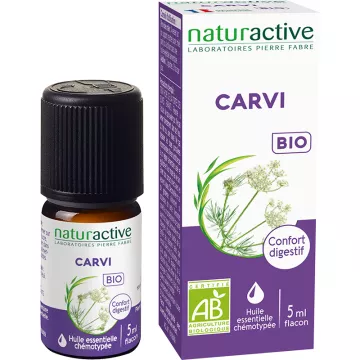
- Essential oil for external use: 2% in jojoba oil, applied with a circular, clockwise abdominal massage — provides rapid relief from bloating
- Digestive herbal tea blend: caraway + fennel + green anise — the classic carminative trio of European herbal medicine
Caraway and Infant Colic?
One of the most widespread traditional uses—but one that requires caution regarding dosage.
- Very mild infusion: 1/4 c.c. of seeds per 250 mL of cold water, bring to a simmer, remove from heat, and let steep for 5 min—cool before spoon-feeding to the infant
- Infant dosage: a few teaspoons, 2–3 times a day during colic episodes—never use essential oil in infants or children under 6 years of age
- Always consult a pediatrician before administering anything to an infant—even for plants considered mild
- Hydrosol alternative: fennel or caraway hydrosol (when available)—an even gentler option than herbal tea for very young children
Caraway essential oil: When is it preferable to herbal tea?
Carvone in essential oil concentration has more targeted properties than herbal tea—and a distinctive scent profile.
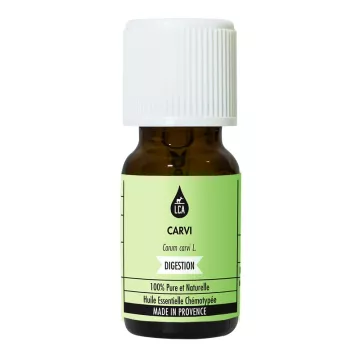
- Recurrent functional digestive disorders: 2% essential oil in jojoba for abdominal massage, twice daily—more convenient and effective than daily herbal tea when traveling
- Aromatic note: Carvone offers a fresh, anise-like scent reminiscent of spearmint—pleasant when diffused lightly, but use with caution (max 4–5 drops)
- Digestive-relaxation diffusion blend: caraway + coriander + sweet orange—a spicy-fresh atmosphere that supports digestive comfort after meals
- Caraway dry extract capsules: the most convenient format for long-term treatment of functional digestive disorders
Precautions?
- Allergy to Apiaceae (dill, fennel, parsley, celery): risk of cross-reactivity—perform a skin test before extended use
- Gastroesophageal reflux and ulcers: use with caution—stimulates gastric acid production, may worsen acidity
- Pregnant women: Essential oil not recommended — a mild herbal tea is generally well tolerated
- Essential oil: contraindicated for infants and children under 6 years of age—use only a very mild infusion and only under pediatric supervision
- Essential oil treatment duration: 3–4 weeks maximum, followed by a break