What is intestinal gas, and how is it formed?
Intestinal gas refers to all the gases present in the digestive tract—from air swallowed into the stomach to gases produced by colonic fermentation. These gases serve as a guide to identifying specific causes. Our Flat Stomach line offers solutions tailored to each individual’s needs.
- Swallowed air (aerophagia): air ingested during fast meals, carbonated beverages, or chewing gum—expelled orally (belching) or moving through the digestive tract → flatulence
- Colonic fermentation gases: CO₂ + H₂ + methane (CH₄, in 30% of individuals) + H₂S (odor)—produced by microbiota bacteria during the fermentation of undigested fiber—see our bloating page
- Normal digestive gases: 200–2,000 mL produced per day — 8–20 normal flatulence episodes per day — production is proportional to fermentation and the individual’s microbiota
- SIBO (Small Intestinal Bacterial Overgrowth): bacterial colonization of the small intestine → fermentation in an area where it should not occur → gas beginning within minutes after a meal (early onset) → constant bloating — diagnosed via a lactulose breath test
- Excessive bowel sounds (borborygmi): increase during high gas production — normal but may be socially embarrassing
Common Causes and Diagnostic Approach
- Excessive fermentation: diet high in FODMAPs (legumes, cruciferous vegetables, onions, fructose) — intestinal dysbiosis — SIBO — see our page on intestinal disorders
- IBS (irritable bowel syndrome): excessive gas + pain related to bowel movements — visceral hypersensitivity amplifies the perception of normal gas
- Lactose intolerance: lactase deficiency → unabsorbed lactose → fermentation → gas + cramps + diarrhea 30 minutes to 2 hours after consuming dairy products
- Celiac disease: villous atrophy → malabsorption → fermentation of unabsorbed residues in the colon — IgA anti-transglutaminase serological test
- Diagnostic tests: H₂ breath test (lactulose for SIBO, lactose for intolerance, fructose for malabsorption) — stool analysis — colonoscopy if red flags are present (blood, weight loss, fever)
Medications and natural remedies for intestinal gas
Find these active ingredients in our line of probiotics and supplements.
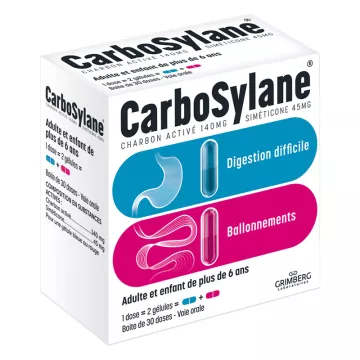
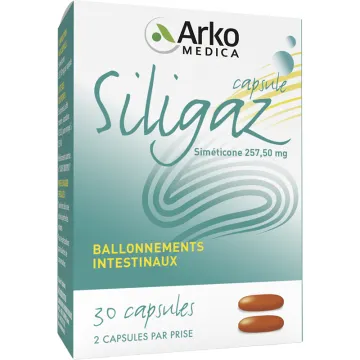
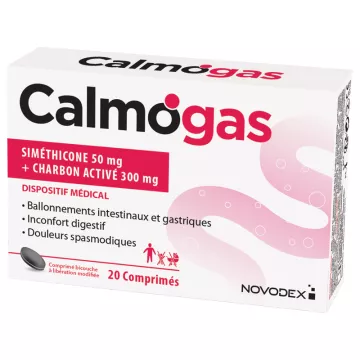
- Simethicone: reduces gas in the stomach and intestines — breaks down gas bubbles into larger bubbles that can be expelled — no systemic absorption — safe for infants, pregnant women, and seniors — see our simethicone page
- Activated vegetable charcoal: adsorbs gas and odor-causing molecules (H₂S) — provides rapid relief — should be taken separately from any medication (at least 2 hours apart — as it also adsorbs active ingredients)
- Digestive enzymes: alpha-galactosidase (digests galactooligosaccharides in legumes), lactase (lactose), amylase (starch) — take at the start of a meal to prevent gas production
- Natural carminatives: peppermint, ginger, fennel, caraway, chamomile — relax the smooth muscles of the digestive tract and facilitate the release of gas — herbal teas after meals or enteric-coated capsules
- Probiotics (Lactobacillus plantarum, Bifidobacterium longum): alter the microbiota’s fermentation profile to reduce H₂ and H₂S production — take for at least 6–8 weeks
Diet, lifestyle, and when to seek medical advice
- Chew slowly: 20–30 times per bite — reduces swallowed air + improves preliminary enzymatic digestion (fewer fermentable residues)
- Avoid carbonated beverages: each sip of a carbonated drink releases CO₂ directly into the stomach → gas buildup
- Physical exercise: 30 min/day of walking, biking, or swimming — stimulates peristalsis and gas expulsion — digestive yoga (Balasana, Apanasana) is effective
- Stress and gas: Cortisol slows colonic motility → gas buildup → discomfort — cardiac coherence, meditation
- See a doctor if: gas + blood in the stool, + unintentional weight loss, + persistent fever, + nighttime pain, + symptoms since childhood (celiac disease) — rule out IBD, colorectal cancer, severe SIBO