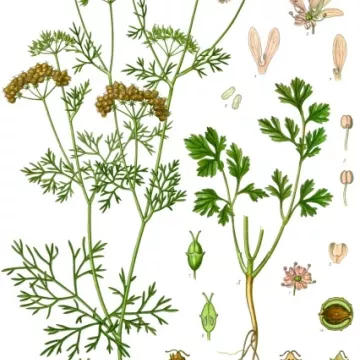
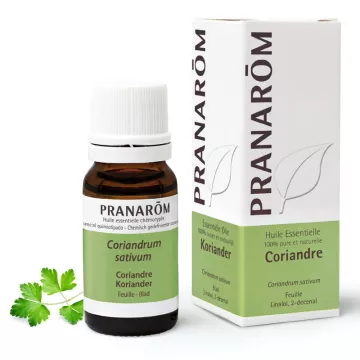
Cilantro (Coriandrum sativum) yields two radically different essential oils depending on the part that is distilled: the leaves (with a very pronounced green, herbaceous note, rarely used in aromatherapy) and the seeds —and it is always the seed that you will find in health food stores. Its dominant linalool profile (60–70%) gives it properties similar to those of true lavender: digestive, antispasmodic, and mildly sedative. A very gentle essential oil for the intestines and nerves. Explore our aromatherapy line.
Coriander Seed Essential Oil vs. Coriander Leaf Essential Oil?
Confusion is common—these are entirely different products in terms of their uses.
- Coriander seed essential oil: linalool 60–75% + α-pinene + camphene — floral-spicy, soft, and slightly sweet note — therapeutic uses: digestive, antispasmodic, relaxing—this is the essential oil sold in drugstores and aromatherapy shops
- Coriander leaf essential oil: decyl aldehyde + other aldehydes—an intense herbaceous note that most people find unpleasant—very limited use in aromatherapy—rarely sold in France
- On the label: “coriander fruit” or “seed”—check the full botanical name Coriandrum sativum + the part used for distillation
- The linalool in coriander seed is the same active compound found in true lavender—those who love lavender but want a warmer, spicier note may find coriander even more pleasant
Its primary area of use—and the plant’s most well-documented traditional application.
- Linalool relaxes the smooth muscles of the digestive tract—providing relief from intestinal spasms, bloating, and postprandial cramps
- Seed infusion: 1 tsp of lightly crushed seeds in 250 mL of water at 90°C, steep for 10 min—a floral, slightly sweet note; drink warm after meals
- Essential oil for abdominal massage: 2–3% in jojoba oil—gently massage in circular motions, twice daily during the active phase of digestive issues
- Spicy digestive blend: cilantro + cumin + fennel — a carminative trio with complementary profiles for difficult digestion
- Gentler on the mucous membranes than cumin — well tolerated as an infusion, even by sensitive stomachs
Coriander and nervous relaxation?
Its dominant linalool content makes coriander seed a relaxing active ingredient—often underestimated.
- Diffusion: 6–8 drops, 20 min — a gentle floral-spicy note, less “medicinal” than lavender, more unique — supports relaxation at the end of the day
- Sleep support: cilantro + marjoram —linalool and terpinene-4-ol work together to promote sleep
- Diluted on the wrists: 1–2% in vegetable oil — gentle inhalation, gradual relaxing effect
- "Stomach and nerves" blend: cilantro + green anise + marjoram — for people whose stomachs knot up with stress
Coriander Among Carminative Essential Oils: Which One to Choose?
The Umbelliferae family offers several carminative essential oils—each with a distinct profile.
- Coriander (linalool): the mildest, with a simultaneously relaxing profile—ideal for nervous digestive disorders and sensitive individuals
- Fennel (trans-anethole): more potent for gas, with a pronounced anise-like note—contraindicated for children under 12 and those sensitive to estrogen
- Green anise (trans-anethole): same family as fennel, same precautions—powerful against digestive and respiratory spasms
- Caraway (carvone): intermediate — more active than cilantro, less irritating than fennel — meadow cumin
- Selection criteria: mild profile + nervous system component = coriander. Severe bloating + no contraindications = fennel or caraway
Precautions?
- Pregnant and breastfeeding women: not recommended as an essential oil—a mild seed infusion is generally well-tolerated
- Allergy to Apiaceae (carrot, celery, parsley, anise): possible cross-reactivity—perform a skin test before extended use
- Essential oil: dilute to 2–3% for topical use
- Internal use of essential oil: only in enteric-coated capsules under qualified medical supervision