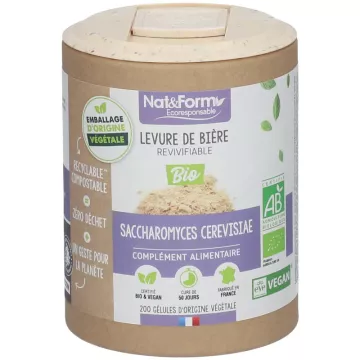
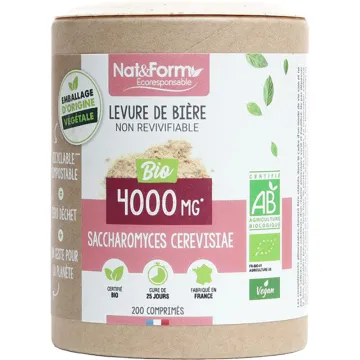
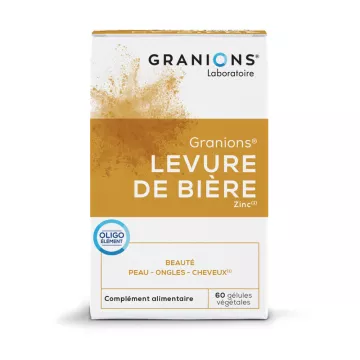
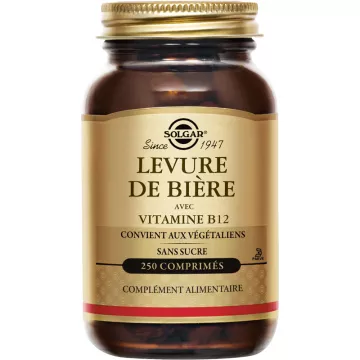
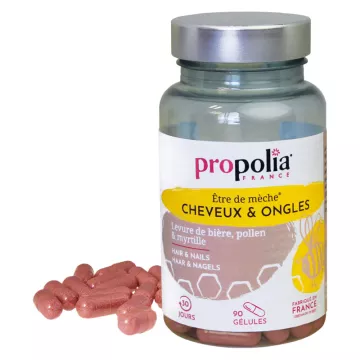
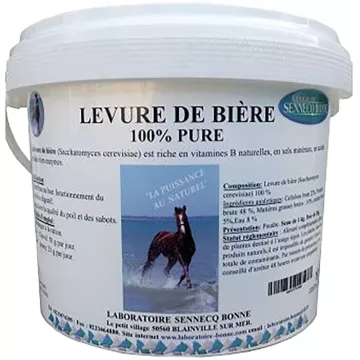
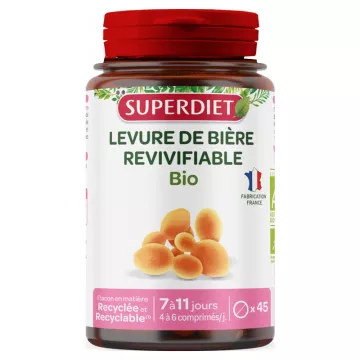
Brewer's yeast (Saccharomyces cerevisiae) is a natural microorganism produced through fermentation that has been used for centuries in nutrition and cosmetics. It is rich in B vitamins (including biotin, or vitamin B8), zinc, proteins, and essential amino acids. It is primarily found as a dietary supplement in the form of capsules, tablets, flakes, or powder.
What is brewer’s yeast?
Brewer’s yeast is a microscopic fungus (Saccharomyces cerevisiae) rich in B vitamins—including biotin (B8), B6, and B12 —as well as zinc, complete proteins, and beta-glucans. It comes in two forms with distinct uses: active (with live cultures) and inactivated (rich in nutrients, without fermentation).
What nutrients does brewer’s yeast provide?
Its composition provides nutritional benefits recognized by the EFSA.
- Biotin (B8): helps maintain normal hair and nails
- Zinc: contributes to the maintenance of normal hair, nails, and skin, as well as to normal sebum metabolism
- B vitamins (B1, B2, B3, B5, B6): contribute to normal energy metabolism and the reduction of fatigue
- Proteins and essential amino acids: help maintain normal muscle mass
Is brewer’s yeast good for beauty?
This is one of the most sought-after uses of brewer’s yeast, based on EFSA-authorized functions.
- Hair: its biotin contributes to the maintenance of normal hair; its zinc supports hair regrowth within the limits of an optimal intake
- Nails: biotin and zinc help maintainnormal nails that are less brittle
- Skin: Zinc helps maintain normal skin and supports normal sebum metabolism, which is beneficial for combination skin
How should brewer’s yeast be used daily?
Brewer’s yeast can be incorporated into your routine just like any other supplement.
- Capsules or tablets: 3 to 6 units per day according to the package insert, as a 1- to 3-month course
- Flakes or powder: Dilute in a beverage or mix into a no-bake dish to preserve the live cultures
- Start with small doses and increase gradually to avoid digestive upset
Active or inactivated: which brewer’s yeast should you choose?
The choice depends on your goal and digestive profile.
- Active yeast: contains live cultures to support gut flora; not recommended for those with candidiasis, irritable bowel syndrome, or Crohn’s disease
- Inactivated yeast: retains all nutrients without causing fermentation and is better tolerated by sensitive intestines
Opt for an organic, non-GMO product derived from natural fermentation and free of chemical additives.
Does brewer’s yeast have any contraindications?
Although it is natural, it does require certain precautions.
- Candidiasis, irritable bowel syndrome, Crohn’s disease: opt for the inactivated version
- Immunocompromised individuals: not recommended in its active form
- Antifungal treatment: possible interactions—consult a pharmacist
- Gout: consume in moderation; brewer’s yeast is high in purines
- Allergy to Saccharomyces cerevisiae: contraindicated
Content reviewed by Arnaud, Ph.D. in Pharmacy.