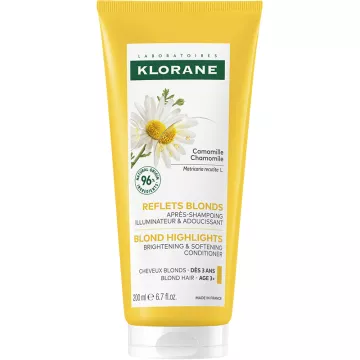
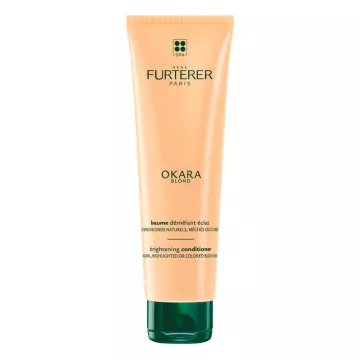
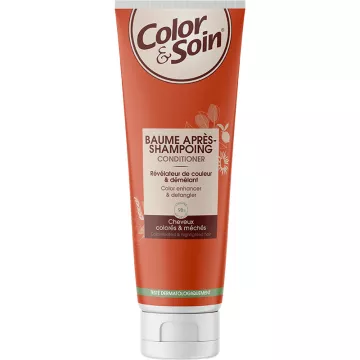
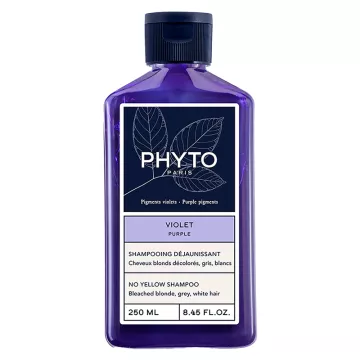
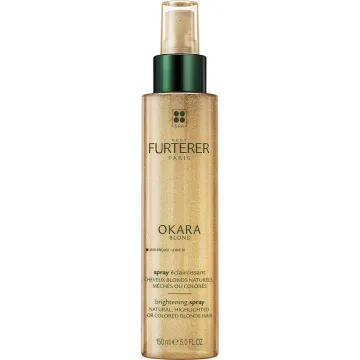
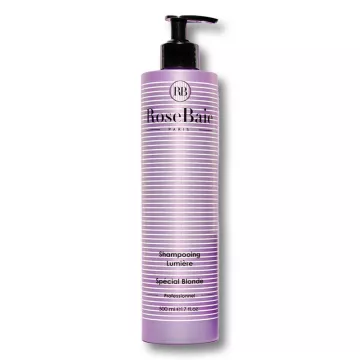
Bleached hair has undergone a chemical process that opens the cuticle and permanently weakens the hair shaft: bleaching partially dissolves melanin, leaving the hair more porous, drier, and more sensitive. It therefore requires special care. Use shampoos and conditioners specifically formulated for chemically treated hair, enriched with keratin, argan oil, and silk proteins, which coat the hair shaft and deeply moisturize it. Regularly apply nourishing hair masks to improve the hair shaft’s strength and reduce breakage. These treatments significantly improve the appearance and behavior of bleached hair, though they cannot rebuild a damaged structure, as hair is a dead tissue. A rich, gentle, and consistent hair care routine is the key to healthy, radiant bleached hair.
Washing bleached hair requires moderation and gentleness:
A shampoo for colored hair helps preserve its vibrancy. A final rinse with cold water closes the cuticles, revives shine, and minimizes color loss. These simple steps protect hair strands already weakened by bleaching.
Since bleaching makes the hair shaft particularly fragile and brittle, preventing breakage is essential. Minimize heat styling (frequent straightening or curling) as much as possible, and if you must use heat, always apply a heat protectant. Opt for air-drying whenever possible. When detangling, never brush wet hair vigorously, as it is more vulnerable at this time: use a wide-tooth comb and work gently, from the ends toward the roots. Treat bleached hair as if it were a precious material, without pulling or using harsh motions. Also avoid tight hairstyles that pull on the hair. At night, a silk pillowcase reduces friction. These precautions, which apply to any damaged hair, are especially crucial for bleached hair, whose mechanical strength is significantly reduced by the chemical treatment it has undergone.
The choice of ingredients is crucial for bleached hair. Avoid: sulfates (which dry out the hair and cause color to fade), parabens, and short-chain drying alcohols, which further weaken an already sensitized hair shaft. Opt for formulas free of these ingredients and enriched with moisturizing and coating agents. Keratin and proteins (silk, wheat) coat and strengthen the hair shaft. Ceramides help rebuild the intercellular matrix and smooth the cuticle. Plant-based oils such as argan oil or shea butter provide intense nourishment, and provitamin B5 (panthenol) improves suppleness and shine. Checking the INCI list allows you to verify that these moisturizing and reparative active ingredients are listed near the top. For bleached hair, it’s the richness and quality of the formula—as well as consistent application—that make the difference in the hair’s appearance and feel.
Split ends are common in bleached hair, which has been weakened by chemical treatments. To improve their appearance, use nourishing treatments for the ends (argan oil, shea butter, provitamin B5) that mask and smooth them. However, since split ends are irreversible, regularly trimming damaged ends remains essential to prevent the split from traveling up the hair shaft. For bleached hair damaged by heat, opt for reparative masks rich in wheat proteins, argan oil, and ceramides, which strengthen the hair’s structure and restore suppleness and elasticity. Above all, limit the use of heat styling tools and opt for lower temperature settings. These treatments improve comfort and appearance, but prevention—reducing heat and damage—remains the best strategy for hair already strained by bleaching. It’s better to prevent new damage than to try to mask old damage.
To prolong the vibrancy of bleached or dyed hair, a few simple habits can help. Use shampoos and treatments specifically designed for color-treated hair, formulated to preserve its vibrancy. Avoid sulfates, which cause the color to fade more quickly with each wash. Space out shampoos and wash with lukewarm water, then rinse with cold water. Minimize exposure to environmental factors that dull and damage the color: the sun (use products with UV filters, wear a hat during prolonged exposure) and chlorine from swimming pools (rinse or protect your hair before swimming, wash it afterward). Hard water can also dull highlights. These precautions, combined with proper hydration of the hair shaft, preserve both the color and the health of bleached hair. For very intensive care or severely damaged hair, a professional hairstylist can recommend appropriate reconstructive treatments after assessing the hair’s actual condition.