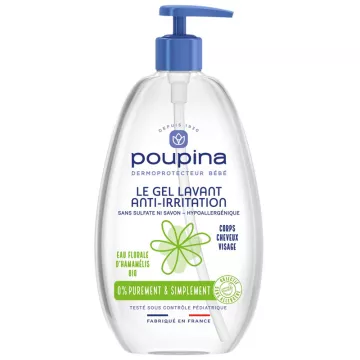
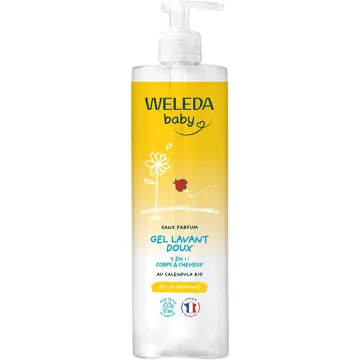
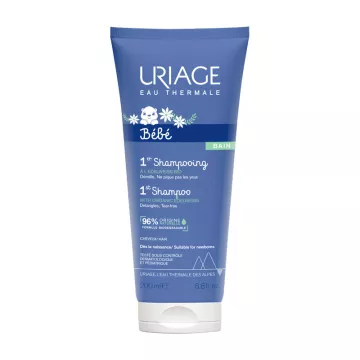
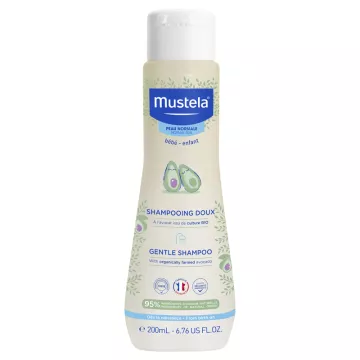
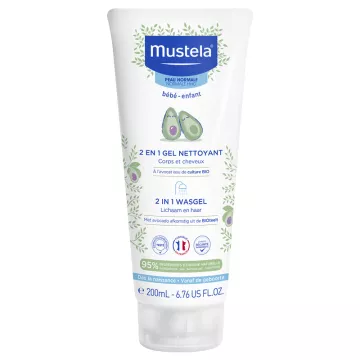
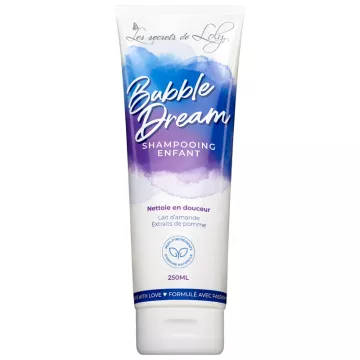
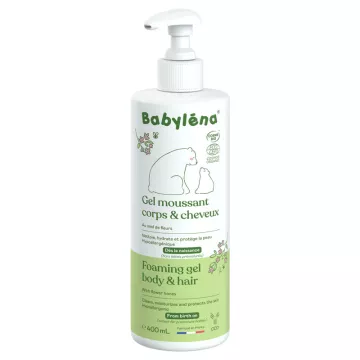
What is baby shampoo?
Baby shampoo is a cosmetic product specially formulated to gently cleanse the hair and scalp of infants and young children. Unlike adult shampoos:
- Mild surfactants that respect the immature skin barrier
- A physiological pH close to that of a baby’s skin
- Minimalist, hypoallergenicformulas in accordance with Regulation (EC) No. 655/2013
- “Tear-free” label: does not cause stinging if it accidentally comes into contact with the eyes
- Suitable for the fragile, delicate, and more permeablescalp of infants compared to that of adults
This adaptation to the specific needs of an infant’s skin makes baby shampoo a must-have for fine hair, sensitive scalps, or babies with cradle cap. For daily cleansing, it fits naturally into the bath routine.
What ingredients are in baby shampoo?
Baby shampoos are generally formulated with a few key ingredient groups:
- Aqueous base (aqua): the main moisturizing ingredient
- Mild surfactants: coco-glucoside, lauryl glucoside, sodium cocoyl isethionate
- Cocamidopropyl betaine: a mild amphoteric surfactant; be aware that it can sometimes cause allergic reactions in some people
- Moisturizers: vegetable glycerin, panthenol (provitamin B5)
- Soothing plant extracts: chamomile, calendula, aloe vera
- Mild preservatives: sodium benzoate, potassium sorbate
- Thickening and opacifyingagents of natural origin
Choose formulas with a short, easy-to-read ingredient list. Avoid harsh sulfates (SLS, SLES), long-chain parabens, synthetic fragrances that can cause allergies, phenoxyethanol for infants, and artificial dyes.
How to Choose the Best Baby Shampoo?
Several selection criteria will help you find a product that’s truly suitable:
- Hypoallergenic and tested under dermatological and pediatric supervision
- Fragrance-free or with very mild natural fragrances
- Free of harsh sulfates, parabens, and dyes
- Physiological pH close to 5.5
- Tear-free formula for comfort during bath time
- "Suitable from birth" label on the packaging
- Eco-labels: Cosmebio, Ecocert, Cosmos Organic, Natrue, Ecolabel
- Recommended by pediatricians and pharmacists
- Protective packaging (pump bottle) that minimizes contamination
For babies with a family history of atopic conditions or a particularly sensitive scalp, personalized advice from a pharmacist remains invaluable. Our section dedicated to baby shampoo features products selected based on these criteria.
How often should you wash your baby’s hair?
Washing should be done in moderation to protect the delicate scalp:
- 2 to 3 times a week on average for an infant
- Adjust as needed based on the baby’s hair type and activity level
- Do not wash daily: this strips away natural protective oils
- Incorporate it into the regularbath time for a smooth routine
- Gently massage the scalp with your fingertips, without scrubbing with your nails
- Rinse thoroughly to remove all residue
- Pat dry with a soft towel, without rubbing
For babies who sweat a lot—in the summer or after physical activity—a slightly more frequent shampooing schedule may be appropriate. Conversely, if your baby has a dry scalp or is prone to eczema, spacing out shampooing even further helps better protect the skin barrier.
Can cradle cap be treated with baby shampoo?
Cradle cap (infant seborrheic dermatitis) forms yellowish, scaly patches on the scalp. A gradual approach:
- Apply a mild vegetable oil to the affected areas (sweet almond oil, virgin olive oil, coconut oil) 15 to 30 minutes before bath time
- Gently massage the scalp with your fingertips
- Gently brush with a soft-bristled brush to remove the softened scales
- Use amild shampoo to rinse out the oil and residue
- Repeat 2 to 3 times a week until improvement is seen
Some specialized baby shampoos contain soothing agents specifically formulated for cradle cap. Never scratch dry skin to avoid injury and secondary infections. If the condition spreads to the face, or if there is inflammatory redness or oozing, consult a pediatrician or dermatologist: widespread seborrheic dermatitis may require specialized treatment.
What are the benefits of a tear-free baby shampoo?
The tear-free formula offers several tangible benefits:
- Baby’s comfort: no stinging if the product accidentally gets in the eyes
- Eye safety: minimizes the risk of a reaction if the product gets in the eyes
- Amore relaxed bath time: a baby who doesn’t associate shampoo with pain remains cooperative
- Positive hygieneexperience: bath time is perceived as enjoyable
- Parental peace of mind: less stress when rinsing the hair
This formula is achieved through the use of very gentle surfactants and a pH level suited to the sensitivity of the eyes. The “no tears” label on the packaging indicates that specific tests have been conducted, but it does not eliminate the need for caution when rinsing: avoiding getting the product in the eyes remains best practice.
Are baby shampoos eco-friendly?
Many manufacturers are now committed to an eco-friendly approach:
- Biodegradable ingredients derived from renewable sources
- Surfactants derived from plants rather than petrochemicals
- Recyclable packaging or packaging made from recycled plastic
- Economical sizes and eco-refills
- Reduction of unnecessarypackaging
- Avoidance of microplastics and non-biodegradable silicones
- Certified supply chains and products made in France or Europe
To identify products that are truly eco-friendly, look for Ecocert, Cosmebio, Cosmos Organic, Natrue certifications, or the European Ecolabel. Solid shampoos are an even more environmentally friendly alternative, provided they are suitable for a baby’s sensitive scalp.
Can adults use baby shampoo?
Baby shampoo can be used by the whole family, with a few caveats:
- Adults with sensitive skin or a reactive scalp: can use it without concern
- Pregnant or breastfeedingwomen who prefer simple, minimalist formulas
- Older adults with sensitive scalps: a gentle alternative
- Fine or normal hair: a gentle cleanse is often sufficient
However, for oily, thick, long, or colored hair, baby shampoo may be too mild to meet specific needs (regulating oil production, detangling, and color retention). A suitable adult shampoo will be more effective in these situations.
How should you store baby shampoo properly?
Proper storage conditions preserve the product’s quality:
- Stable room temperature (15–25 °C), away from direct sunlight
- Cap or pump bottle tightly closed after each use
- Avoid storing it ina humid bathroom for extended periods if possible
- Observe the PAO (Period After Opening) indicated by the open-jar symbol (often 6M, 9M, or 12M)
- Check before each use: smell, texture, color
- Checkthe expiration date for unopened products
Any noticeable changes (rancid odor, separation of layers, discoloration, abnormal texture) indicate spoilage: it’s better to replace the product than to take a risk with your baby’s scalp.
Are there baby shampoos for specific needs?
Several targeted formulations address specific concerns:
- Shampoos for sensitive or atopic skin: enriched with soothing agents (colloidal oats, panthenol, glycerin)
- Shampoos specifically for cradle cap: formulated to gently soften and remove flakes
- Moisturizing shampoos for dry scalps
- 2-in-1detangling shampoos for babies with long or curly hair
- 2-in-1 body and hair shampoos: maximum convenience
- Certified organic formulas for parents who prefer natural products
For babies with dry skin, including the scalp, a suitable moisturizing shampoo is particularly important.
What’s the difference between baby shampoo and baby soap?
The two products have complementary functions:
- Baby shampoo: specially formulated for the scalp and hair, with gentle cleansing agents and targeted moisturizers
- Baby soap or wash gel: designed for the body; can sometimes be used on the hair but isn’t optimized for hair care
- 2-in-1 products: combine both uses, which is convenient for the first few months when the baby’s hair is still sparse
- Separate products: recommended when the baby develops thicker hair or has specific issues (cradle cap, dry scalp)
For newborns with sparse hair, a 2-in-1 product may be sufficient; for older babies or those with long, curly hair, dedicated products are more suitable.
Is baby shampoo suitable for skin allergies?
Many baby shampoos are formulated for sensitive and atopic skin:
- Labeled “hypoallergenic” and tested according to regulatory standards
- Free of the 26 allergens that must be listed on the label
- Fragrance-free, dye-free, alcohol-free
- Documenteddermatological and pediatric testing
- Short ingredient list to limit potential sources of reaction
Always perform a patch test by applying a small amount to a small area for 48 hours before regular use, especially for babies with a known history of atopic conditions. If an allergy has been identified (e.g., cocamidopropyl betaine, methylisothiazolinone), consult your pharmacist or dermatologist to identify the most suitable formulas. For daily infant care, a consistent and well-tolerated routine is essential.
What are the signs that a baby shampoo isn’t suitable?
Several signs of incompatibility may appear:
- Skin irritation: redness, itching, or rashes on the scalp
- Severe dryness: a flaky or tight scalp after application
- Worsening of cradle cap or the appearance of new patches
- Visible discomfort: the baby cries during or after bath time
- Itching: baby scratching their head
- Dull or brittle hair after several uses
If a reaction occurs, stop using the product immediately, rinse thoroughly, and switch to a gentler formula. Consult a healthcare professional if symptoms persist or worsen.
Are there shampoos suited to each hair type?
Some brands offer specific formulations based on hair type:
- Curly or coily hair: enriched with moisturizing agents to define curls and reduce frizz (plant oils, glycerin, shea butter)
- Fine hair: lightweight formulas that don’t weigh hair down and add volume
- Dry or brittle hair: moisturizing and nourishing shampoos
- Normal hair: balanced formulas for gentle daily use
- Mixed-textured hair or older children: products suited for scalps in transition
For babies and children with Afro, kinky, or very curly hair, specialized brands offer dedicated hair care products rich in plant-based oils (shea, coconut, castor). Ask your pharmacist for advice to identify the product best suited for your child.
Can baby shampoo be used on toys?
A gentle baby shampoo can indeed be used for occasional cleaning of bath toys or accessories that come into contact with the baby:
- Hypoallergenic and free of harsh chemicals
- Safe for toys that babies put in their mouths, provided they are rinsed thoroughly
- Removes dirt and residue without leaving behind toxic residues
- Thorough rinsing is essential after cleaning
- Dry thoroughly to limit bacterial growth
For bath toys with enclosed cavities (plastic ducks, etc.), check regularly for mold inside and opt for models without holes or that can be taken apart. Cleaning bath toys weekly helps maintainyour baby’s overalldaily hygiene.