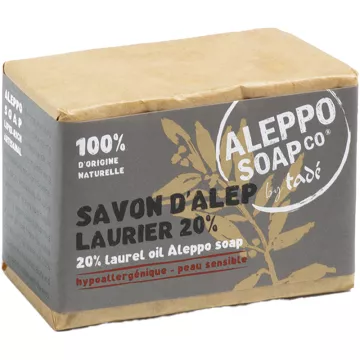
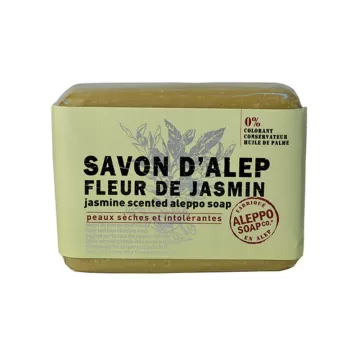
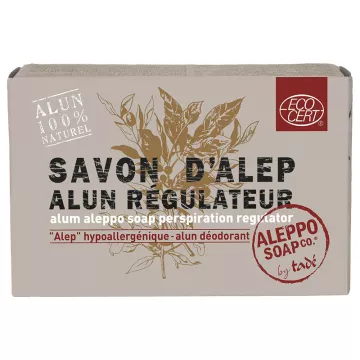
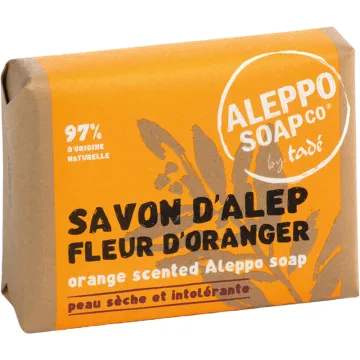
What is Aleppo soap, and what makes it unique?
Aleppo soap (Ghar in Arabic) is the oldest documented bar soap in the world—made in Aleppo, Syria, for over 2,000 years. Its formula consists of just two ingredients: hot-saponified olive oil + laurel berry oil (Laurus nobilis). It’s this second oil that makes all the difference—the higher the laurel content, the more active the soap is, the greener its interior, and the more valuable it becomes. To understand what “saponification” means and compare it with other classic soaps, see our page on plant-based soap.
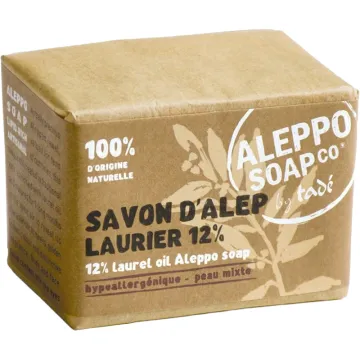
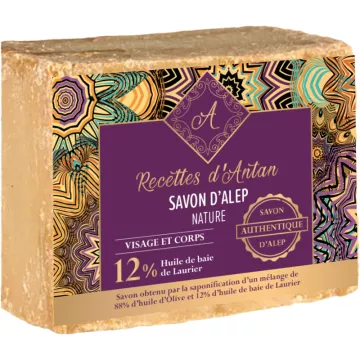
- 5–12% laurel: the mildest—for very sensitive skin, babies, and daily use—gentle cleansing, low active laurel oil content
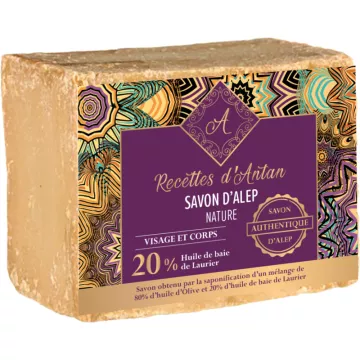
- 15–25% laurel: general use—normal to combination skin—good balance of cleansing and gentleness
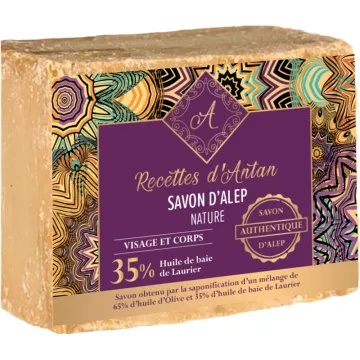
- 30–50% laurel: high active content—for combination to oily skin, seborrheic scalps, and acne-prone skin —targeted use, not for daily use if skin is reactive
- The green interior oxidizes and turns brown on the surface as it ages — a genuine Aleppo soap ages and improves — the laurel scent fades over time
What are the specific properties of laurel berry oil?
It is the distinctive active ingredient in Aleppo soap—without it, it’s just Castile soap. Laurel berry oil is rich in lauric acid (40–50%), which has documented purifying and cleansing properties, and in terpenic compounds (cineole, pinene) that explain the traditional use of Aleppo soap in treating irritated scalps and skin inflammations.
- Lauric acid: purifying and sanitizing—the same active ingredient found in coconut oil, but with a different profile due to the terpenes
- Effect on the scalp: regulates sebum and balances the skin’s microflora—documented traditional uses for dandruff and itching
- Hair care uses: Aleppo soap can replace shampoo for oily or irritated scalps—rinsing with diluted apple cider vinegar is recommended to neutralize the alkaline pH
Aleppo soap vs. Marseille soap: what are the practical differences?
Two great classics of traditional plant-based soap —but with very different profiles for skin and hair.
- Marseille soap: olive oil alone or with palm oil—no laurel oil—very mild, moderate cleansing action—versatile for body and laundry
- Aleppo soap: olive oil + laurel oil—more active, with a characteristic resinous scent—targeted for skin and hair care—not suitable for laundry (may leave a stain)
- For dry, problem-free skin: superfatted plant-based soap or Marseille soap—for problem skin (acne, dandruff, irritation): Aleppo soap with an appropriate laurel oil content
How can you tell if Aleppo soap is genuine, and how should you store it?
The market is flooded with many “Aleppo” products that aren’t actually Aleppo soap—here are some concrete tips to help you identify the authentic one. As with organic soap, transparency regarding ingredients and traceable origin are the best indicators.
- INCI: “sodium olivate” (saponified olive oil) + “sodium laurate” or a reference to laurel berry oil (Laurus nobilis)—both must be present
- Color: brown on the outside (oxidation) + green on the inside (laurel polyphenols)—if it’s uniformly brown throughout, the quality is questionable
- Declared laurel content: Reputable manufacturers specify this—without this information, it is difficult to assess the soap’s strength
- Origin: Aleppo (Syria) or the surrounding region—since the Syrian conflict, some producers have relocated to Turkey—quality varies by batch
- Storage: A draining soap dish is essential; allow the soap to dry in a well-ventilated area between uses—aged Aleppo soap (cured for 1–3 years) is often milder than new soap
- See our personal care line