0
Menu
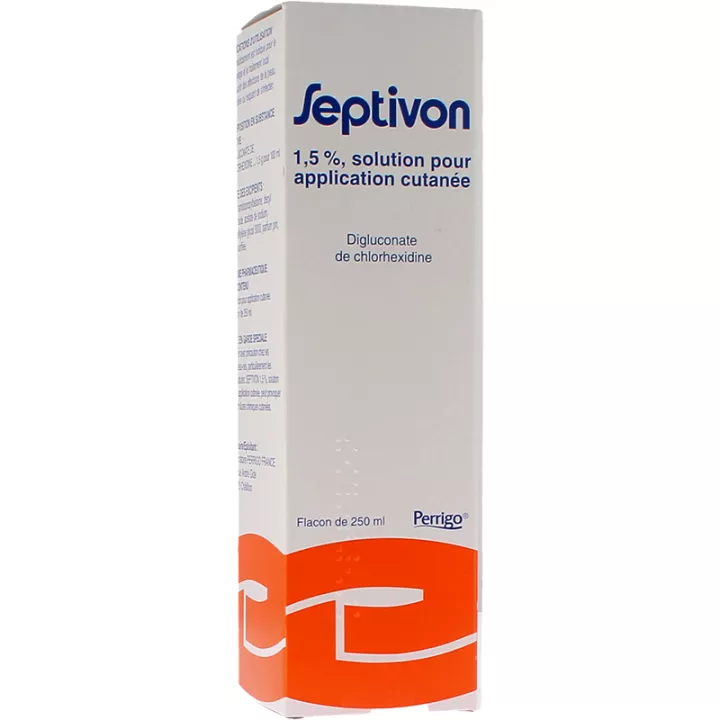
Septivon 1.5% Varicella antiseptic solution Septivon 1.5% Varicella antiseptic solution
Over-the-counter medication

Septivon 1.5% Varicella antiseptic solution

Septivon is a local antiseptic. Septivon 1.5% Antiseptic Solution is used for the cleansing and adjunctive treatment of infected lesions(chickenpox treatment) or lesions at risk of infection.

€2.89 EXCL. VAT €3.19 INCL. VAT
In stock Shipped within 24h Secure payment
Reference : 3400936416628
You must be logged in to add this product to a list. Customer login
See delivery conditions

Our doctors of pharmacy advise you

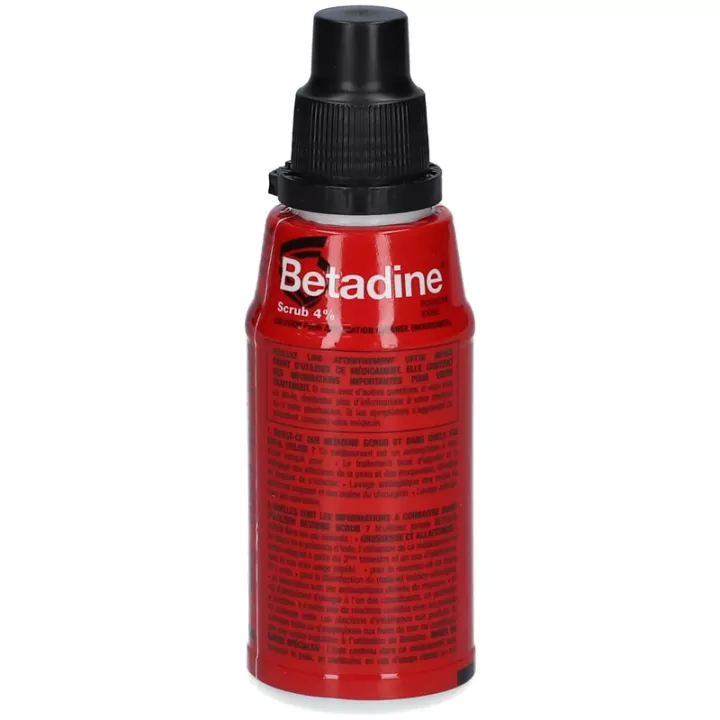
Betadine Rouge Antiseptic Foaming Scrub 125 ml Betadine Rouge Antiseptic Foaming Scrub 125 ml
€2.99
Shipped within 24h
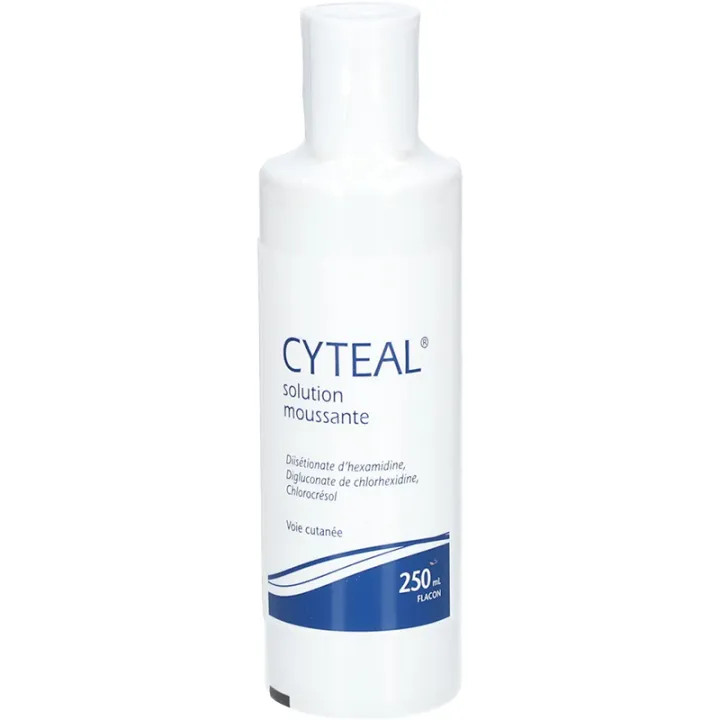
CYTEAL Foaming Antiseptic Solution 250ML CYTEAL Foaming Antiseptic Solution 250ML
€4.43
Shipped within 24h
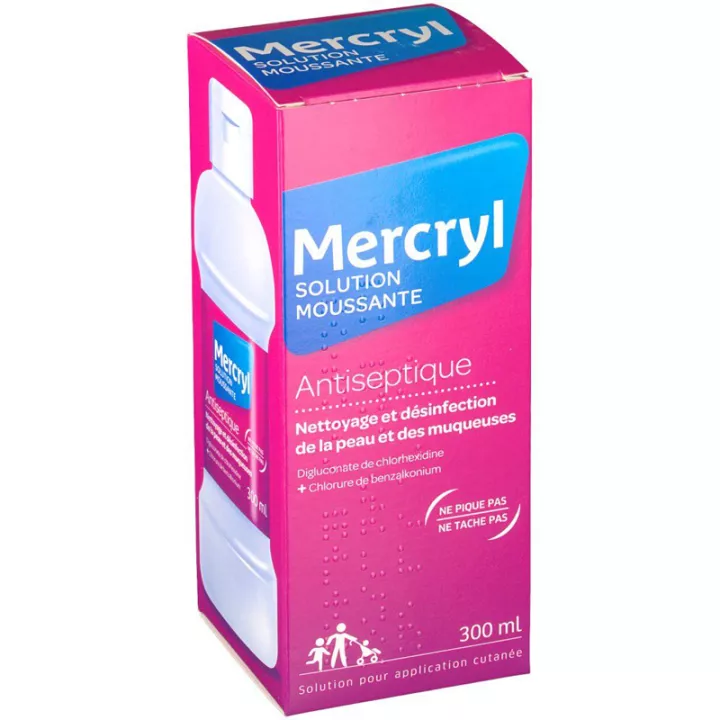
Mercryl Foaming Solution 300 ml bottle Mercryl Foaming Solution 300 ml bottle
€8.56
Add to cart
Shipped within 24h
Poxclin Varicella Foam 100 ml Poxclin Varicella Foam 100 ml
€13.96
Shipped within 24h
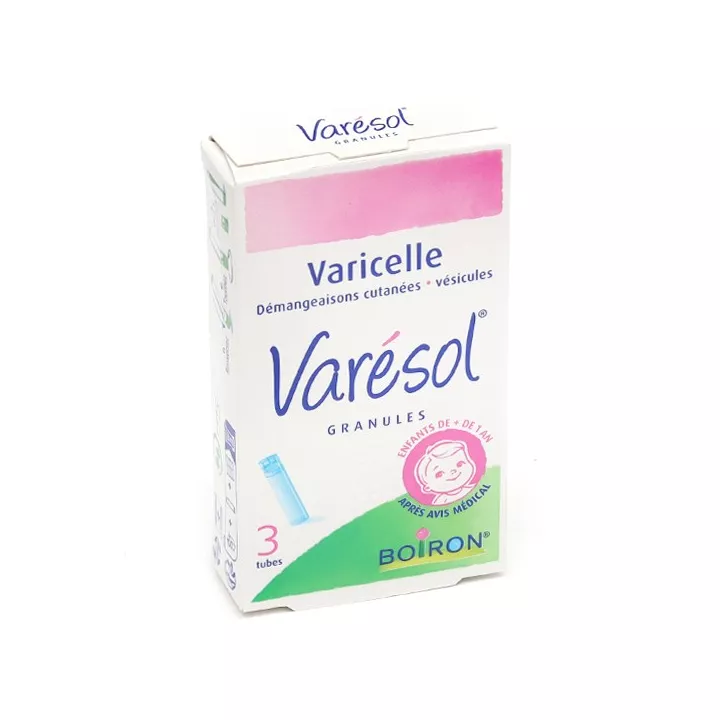
Varésol Boiron Chicken pox itchy skin 3 tubes of granules Varésol Boiron Chicken pox itchy skin 3 tubes of granules
€8.99
Shipped within 24h
CALCAREA MURIATICA pellets Boiron homeopathy CALCAREA MURIATICA pellets Boiron homeopathy
4 C 5 C +
€6.99
Add to cart
In stock - preparation within 1 to 2 working days
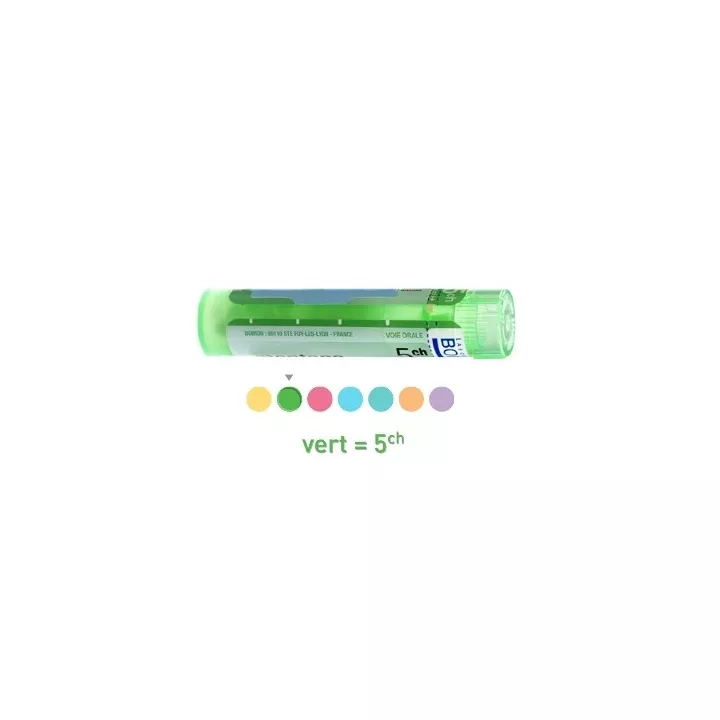
CALTHA PALUSTRIS pellets Boiron homeopathy CALTHA PALUSTRIS pellets Boiron homeopathy
5 C
€2.99
Add to cart
In stock - preparation within 1 to 2 working days
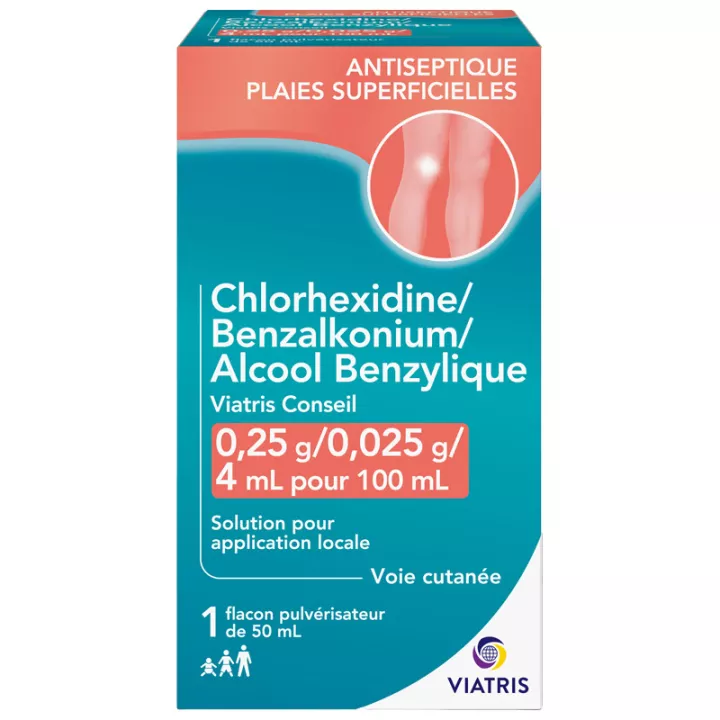
Chlorexidine/Benzalkonium/Benzyl Alcohol Mylan 50 ml Chlorexidine/Benzalkonium/Benzyl Alcohol Mylan 50 ml
€2.95
Add to cart
Shipped in 5 to 7 working days
Anantherum muricatum 5C 7C homeopathic pellets Boiron Anantherum muricatum 5C 7C homeopathic pellets Boiron
5 C Tube 80 granules 4 g. +
€2.99
Add to cart
In stock - preparation within 1 to 2 working days

Septivon Chlorhexidine Digluconate 1.5% Antiseptic solution for the treatment of chickenpox

Septivon belongs to a family of medicines called antiseptics. It works by destroying bacteria. It is used to clean or locally treat skin that is infected or at risk of infection.

Description of Septivon 1.5% antiseptic solution

Septivon is a local antiseptic. Septivon Chlorhexidine Digluconate 1.5% is a solution for cutaneous application indicated for the cleansing and adjunctive treatment of skin conditions that are primarily bacterial or susceptible to superinfection.

Septivon is used for the cleansing and adjunctive treatment of lesions that are infected or at risk of infection.

How to relieve chickenpox itching with Septivon

Chickenpox is caused by the varicella-zoster virus (VZV), a member of theherpes family. Chickenpox is a highly contagious viral infectious disease that most often affects babies and young children. It causes a rash of blisters on the skin and mucous membranes.

Septivon Antiseptic Solution contains a local antiseptic and a foaming agent.

Applying Septivon antiseptic soap to chickenpox pimples while washing calms the itching.

Chickenpox heals after 12 days: the pimply blisters dry up and gradually disappear from the skin.

How to use Septivon to treat skin disorders

Apply to the skin. Do not swallow.
It is used pure or diluted with water.

It may be used undiluted:

  • If you need to apply it to small lesions.
  • If you need to wash an area of your skin.

This product may be used diluted:

  • If you need to wash an area of your skin. In this case, pour 3 capfuls of Septivon into 1 liter of water.
  • If you need to soak an area of your skin. In this case, pour 3 capfuls of Septivon for 2 liters of water.
  • For women who need to wash their vulva. In this case, pour 3 capfuls of Septivon for 1 liter of water.

After use:
Rinse thoroughly after use.

Composition of Septivon solution for cutaneous application

The active substance is chlorhexidine digluconate (1.5 g per 100 ml solution).

Other ingredients include: alkanamidopropylbetaine, copra fatty acid diethanolamine, polyalkene glycol 3000, sodium edetate, pine fragrance, purified water.

Precaution of use

If you have used more SEPTIVON than you should: tell your doctor or pharmacist.

If you forget to use SEPTIVON: do not use a double dose to make up for the single dose you forgot to use.

Never use SEPTIVON :

  • if you are allergic (hypersensitive) to chlorhexidine or any of its ingredients,
  • to disinfect medical and surgical equipment,
  • when applied to the eyes,
  • in the ears in case of tympanic perforation.

Take care with SEPTIVON :

Use cleanly and do not keep it for long once it has been opened. Microbial contamination can occur as soon as the bottle is opened, especially when the volume exceeds 250 ml.

You should also take care when using Septivon :

  • on a large area of skin,
  • under a water- and airtight dressing,
  • on deeply burned skin,
  • on the skin of premature babies or infants. There is a risk that the active substance may enter the bloodstream.

Taking or using other medicines :

  • This product must not be used at the same time as other local antiseptics, as there is a risk that the combination of several antiseptics may be incompatible or render them ineffective.
  • If you use soap beforehand, you must rinse the skin thoroughly before using Septivon.

Septivon packaging

Septivon Antiseptic Solution comes in 250 ml and 500 ml bottles.

Your expert pharmacist's advice on chickenpox

Symptoms of chickenpox in children

  • moderate fever up to 38°C, with possible headaches ;
  • raised redness of the skin, on which vesicles or bullae rapidly appear. These measure three to four millimetres in diameter, are filled with a clear liquid (dewdrop-like in appearance) and rapidly cloud over;
  • severe skin itching (pruritus).

How to deal with chickenpox.

  • Prevent scratching: To avoid scarring and prevent superinfection of the lesions, which could lead to hospitalization, it's important to prevent scratching.
  • Take care of chickenpox pimples: Ideally, you should disinfect them daily with a local antiseptic. If your children are still wearing diapers, be sure to change them as often as possible to prevent the vesicles in this area from becoming infected through contact with moisture.
  • Limit bathing: as well as increasing the risk of superinfection, soaking in water softens scabs and slows down the healing process. Prefer quick showers with cool (to relieve itching) or lukewarm water.
  • Avoid the sun: And heat in general, which tends to accentuate itching. Keep the temperature below 20°C in your home.

Pharmacovigilance Report an adverse drug reaction(s)

Download PDF leaflet

NOTICE

ANSM - Updated on : 17/07/2024

Product name

SEPTIVON 1.5%, solution for cutaneous application

Chlorhexidine digluconate

Box

Please read this leaflet carefully before using this medicine, as it contains important information for you.

You must always use this medicine in strict accordance with the information provided in this leaflet or by your doctor or pharmacist.

- Keep this leaflet. You may need to read it again.

- Ask your pharmacist for any advice or information you may need.

- If you experience any of the side effects listed above, please tell your doctor or pharmacist. This also applies to any side effects not mentioned in this leaflet. See section 4.

- You should contact your doctor if you do not feel any improvement or if you feel less well.

Keep out of the reach of children.

What does this leaflet contain?

1. What is SEPTIVON 1.5%, solution for cutaneous application and what is it used for?

2. What do I need to know before using SEPTIVON 1.5%, solution for cutaneous application?

3. How do I use SEPTIVON 1.5%, solution for cutaneous application?

4. What are the possible side effects?

5. How do I keep SEPTIVON 1.5%, solution for cutaneous application?

6. Package contents and other information.

1. WHAT IS SEPTIVON 1.5%, solution for cutaneous application AND WHAT IS IT USED FOR?

Pharmacotherapeutic class - ATC code: D08AC02

ANTISEPTICS AND DISINFECTANTS

This drug is indicated for the cleansing and adjunctive local treatment of skin conditions which are infected or at risk of infection.

2. WHAT DO I HAVE TO KNOW BEFORE USING SEPTIVON 1.5%, solution for cutaneous application?

Never use SEPTIVON 1.5%, solution for cutaneous application:

- if you are allergic (hypersensitive) to chlorhexidine digluconate or to any of the other ingredients listed in section 6.

- for disinfecting medical and surgical equipment.

Do not use in the eyes or ears if the eardrum has been perforated.

IF IN DOUBT, ASK YOUR DOCTOR OR PHARMACIST FOR ADVICE.

Warnings and precautions

Talk to your doctor or pharmacist before using SEPTIVON 1.5%, solution for cutaneous application.

SEPTIVON 1.5%, solution for cutaneous application must not come into contact with the eye, as it may cause visual damage. If it comes into contact with the eyes, rinse immediately and thoroughly with water. In the event of irritation, redness, pain or visual disturbance, seek medical advice immediately.

Serious cases of persistent corneal damage (damage to the surface of the eye), which may require corneal transplantation, have been reported when similar products accidentally came into contact with the eye during surgery, in patients under general anaesthesia (sleep without intense pain).

Special warnings

If used over a large surface area, under an occlusive dressing, on deeply burned skin, or on the skin of premature babies or infants, there is a risk of the product passing into the general circulation.

Precautions for use

Do not keep opened bottles for a long time, as microbial contamination may occur as soon as they are opened, especially if the bottle volume exceeds 250 ml.

Talk to your doctor or pharmacist before using SEPTIVON 1.5 % solution for cutaneous application.

Children

Use with caution in newborns, particularly premature babies. SEPTIVON 1.5% solution for cutaneous application may cause chemical burns to the skin.

Other drugs and SEPTIVON 1.5%, solution for cutaneous application

This product must not be used in conjunction with other local antiseptics (risk of incompatibility or ineffectiveness). Prior use of soap must be followed by thorough rinsing.

Tell your doctor or pharmacist if you are taking, have recently taken or may take any other medication.

SEPTIVON 1.5%, solution for cutaneous application with food and drink

Not applicable.

Pregnancy, breast-feeding and fertility

If you are pregnant or breastfeeding, think you may be pregnant or are planning to become pregnant, ask your doctor or pharmacist for advice before taking this medicine.

Sportsmen

Not applicable.

Driving and use of machinery

Not applicable.

SEPTIVON 1.5%, solution for cutaneous application does not contain any excipients with a notorious effect.

3. HOW DO I USE SEPTIVON 1.5%, solution for cutaneous application?

Always use SEPTIVON exactly as instructed in this leaflet, or as directed by your doctor or pharmacist. Check with your doctor or pharmacist if in doubt.

For cutaneous use.

For external use only. Do not swallow.

This product can be used pure or diluted.

Pure use :

- Spray on small lesions,

- As a wash.

Diluted use:

- For washing: pour 3 capfuls into 1 liter of water,

- For soaking: pour 3 capfuls into 2 liters of water,

- For vulval cleansing: pour 3 capfuls into 1 liter of water.

Rinse thoroughly after use.

Do not store the mixture for later use.

Close bottle tightly after each use.

If you have used more SEPTIVON 1.5%, solution for cutaneous application than you should have:

Consult your doctor or pharmacist immediately.

If you forget to use SEPTIVON 1.5%, solution for cutaneous application :

Do not use a double dose to make up for the single dose you forgot to use.

If you stop using SEPTIVON 1.5%, solution for cutaneous application :

Not applicable.

If you have any further questions about the use of this medicine, please ask your doctor or pharmacist.

4. WHAT ARE THE POSSIBLE SIDE EFFECTS?

As with all medicines, this drug may cause undesirable effects, but they do not occur systematically in everyone.

- Allergic eczema on contact with the product, particularly in the case of damaged skin, mucous membranes or ulcerations of the lower limbs,

- rarely, a general allergic accident leading to anaphylactic shock,

- chemical burns in newborns,

- corneal damage (damage to the surface of the eye) and permanent eye damage, including permanent visual impairment (following accidental ocular exposure during surgical procedures on the head, face and neck) in patients under general anaesthesia (sleep without intense pain).

Reporting side effects

If you experience any side effects, please tell your doctor or pharmacist. This also applies to any side effects not mentioned in this leaflet. You can also report adverse reactions directly via the national reporting system: Agence nationale de sécurité du médicament et des produits de santé (ANSM) and the network of Centres Régionaux de Pharmacovigilance. Website: https: //signalement.social-sante.gouv.fr/.

By reporting adverse reactions, you are helping to provide more information on drug safety.

5. HOW TO CONSERVE SEPTIVON 1.5%, solution for cutaneous application?

Keep out of sight and reach of children.

Do not use this medicine after the expiration date indicated on the packaging after EXP. The expiration date refers to the last day of that month.

Before opening: Store at a temperature not exceeding +25°C.

After opening: Do not store for more than 3 months.

Do not dispose of any medicine down the drain or in the household waste. Ask your pharmacist to dispose of any medicines you no longer use. These measures will help protect the environment.

6. CONTENTS AND OTHER INFORMATION

What SEPTIVON 1.5%, solution for cutaneous application, contains

The active substance is :

Chlorhexidine digluconate.................................................................................................... 1.5 g

per 100 ml.

Other components are :

Alcanamidopropylbetaine, decyl glucoside, sodium acetate, polyalkylene glycol 3000, pine fragrance, purified water.

What is SEPTIVON 1.5%, solution for cutaneous application and what does it contain?

This medicine comes in the form of a solution for cutaneous application. Available in 250 ml, 500 ml or 2000 ml bottles.

Marketing authorization holder

LABORATOIRE PERRIGO FRANCE

20, RUE ANDRE GIDE

92320 CHATILLON

Marketing authorization holder

LABORATOIRE PERRIGO FRANCE

20, RUE ANDRE GIDE

92320 CHATILLON

Manufacturer

CHEMINEAU

ROUTE DE LA MONNAIE

37210 VOUVRAY

or

OMEGA PHARMA MANUFACTURING GMBH & CO. KG

BENZSTRASSE 25

71083 HERRENGBERG

GERMANY

Product names in member states of the European Economic Area

Not applicable.

The last date on which this leaflet was revised was :

[to be completed subsequently by the holder].

Other

Detailed information on this drug is available on the ANSM (France) website.

VIDAL DE LA FAMILLE

SEPTIVON

Fiche révisée le : 16/10/2024

Antiseptique local

chlorhexidine

.Présentations. Composition.Indications.Contre-indications.Attention.Interactions médicamenteuses.Grossesse et allaitement.Mode d'emploi et posologie. Conseils.Effets indésirables.Lexique

PRÉSENTATIONS  (sommaire)

SEPTIVON 1,5 % : solution pour application cutanée ; flacon de 250 ml.
Remboursé à 15 %. - prix : 2,10 euro(s).

SEPTIVON 1,5 % : solution pour application cutanée ; flacon de 500 ml.
Non remboursé - Prix libre -

Laboratoire Perrigo France

COMPOSITION  (sommaire)
 p 100 ml 
Chlorhexidine gluconate 1,5 g 

INDICATIONS  (sommaire)
Ce médicament contient un antiseptique local associé à un agent moussant.
Il est utilisé pour le nettoyage et le traitement d'appoint des lésions infectées ou exposées à un risque d'infection.
CONTRE-INDICATIONS  (sommaire)
Ce médicament ne doit pas être utilisé dans les cas suivants :
  • dans les yeux ou dans le conduit auditif (risque de toxicité en cas de perforation du tympan) ;
  • pour la désinfection du matériel médicochirurgical (voir Attention).
ATTENTION  (sommaire)
Évitez l'usage prolongé de ce médicament, notamment chez l'enfant, sur des surfaces étendues ou profondément lésées, sans l'avis de votre médecin : risque de passage du médicament dans le sang.
Cet antiseptique ne convient pas pour la désinfection des ciseaux, rasoirs et autres objets potentiellement contaminants.
En cas de contact accidentel avec les yeux, rincez rapidement et abondamment à l'eau courante. En effet, la chlorhexidine contenue dans ce médicament peut provoquer des lésions de la cornée. Si vous devez utiliser cette solution sur le visage, veillez absolument à ce que le produit ne puisse entrer en contact avec les yeux.
INTERACTIONS MEDICAMENTEUSES  (sommaire)
L'association à d'autres antiseptiques ou aux savons est déconseillée car leurs effets risquent de s'annuler.
GROSSESSE et ALLAITEMENT (sommaire)
Le passage de la chlorhexidine dans le sang après une application cutanée n'a pas été suffisamment étudié (notamment sur une peau lésée) pour que ce médicament puisse être utilisé chez la femme enceinte ou allaitante sans avis médical.
MODE D'EMPLOI ET POSOLOGIE  (sommaire)
Ce produit s'utilise pur, sur les lésions peu étendues, ou dilué dans l'eau (3 bouchons par litre) ou en trempage (3 bouchons poour 2 litres). Rincer après utilisation.
Après dilution, la solution doit être utilisée immédiatement ; la quantité non utilisée doit être jetée.
CONSEILS (sommaire)
Le simple lavage à l'eau et au savon permet d'éliminer la majorité des germes ; il doit être suivi d'un rinçage soigneux car le savon peut inactiver certains antiseptiques.
Tous les antiseptiques peuvent être contaminés par des germes : une fois ouvert, ne conservez pas le flacon plus de 3 mois.
EFFETS INDÉSIRABLES POSSIBLES  (sommaire)
Fréquence indéterminée :
  • eczéma de contact, réaction allergique grave qui nécessite l'arrêt des applications et un avis médical ;
  • brûlure chez le nouveau-né en cas d'utilisation avant un acte chirugical.
De plus, des cas de lésions de la cornée, parfois graves, ont été rapportés après contact accidentel d'une solution contenant de la chlorhexidine avec les yeux.


LEXIQUE  (sommaire)


antiseptique
Substance qui détruit localement les bactéries, réduisant leur nombre et empêchant leur prolifération. Certains antiseptiques sont également actifs sur les champignons microscopiques et les virus.


eczéma
Maladie de la peau se manifestant par des boutons et de vives démangeaisons. L'eczéma peut être dû au contact avec une substance allergisante (eczéma de contact) ou être lié à une prédisposition génétique (eczéma atopique).


germes
Terme général qui désigne tous les organismes microscopiques susceptibles de provoquer une infection : bactéries, virus, parasites, champignons.


réaction allergique
Réaction due à l'hypersensibilité de l'organisme à un médicament. Les réactions allergiques peuvent prendre des aspects très variés : urticaire, œdème de Quincke, eczéma, éruption de boutons rappelant la rougeole, etc. Le choc anaphylactique est une réaction allergique généralisée qui provoque un malaise par chute brutale de la tension artérielle.

Advice from our naturopaths

Home remedies for chickenpox Home remedies for chickenpox

She is back ! Chickenpox is everywhere in classrooms and nurseries. Childhood illness most often benign, it should not be taken lightly. Highly contagious, it can be dangerous, especially in adolescents, pregnant women or vulnerable people. Chickenpox is caused by the varicella-zoster virus of the Herpesviridae family. In toddlers, as impressive as their symptoms are, they usually only remain a…

Read the article on the blog
The 10 essential oils to perform your anti-scar massages The 10 essential oils to perform your anti-scar massages

Hippocrates said that "if Man gets sick, he finds the solution in nature, if he knows how to look at it". Indeed, Mother Nature provides Man with everything he needs to meet his health needs. In his book "Aromatherapy: healing yourself with essential oils", Dominique Baudoux indeed offers many formulas based on essential oils which have a curative aim for…

Read the article on the blog
Which healing cream to choose to erase scars on your skin Which healing cream to choose to erase scars on your skin

Wounds, scars, lesions on the skin... Following surgery, you often need to use a healing ointment. But when you arrive at the chemist's, with all the active ingredients available, you don't know which healing cream to choose... To treat your scar in the most effective way, you need to select a healing ointment that is adapted to the healing phase,…

Read the article on the blog
Natural Health Advice

Order a selection of products frequently purchased by our customers