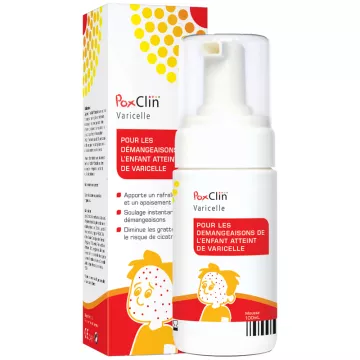
What is chickenpox, and how is it spread?
Chickenpox is an acute viral infection caused by the varicella-zoster virus (VZV—HHV-3, Herpesviridae family). It is extremely contagious and was one of the most widespread infectious diseases before the era of vaccination—90% of unvaccinated adults were infected during childhood. VZV remains dormant for life in the sensory ganglia after the initial infection and can reactivate as shingles in adulthood. For specific care of the blisters, visit our chickenpox blisters page. Explore our immunity and respiratory health product lines for natural support during recovery.
- Transmission and Contagiousness: airborne via aerosols and respiratory droplets (primary mode) + direct contact with fluid from the blisters—the virus remains viable in the air for 1–2 hours—attack rate: 90% among unimmunized household contacts — contagious from 2 days before the rash appears until the scabs have completely fallen off (7–10 days) — contagious individuals are often not yet aware of it (asymptomatic pre-rash period)
- Incubation and clinical phases: incubation 10–21 days — prodromal phase 1–2 days (mild fever, malaise, loss of appetite) — rash appearing in 3–5 successive waves over 3–7 days — unique characteristic: all lesions at different stages simultaneously (coexisting papules, vesicles, and scabs) — begins on the trunk, then spreads to the face and scalp, followed by the limbs — possible mucosal involvement (mouth, pharynx, vagina)
- Differentiate chickenpox from other childhood rashes: chickenpox = generalized vesicles at all stages + intense pruritus + onset on the trunk — measles = descending maculopapular rash (face → trunk) + Koplik spots + conjunctivitis + cough — scarlet fever = “sandpaper” rash + red throat + strawberry tongue — roseola (HHV-6) = pink rash after fever subsides — hand-foot-and-mouth disease = vesicles on palms, soles, and mouth
- Diagnosis: clinical in the vast majority of cases — laboratory confirmation if in doubt: PCR on a blister specimen (gold standard) — VZV IgM serology (acute infection) — should be considered in any child with a generalized, febrile vesicular rash
- Post-infectious immunity: lifelong immunity against chickenpox — but VZV persists in the sensory ganglia → possible reactivation as shingles if immunity is compromised (age, immunosuppression, stress)
Complications depending on at-risk populations
- Healthy, immunocompetent child: generally mild course — most common complication: bacterial skin superinfection (Staphylococcus aureus, Group A Streptococcus → impetigo, cellulitis, necrotizing fasciitis—rare but a medical emergency)—acute otitis media—viral or bacterial pneumonia—febrile seizures
- Unvaccinated adults: 25 times more severe than in children — varicella pneumonia (10% of adults with chickenpox) — hepatitis — encephalitis — longer duration and greater severity of symptoms — more frequent hospitalization
- Pregnant women: risk of severe varicella-associated pneumonia (increased maternal mortality) — congenital varicella syndrome if primary infection occurs in the first or second trimester (fetal malformations: skin scarring, limb atrophy, brain and eye abnormalities — risk 1–2%) — severe neonatal chickenpox if the mother develops chickenpox within 5 days before or 2 days after delivery (neonatal mortality 30% without immunoglobulins) → urgent obstetric consultation
- Infant < 4 weeks: severe forms in the absence of protective maternal antibodies — anti-VZV immunoglobulins and emergency antiviral treatment
- Immunocompromised individuals: disseminated chickenpox (visceral involvement—liver, lungs, brain)—life-threatening—emergency IV acyclovir—antiviral prophylaxis recommended for immunocompromised individuals who have been exposed
Prevention, vaccination, and antiviral treatment
- VZV vaccination: live attenuated vaccine (Varivax, Varilrix) — >95% effective against severe forms — French vaccination schedule: 2 doses recommended for children between 12 and 24 months — also recommended for unimmunized adults with occupational exposure (healthcare workers, teachers) and women of childbearing age without documented immunity — contraindicated during pregnancy (live vaccine) and in severely immunocompromised individuals — 2 doses spaced 4–8 weeks apart in adults
- Antiviral treatment (acyclovir, valacyclovir): recommended for adults (more severe chickenpox), pregnant women, immunocompromised individuals, and severe cases in children — effective if started within 24–48 hours after the rash appears — oral aciclovir in immunocompetent adults (800 mg × 5/day, 7 days) — IV aciclovir during hospitalization for severe cases — valaciclovir (Valtrex) — better oral bioavailability
- Anti-VZV immunoglobulins (Varitect): emergency administration within 96 hours after exposure for high-risk individuals (pregnant women, infants, immunocompromised patients)—reduces the severity or prevents chickenpox
- Absolute contraindications during chickenpox: aspirin and NSAIDs (risk of Reye’s syndrome and group A streptococcal necrotizing fasciitis — absolute contraindication in children) — systemic corticosteroids (promote viral spread in immunocompetent individuals)
- School exclusion: mandatory until all scabs have fallen off (according to HAS recommendations)—notify the school and at-risk contacts—ventilate the room regularly—wash clothes and sheets at 60 °C
Natural Support, Nutrition, and Recovery After Chickenpox
- Blister care: For detailed instructions on blister care (calamine lotion, colloidal oatmeal, warm compresses, and preventing scratching), see our page on chickenpox blisters
- Aloe vera: soothing gel — anti-inflammatory and moisturizing properties — apply a thin layer topically to itchy blisters — relieves burning and itching — do not apply to open scabs or infected wounds
- Supportive nutrition: high-quality protein (skin healing) — vitamin C (acerola) 500 mg/day (collagen support + immunity) — zinc 10 mg/day (wound healing + antiviral immunity) — thyme honey (> 1 year old, not before) on uninfected scabs to speed up healing
- Post-chickenpox immunity: Chickenpox temporarily depletes the immune system (4–6 weeks) — vitamin D3 + zinc + vitamin C during recovery — see our page on immune defenses
- Emergency signs requiring immediate medical attention: fever > 38.5 °C lasting > 4 days — red, warm, swollen, pus-filled blisters (bacterial superinfection) — difficulty breathing — stiff neck + severe headache (meningitis/encephalitis → call 15) — any case of chickenpox in a pregnant woman, an infant under 4 weeks old, or an immunocompromised person