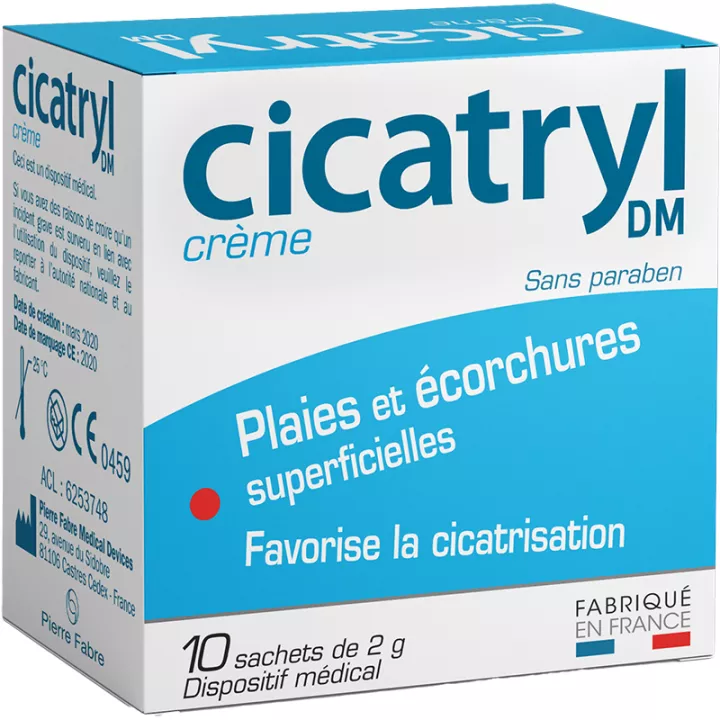
What is Cicatryl Cream DM for Superficial Wounds and Scrapes (10 sachets) used for?
For warnings, precautions, and contraindications, please refer to the Cicatryl Ointment package insert.
Cicatryl DM Cream accelerates and promotes the healing of superficial wounds and scrapes . It soothes wounds and comes in hygienic, portable sachets, each containing 2 g of cream.
This cream is specially formulated to promote optimal healing of superficial wounds and scrapes. Its restorative action helps relieve injured areas and accelerate the skin’s healing process.
- Healing Action: Cicatryl’s formula works deep within the skin to promote the regeneration of damaged skin tissue.
- Immediate relief: The cream soothes irritation and discomfort, providing immediate relief.
Take Cicatryl with you wherever you go thanks to its convenient, easy-to-carry size. Cicatryl Cream is available in individual sachets, making it an ideal travel companion. Its convenient size lets you take it with you everywhere, for quick use whenever needed.
- Individual sachets: Each sachet contains a single dose designed for targeted application to the affected area.
- Hygienic and easy to use: The sachets ensure perfect hygiene, while application is simple and precise.
Add Cicatryl to your first-aid kit for everyday use with your children and pets. Cicatryl is a must-have in your first-aid arsenal. Thanks to its specialized formula, it’s perfect for minor everyday accidents, ensuring confident healing.
- Versatile use: Cicatryl is suitable for superficial wounds and scrapes, whether caused by scratches, cuts, or bumps.
- Optimal healing: Thanks to its restorative action, Cicatryl helps minimize scarring and prevent infections.
- Non-greasy formula: The cream spreads easily and doesn’t leave a greasy film on the skin.
We also offer DermEden Specific Cicaderm Repair Treatment Protocol 30 ml at the best price in our online pharmacy
How do you use this healing cream?
- Wash and dry your hands thoroughly.
- Clean the wound with soapy water or saline solution.
- Apply a thin layer of Cicatryl to the affected area and gently massage it in with your fingertips until absorbed.
As a general rule, apply 1 to 2 times a day, depending on the nature and severity of the wound.
Share your feedback on the usage instructions and dosage of Cicatryl Cream with our partner “Verified Reviews” after your purchase.
Precautions for Use
- Wash your hands before and after use.
- Do not apply to mucous membranes or in or around the eyes.
- If contact with these areas occurs, rinse immediately with clean water.
- Do not swallow.
- Keep out of reach of children.
- Do not use if the packet is damaged.
- Treatment should not exceed 7 days. If the wound persists, consult a doctor or pharmacist.
- If the area around the wound is irritated, apply Cicatryl generously beyond the edges of the wound being treated.
- If the wound is too painful, cover it with gauze that has been coated with Cicatryl.
- Do not use on children under 2 years of age.
- Do not use if you are allergic to any of the ingredients.
- Due to a lack of data, do not use in pregnant or breastfeeding women.
- Do not use in combination with other wound treatments.
- Not suitable for treating deep and/or extensive wounds.
- If in doubt and/or if adverse effects occur, consult a healthcare professional.
What are the ingredients in this wound-healing aid?
Active ingredients (per 100 g of cream)
- Sodium Hyaluronate: 0.20%
- Allantoin: 0.50%
- Alpha-tocopherol acetate: 0.01%
Ingredients
Aqua, Cetearyl Alcohol, Petrolatum, PEG-8, PEG-40 Castor Oil, Sodium Cetearyl Sulfate, Hydrogenated Starch Hydrolysate, Paraffinum Liquidum, Allantoin, Sodium Benzoate, Glyceryl Stearate, Sodium Hyaluronate, Lactic Acid, Tocopheryl Acetate.
Packaging
10 sachets containing 2 g of cream each. Available at the best price in our online pharmacy.
Advice and insights from our pharmacy experts: the different degrees of burns
Doctors classify burns by degree based on their depth.
- A first-degree burn is the most superficial and corresponds to a classic sunburn. Only the epidermis is affected. Beneath the epidermis, there is vasodilation—an increase in the diameter of the blood capillaries. The skin is red and painful, but intact. There are generally no blisters.
- A second-degree burn is deeper. It is characterized by blisters (or phlyctenes) that appear either immediately or within hours of the burn. The blisters are filled with a clear fluid. They are surrounded by a red area: erythema. The dermis, the deep layer of the skin, is affected.