NOTICE
ANSM - Updated on : 04/03/2025
Product name
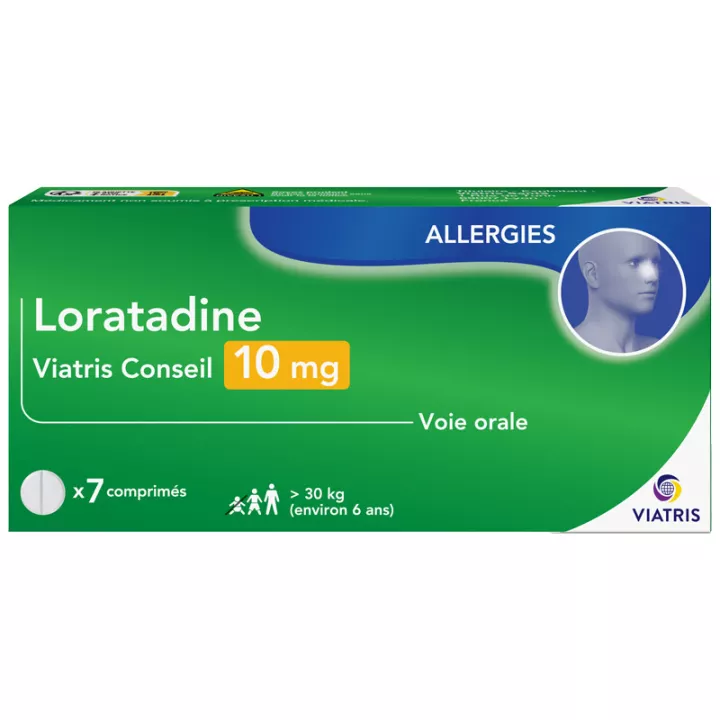
LORATADINE COOPER 10 mg, tablet
Loratadine
Box
Please read this leaflet carefully before taking this medicine, as it contains important information for you.
Always take this medicine exactly as it is prescribed by your doctor, pharmacist or nurse.
- Keep this leaflet. You may need to read it again.
- Ask your pharmacist for advice and information.
- If you experience any side effects, talk to your doctor, pharmacist or nurse. This also applies to any side effects not mentioned in this leaflet. See section 4.
- You should contact your doctor if you do not feel any improvement or if you feel less well after 3 days.
What does this leaflet contain?
1. What is LORATADINE COOPER 10 mg, tablet and what is it used for?
2. What do I need to know before taking LORATADINE COOPER 10 mg, tablet?
3. How do I take LORATADINE COOPER 10 mg, tablet?
4. What are the possible side effects?
5. How do I keep LORATADINE COOPER 10 mg, tablet?
6. Package contents and other information.
1. WHAT IS LORATADINE COOPER 10 mg, tablet AND WHAT IS IT USED FOR?
Pharmacotherapeutic class: antihistamines for systemic use - ATC code: R06AX13
LORATADINE COOPER 10 mg, tablet belongs to the class of antihistamines. Antihistamines help reduce allergy symptoms by preventing the effects of a substance called histamine, which is produced by your body when you have an allergic reaction.
LORATADINE COOPER 10 mg, tablet is indicated for adults and children over 6 years of age and weighing more than 30 kg to relieve symptoms associated with allergic rhinitis (e.g. hay fever), such as sneezing, runny nose, itchy nose and/or eyes, and watery eyes.
2. WHAT DO I HAVE TO KNOW BEFORE TAKING LORATADINE COOPER 10 mg, tablet?
Never take LORATADINE COOPER 10 mg, tablet:
- if you are allergic to loratadine or any of the other ingredients listed in section 6.
IF IN DOUBT, ASK YOUR DOCTOR OR PHARMACIST FOR ADVICE.
Warnings and precautions
Talk to your doctor, pharmacist or nurse before taking LORATADINE COOPER 10 mg, tablet.
Tell your doctor if you have severe liver disease.
Tell your doctor that you are taking this medicine if he/she prescribes a skin test to diagnose an allergy. In this case, treatment must be discontinued 48 hours before the test, as this drug may distort the result.
IF IN DOUBT, ASK YOUR DOCTOR OR PHARMACIST FOR ADVICE.
Children
LORATADINE COOPER 10 mg, tablet should not be administered to children under 6 years of age or weighing 30 kg or less.
The efficacy and safety of LORATADINE COOPER 10 mg, tablet in children under 2 years of age have not been established. No data are available.
Other drugs and LORATADINE COOPER 10 mg, tablet
Tell your doctor or pharmacist if you are taking, have recently taken or may take any other medicines.
LORATADINE COOPER 10 mg, tablet with food and drink
LORATADINE COOPER 10 mg, tablet may be taken with or without meals.
Pregnancy and breast-feeding
If you are pregnant or breast-feeding, think you may be pregnant or are planning to become pregnant, ask your doctor or pharmacist for advice before taking this medicine.
Unless otherwise advised by your doctor, this medicine should not be used during pregnancy. If you discover that you are pregnant during treatment, consult your doctor as soon as possible: only he or she will be able to decide on the most appropriate treatment for you.
This medicine passes into breast milk. Consequently, the use of this drug is not recommended if you are breast-feeding.
Driving vehicles and operating machinery
At the therapeutic dose, LORATADINE COOPER 10 mg, tablet does not generally make you drowsy or reduce your alertness. However, very rare cases of drowsiness have been reported which may affect the ability to drive or use machines.
LORATADINE COOPER 10 mg, tablet contains lactose
If your doctor has informed you that you are intolerant to certain sugars, contact him/her before taking this medicine.
3. HOW DO I TAKE LORATADINE COOPER 10 mg, tablet?
Always take this medicine exactly as instructed in this leaflet or as directed by your doctor, pharmacist or nurse. Check with your doctor, pharmacist or nurse if in doubt.
Dosage
Adults and children over 6 years of age and weighing over 30 kg:
1 tablet daily with a glass of water, with or without food.
Subjects weighing 30 kg or less
LORATADINE COOPER 10 mg, tablet is not suitable for treatment of subjects weighing 30 kg or less.
Children under 2 years of age
The use of LORATADINE COOPER 10 mg, tablet is not recommended in children under 2 years of age.
Adults and children with severe hepatic impairment:
Adults and children weighing over 30 kg :
1 tablet every 2 days with a glass of water, with or without food. Please ask your doctor, pharmacist or nurse for advice before taking this medicine.
If you feel that the effect of LORATADINE COOPER 10 mg, tablet is too strong or too weak, consult your doctor or pharmacist.
Method of administration
Take by mouth.
Swallow the tablet with a glass of water.
This medicine can be taken either with or without meals.
If you have difficulty swallowing the whole tablet, the breakline is there to make it easier to take.
Increasing the dosage does not increase the efficacy of this medicine.
Duration of treatment
If symptoms worsen or persist after 3 days, consult a physician.
If you have taken more LORATADINE COOPER 10 mg, tablet than you should have :
Drowsiness, increased heart rate and headache have been reported with overdoses of LORATADINE COOPER 10 mg, tablet.
Consult your doctor or pharmacist immediately.
If you forget to take LORATADINE COOPER 10 mg, tablet :
If you forget to take your dose on time, take it as soon as possible, then continue your treatment as usual. Do not take a double dose to make up for the tablet you forgot to take.
If you stop taking LORATADINE COOPER 10 mg, tablet :
Not applicable.
If you have any further questions about the use of this medicine, please ask your doctor, pharmacist or nurse.
4. WHAT ARE THE POSSIBLE SIDE EFFECTS?
Like all medicines, this product may cause undesirable effects, but they do not occur systematically in everyone.
The most frequently reported side effects of loratadine in children aged 2 to 12 years are headache, nervousness and fatigue.
Adverse reactions most frequently reported in adults and adolescents are drowsiness, headache, increased appetite and difficulty sleeping.
Since the marketing of LORATADINE COOPER 10 mg, tablet,cases of severe allergic reactions (including angioedema and anaphylaxis), dizziness, convulsion, accelerated or irregular heartbeat, nausea, dry mouth, stomach upset, liver disorder, hair loss, skin rash or redness have been reported very rarely.
Undetermined frequency : frequency of occurrence cannot be estimated on the basis of available data : weight gain (in children).
Reporting side effects
If you experience any side effects, please tell your doctor, pharmacist or nurse. This also applies to any side effects not mentioned in this leaflet. You can also report adverse reactions directly via the national reporting system: Agence nationale de sécurité du médicament et des produits de santé (ANSM) and the network of Centres Régionaux de Pharmacovigilance - Website: https://signalement.social-sante.gouv.fr
By reporting adverse reactions, you are helping to provide more information on drug safety.
5. HOW TO CONSERVE LORATADINE COOPER 10 mg, tablet?
Keep out of sight and reach of children.
Do not use this medicine after the expiration date indicated on the box or blister pack. The expiration date refers to the last day of this month.
No special storage precautions.
Do not dispose of any medicine down the drain or in the household waste. Ask your pharmacist to dispose of any medicines you no longer use. These measures will help protect the environment.
6. CONTENTS AND OTHER INFORMATION
What LORATADINE COOPER 10 mg, tablet contains
- The active substance is :
Loratadine........................................................................................................................ 10 mg
For one tablet.
- The other components are :
Corn starch, magnesium stearate, microcrystalline cellulose, lactose monohydrate.
What is LORATADINE COOPER 10 mg, tablet and what does it contain?
This medicine comes in tablet form. Box of 7 tablets.
Not all presentations may be marketed.
Marketing authorization holder
COOPER CONSUMER HEALTH B.V.
VERRIJN STUARTWEG 60
1112 DIEMEN
THE NETHERLANDS
Marketing authorization holder
COOPERATION PHARMACEUTIQUE FRANCAISE
PLACE LUCIEN AUVERT
77020 MELUN CEDEX
Manufacturer
ACTAVIS LTD
BLB 015-016
BULEBEL INDUSTRIAL ESTATE
ZEJTUN ZTN 3000
MALTA
Product names in member states of the European Economic Area
Not applicable.
The last date on which this leaflet was revised was :
[to be completed subsequently by the holder].
Other
Detailed information on this drug is available on the ANSM (France) website.
Health education advice :
a) What is allergy, what is an allergic reaction?
Allergy is an excessive reaction by the body to substances it considers harmful, known as allergens. Allergens are the factors and substances that trigger allergy and the associated disorders.
Allergic reactions are triggered by repeated, intensive contact with allergens.
The allergic reaction refers to the set of symptoms that appear minutes or hours after exposure to allergens. These allergens may come from plants, animal hair, food, dust mites, molds or substances of occupational origin.
This allergic reaction causes the body to release substances such as histamine, which are responsible for the symptoms experienced.
As with any illness of an allergic nature, it's important to consult a doctor at least once.
HE OR SHE WILL DETERMINE THE NEED FOR AN ALLERGY TEST.
b) How to recognize allergic rhinitis?
Allergic rhinitis is characterized by the following symptoms: successive sneezing, colorless nasal discharge, nasal obstruction (blocked nose), itching and tingling of the nose. It can be accompanied by irritation of both eyes (tearing, redness), throat and nose.
A distinction is made between :
Seasonal allergic rhinitis or hay fever: frequent, it occurs every year at the same time of year, when the concentration of pollens in the air increases, and generally first appears during adolescence. However, you may not be allergic to all pollens, but to one or more of them.
Perennial allergic rhinitis occurs all year round, and most often depends on household allergens such as dust mites, molds and pets.
c) Some practical advice
Eliminating the allergen (eviction) is the measure of choice for eliminating or reducing allergy symptoms.
For household allergens: it is essential to take measures to reduce the presence of the allergen:
- Mattresses and pillows should be completely encased in anti-dust mite plastic covers. The bed base, unless it is made of slats or metal, should be encased in plastic. All bedding should be washed twice a month at 60°C if possible.
- The bedroom should be regularly aired and cleaned.
- On the floor, avoid bedspreads and carpets.
- Avoid pets.
During the pollen season, you can reduce your exposure to pollens:
- In your garden, diversify your plantings, avoiding the most allergenic species (cypress, cedar, birch, etc.).
- Avoid mowing the lawn yourself during the pollen season.
- Garden preferably with protective goggles and mask.